
- Matching occurs within 3-15 minutes of your request
- Experts available in your geographic service zone
- Direct communication, no platform, and membership costs
Avg Response Time< 60 min
Average Rating 4.7 ★
Top Rated Contractors
Trusted Services
Available Locations
Areas Where Our Partners Provide Water Heater Repair Services
We connect homeowners with local plumbers in Texas, California, and Florida to have water heater diagnostics, thermal system repair, heating element replacement, and emergency leak detection in the major states.
Water Heater Types
Water Heater Repair Services Our Partners Offer
Our partners offer water heater repair services for tank, tankless, gas, electric, heat pump, and hybrid units. Each system is matched with a plumber who knows its parts and fuel type, so the fault gets diagnosed correctly the first time.
Tank Water Heaters
Tank water heater repair covers thermostat replacement, heating element service, anode rod replacement, sediment flushing, and pressure relief valve work. A tank unit stops working properly when sediment builds up, the anode rod corrodes, or the thermostat fails. You may notice lukewarm water, rust-colored water, or rumbling noises. Repair is usually the better choice when one part has failed. A tank leaking from the shell is typically past repair.
Tankless Water Heaters
Tankless water heater repair covers mineral scale removal, flow sensor replacement, ignition and gas valve adjustment, and error code diagnostics. A tankless unit stops working properly when scale blocks the heat exchanger or a sensor fails. You may see cold bursts, low hot water flow, or a shutdown after a few seconds. These units rely on electronic controls. A plumber trained on your brand should handle the repair.
Gas Water Heaters
Gas water heater repair covers burner cleaning, pilot light and thermocouple replacement, gas control valve service, and venting checks. A gas unit stops working properly when the pilot will not stay lit or debris clogs the burner. The result is no hot water or weak heating. If you smell gas, leave the home. Call for emergency help before attempting any repair.
Electric Water Heaters
Electric water heater repair covers heating element replacement, thermostat adjustment, and electrical connection checks. An electric unit stops working properly when an element burns out or the thermostat fails. The water may run lukewarm, run out quickly, or never heat. A breaker that keeps tripping often points to a failed element. A plumber can test the circuit before replacing parts.
Heat Pump and Hybrid Systems
Heat pump and hybrid water heater repair covers refrigerant leak service, compressor and fan diagnostics, and switching between heat pump and standard electric modes. These systems stop working properly when the heat pump side fails. The unit then falls back on slower electric heating. This raises energy use and slows recovery. Repairs need a technician with refrigerant and electrical experience. Confirm that your plumber works on these units before booking.
Reliable Repair Support
Why Choose WhatsDemand when Finding Water Heater Repair?
The reasons to choose WhatsDemand when finding water heater repair are listed below.
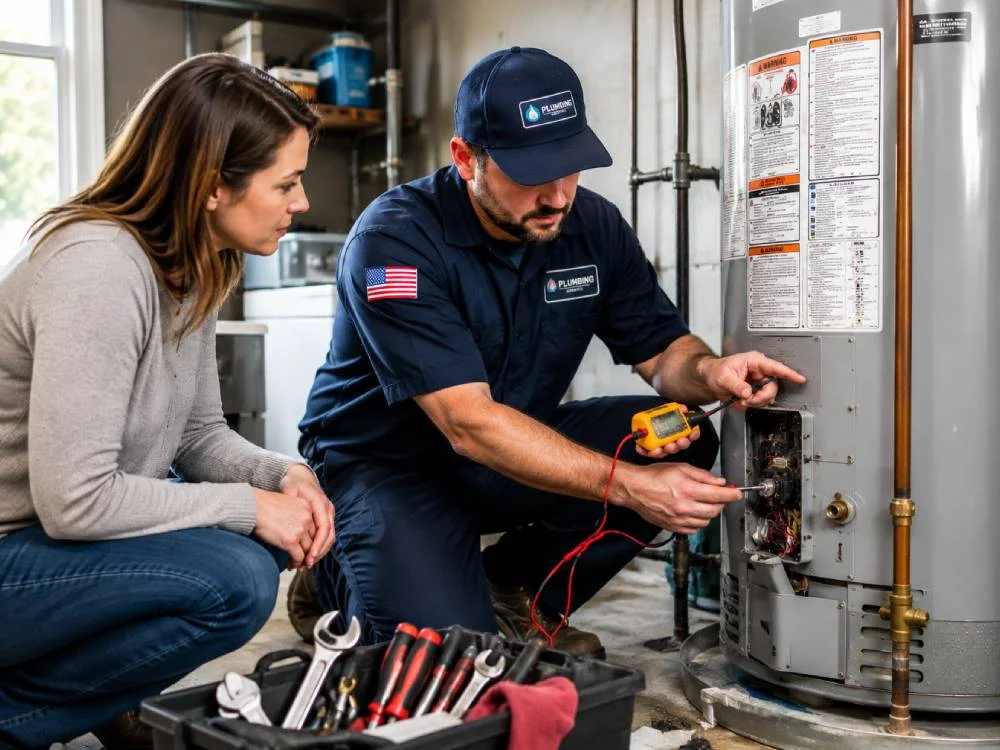
Local Contractor Access
We operate around the clock, enabling emergency water heater repair requests regardless of time or day.
Rapid Response Matching
We identify available technicians within minutes, connecting you with contractors prepared for emergency repairs and same-day service requests.
Direct Communication
We facilitate dialogue between you and the technician, eliminating delays and enabling transparent discussion of repair scope and costs from WhatsDemand.
Service Transparency
We ensure contractors present diagnostic findings, timeline estimates, and restoration details without hidden fees or platform markup.
24/7 Availability
We link you with expert plumbers equipped for water heater diagnostics, heating element replacement, and thermal system restoration.
Our Process
What to Expect from Our Partner Water Heater Repair Services?
We guide homeowners through three critical phases when coordinating thermal system repairs. Here is what develops from connection through completion.
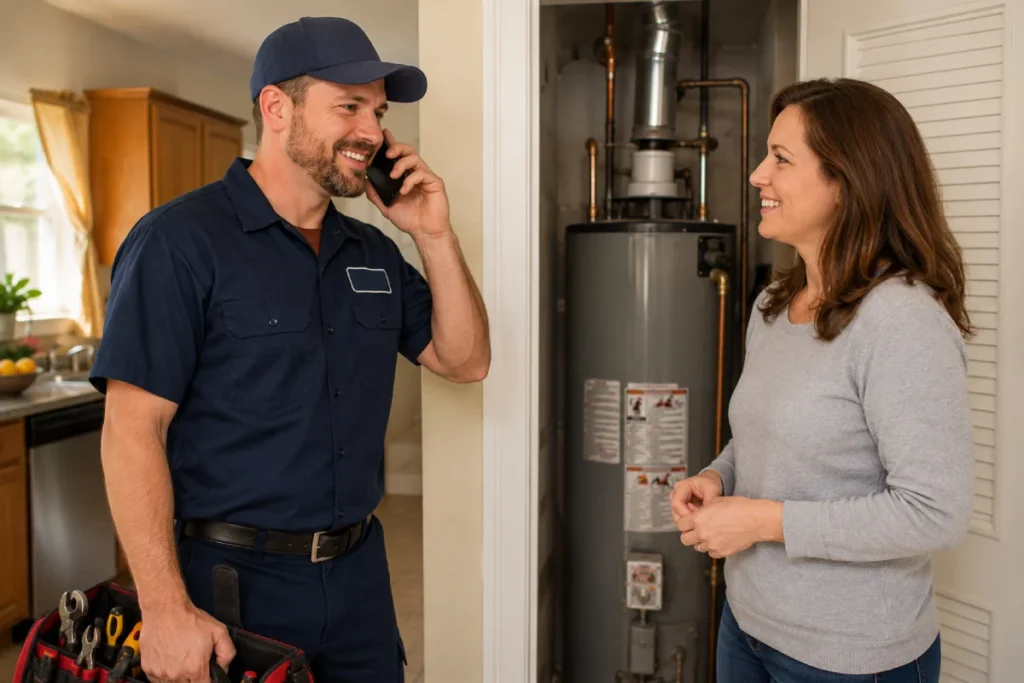
Stage 01
Before: Technician Connection
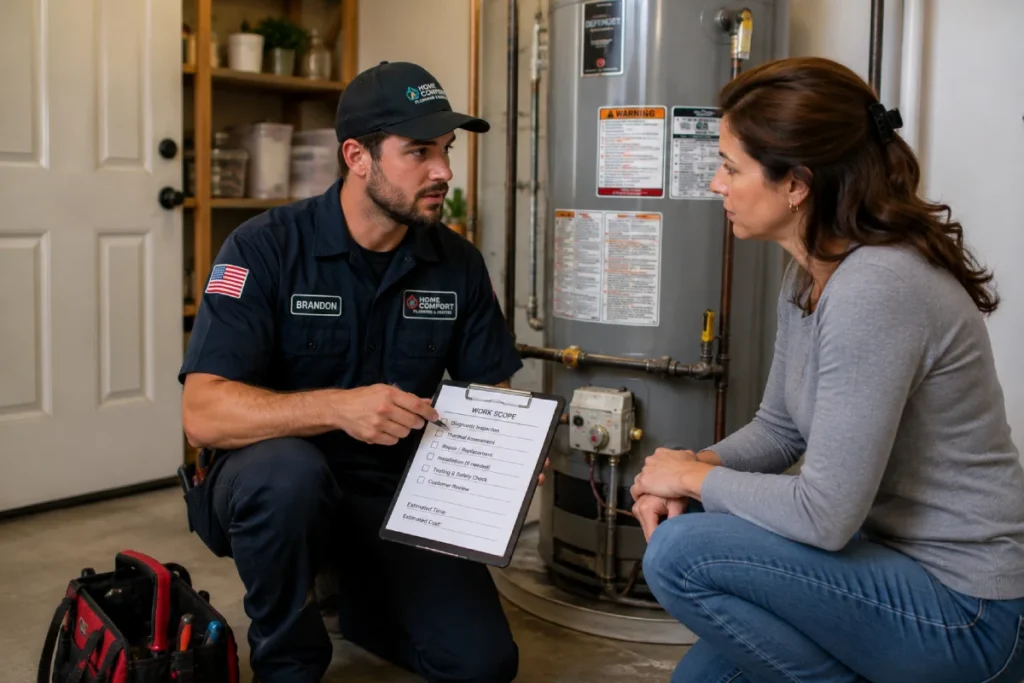
Stage 02
During: System Restoration
- Qualified technician arrives for diagnostics and repair
- Thermal assessment and installation were all addressed
- Work scope outlined before labor commences
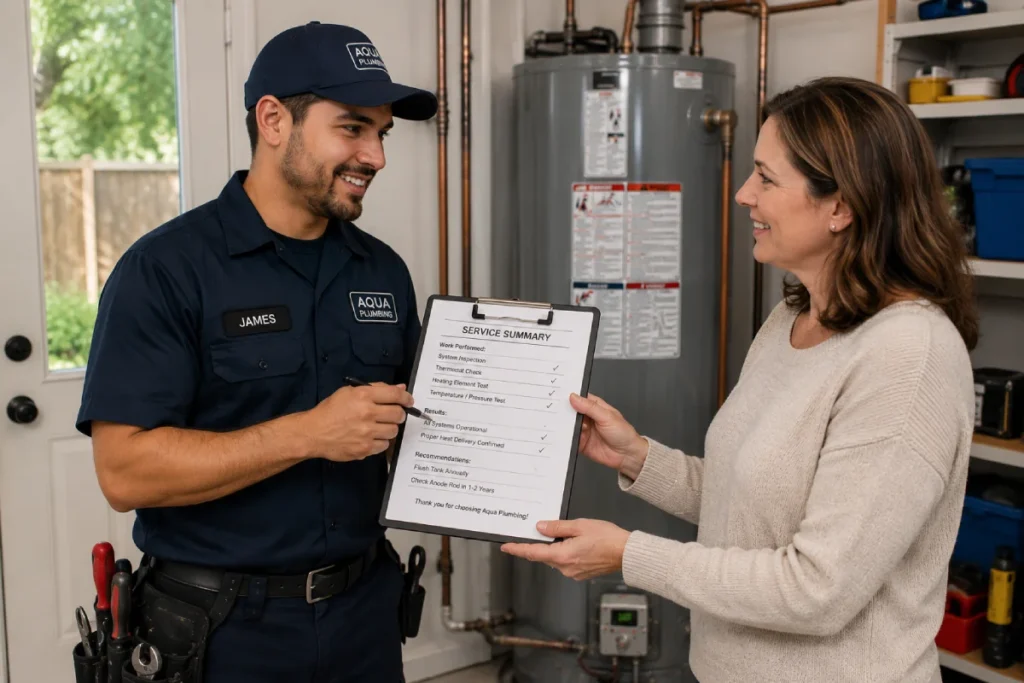
Stage 03
After: Performance Verification
- The technician tests system operation and confirms heat delivery
- Property restored to original condition
- Homeowner receives summary and contractor details for future reference
Trusted Partner Services
Additional Services Offered by Our Partners
Additional services offered by our partners include a full scope of network management, routine repairs, urgent crises, and treatment installations with thermal system restoration.
Common Questions
Water Heater Service FAQs
Water heater services raise practical questions about repair costs and unit lifespan. The answers below help you decide when to repair and when to replace.
Water heater repair restores malfunctioning thermal units through heating element replacement, thermostat recalibration, anode rod service, and sediment flushing. Technicians diagnose burner assembly failures, relief valve malfunctions, and mineral deposit accumulation via system diagnostics. Repairs address component-level failures when tank integrity remains intact, and restoration is feasible.
The common water heater repairs are listed below.
- Sediment Flushing: Mineral deposits accumulate on tank bottoms, reducing heating output and generating operational noise.
- Heating Element Replacement:Electrical resistance coils fail from corrosion, eliminating thermal generation capacity.
- Thermostat Recalibration: Temperature sensors malfunction, causing inconsistent water output or extreme heat delivery.
- Anode Rod Service: Sacrificial metal rods corrode completely, exposing tank steel to rust penetration.
- Relief Valve Restoration: Pressure release mechanisms jam, creating dangerous pressure conditions requiring immediate technician inspection.
- Pilot Light Reignition: Gas ignition systems fail to sustain flame, preventing burner assembly activation.
- Dip Tube Replacement: Internal supply conduits crack and fragment, mixing cold inlet water with heated reserves.
- Mixing Valve Repair: Temperature balancing mechanisms clog or deteriorate, producing scalding or inadequate water conditions.
- Tank Leak Sealing: Corrosion penetration creates rupture points at connection sites and fitting locations, causing water loss.
- Burner Assembly Cleaning: Gas combustion components accumulate debris and corrosion, reducing heat generation efficiency.
Gas water heater repairs begin with a system assessment, testing pilot light ignition, thermocouple function, and gas valve operation to identify malfunction sources. Technicians isolate the gas supply, remove defective components, burner assembly, and install replacement units or execute cleaning procedures restoring proper combustion.
Final safety testing confirms flame ignition, heat generation, temperature regulation, and pressure relief functionality before system activation.
Electric water heater repairs start with power disconnection and component testing. Technicians diagnose heating elements rated 4500-5500 watts on 240-volt circuits, replace defective coils through drain-down procedures, and access thermostat terminals embedded in the tank sidewall. The testing confirms element activation and temperature regulation before system operation.
Most water heater repairs take 1-2 hours, depending on the component system type. Simple thermostat or anode rod replacement requires 30-45 minutes, while heating element service extends to 1.5-2 hours. Sediment flushing and pressure relief valve work is complete within 60-90 minutes, whereas tank replacement or complex burner assembly repairs demand 2-3 hours. Emergency leak sealing or pilot light reignition is resolved within 30-60 minutes, allowing rapid hot water restoration in urgent situations.
The water heater is making strange noises because sediment and mineral buildup on heating elements create popping and rumbling sounds as superheated water pockets explode at temperatures above 140°F. Hissing and crackling arise from accumulation on burner assemblies or heating coils, while whistling and banging result from pressure relief valve vibration and water hammer reverberations. Thermal expansion tank failure and high-pressure conditions in heating cycles intensify the audible disturbances throughout the system.
You should call for emergency water heater repair when active leaks flood surrounding areas, complete hot water loss occurs, or strange noises indicate imminent tank rupture. Gas odours, pilot light failure, pressure relief valve discharge, and burst pipes require urgent same-day technician response. Tank ruptures, creating water damage and scalding conditions, threatening household safety, warrant immediate emergency dispatch.
Yes, emergency water heater repairs cost more due to after-hours service surcharges, a 25-50% premium on standard diagnostic and labour fees. Technicians responding to urgent requests outside business hours prioritize equipment allocation and dispatch scheduling, justifying accelerated response pricing. Delayed emergency calls result in compounded tank damage, flooding, or component failures requiring extensive restoration.
Yes, it is worth repairing a water heater when the unit is under 10 years old and the repair costs less than half the price of a new one. A newer unit with one failed part is cheaper to repair. Repair also extends its life. Replacement is usually the better choice when the unit is over 10 years old or the tank is leaking. Repeated repairs also add up. Compare the repair quote with the cost of a new unit before you decide.
The average lifespan of a tank water heater is 10 to 15 years. A tankless water heater lasts about 20 years or more. Annual flushing and anode rod checks help a unit reach the upper end of that.
Our News and Articles
Latest Blogs & Articles
Need Help Right Now?
Our team is standing by to connect you with a trusted local professional.
Call Now: (888) 217 4914Free to call • No hold times • Available 24/7