

Locate the main water shut-off valve where the water line enters the house, close it by turning it clockwise until it stops, and open a cold-water faucet to relieve pressure and confirm the flow has stopped. If the valve is a ball valve, the handle closes with a quarter-turn until it sits perpendicular to the pipe, and if it’s a gate valve, it usually takes several clockwise turns.
A leak doesn’t wait for a convenient moment. Water on the floor, a toilet that won’t stop running, or a burst supply line calls for a fast, calm shutoff, and the right valve choice matters more than speed alone.
Immediate Steps to Shut Off Your Home Water Supply
The fastest safe move is to close the right valve, then verify that the water is off. If the leak is isolated under a sink, behind a toilet, or above a water heater, use the nearby fixture valve first. If you can’t isolate it there, shut off the main water shut-off valve for the whole house.
Start with the safest valve you can reach
If the leak is clearly coming from one fixture, shut off that fixture’s local valve first. A toilet, sink, shower, or washing machine often has its own small shutoff, and closing that smaller valve can stop the problem without taking down the whole home.
If the source is hidden, spreading, or tied to a supply line you can’t isolate, go to the main house valve. For a quick example of how that logic works in a bathroom emergency, see how to handle a flooded toilet.
Practical rule: The smaller valve comes first when you can reach it safely. The main valve comes first when the leak is hidden, moving, or beyond the fixture valve.
Use the correct closing motion
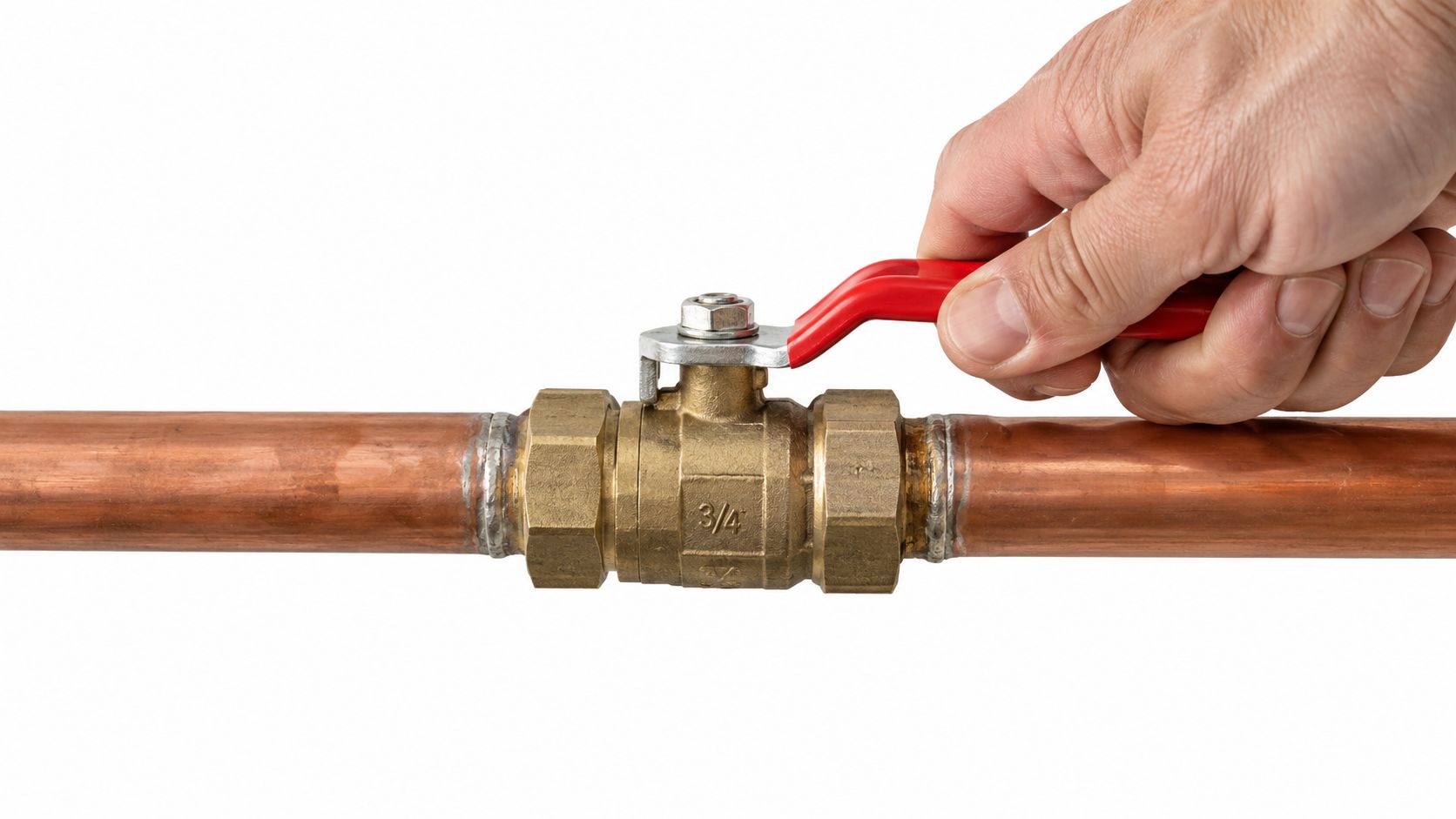
Turn a ball valve handle a quarter-turn so the handle ends up perpendicular to the pipe. Turn a gate valve clockwise until it stops, usually with multiple turns. A valve that resists gentle hand pressure is a warning sign, not a challenge.
After you close it, open a nearby cold-water faucet. Water can keep moving for a short time because the pipes still hold stored water, so the faucet helps relieve pressure and shows whether flow has stopped. If the faucet goes dry after the remaining water drains, the home is isolated.
Locating and Identifying Your Main Water Shutoff Valve
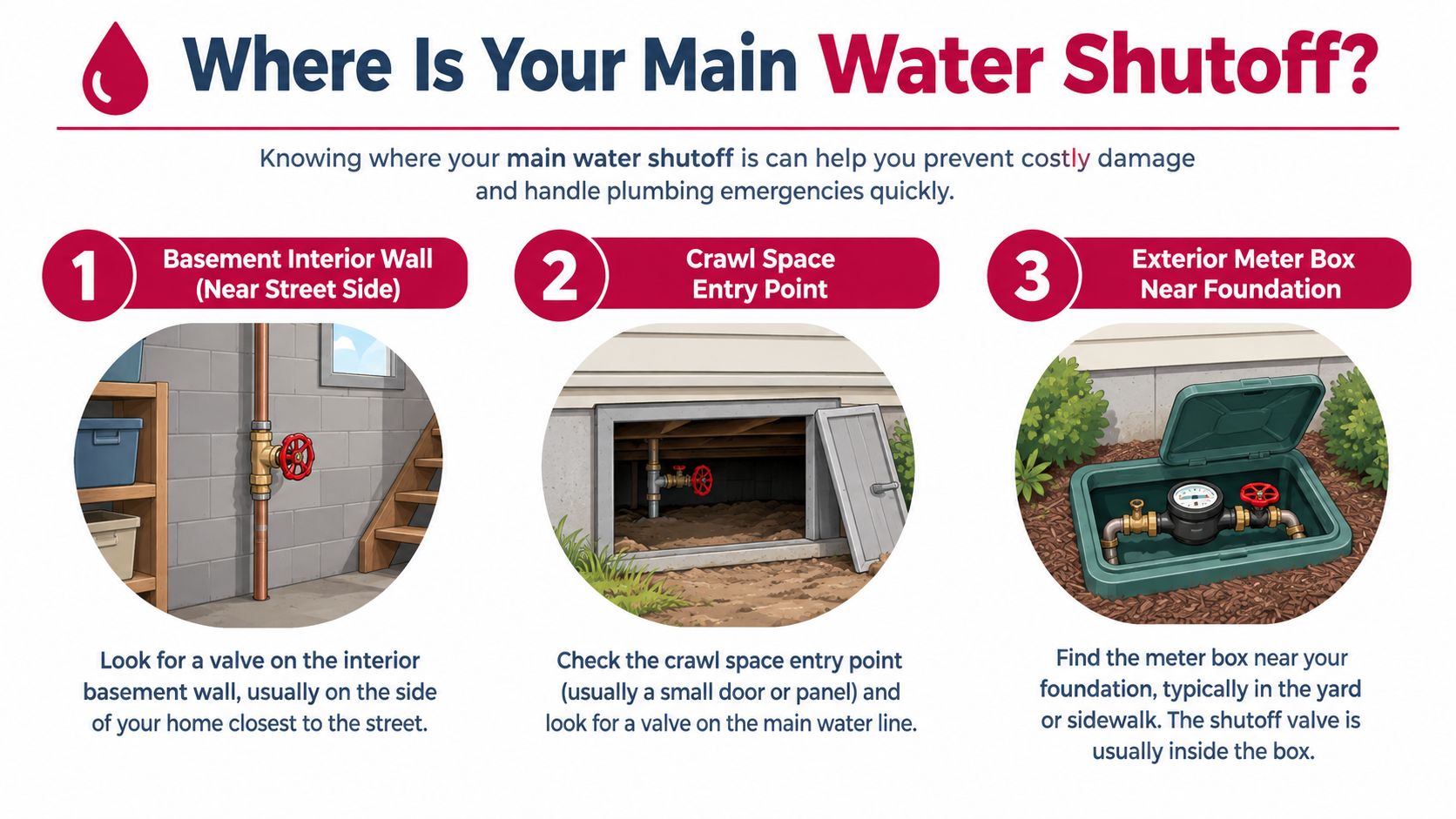
The main water shut-off valve is usually where the service line enters the house, but the exact spot changes from property to property. Common places include a basement, crawl space, garage, utility area, or an exterior meter box near the foundation. A flashlight helps more than guesswork.
Know the difference between the common valve types
The two setups you’ll see most often are simple, but they behave differently. A gate valve usually has a round wheel and closes with clockwise turns. A ball valve usually has a lever handle and closes with one quarter-turn until the handle is perpendicular to the pipe.
| Valve type | How it looks | How it closes | What to watch for |
|---|---|---|---|
| Gate valve | Round wheel | Clockwise, usually several turns | Don’t force a stuck wheel |
| Ball valve | Lever handle | Quarter-turn until the handle is perpendicular to the pipe | Handle position shows open or closed |
Use the valve’s motion, not the handle color, to identify what you’re dealing with. If the handle is already perpendicular to the pipe on a ball valve, it’s closed. If the wheel on a gate valve keeps turning freely without reaching a stop, the valve may be damaged or unreliable.
Check the entry point before you search everywhere else
Start where the supply pipe enters the structure. That’s the most logical place to look because the main valve normally sits on the house side of the service line, not somewhere random in the building. Some homes also have a customer-side meter valve outside, but that’s not the same thing as a utility street valve.
For a visual overview of typical locations, use this reference on common home water shutoff valve locations.
A street-side curb valve is different. It can be hard to turn and may require a special tool, so that’s usually a job for the utility or a plumber. Don’t treat that valve like a normal indoor shutoff.
Step by Step Guide to Closing the Main Valve Safely
Closing the main valve safely starts with a clear view and a steady hand. If there’s standing water near outlets, appliances, or a breaker area, stay out of it and treat the space as hazardous. If the electrical area is wet, the utility or a licensed professional should handle power isolation.
Close the valve without overworking it
Use these steps in order:
- Find the valve body where the service line enters the home.
- Identify the valve type by shape, wheel, or lever.
- Turn a gate valve clockwise until it stops.
- Rotate a ball valve handle 90 degrees until it’s perpendicular to the pipe.
- Open a cold faucet at the lowest practical level.
- Watch for flow to stop after the remaining water drains.
That last step matters. A closed valve doesn’t make the water disappear instantly, because the house plumbing still holds water. The faucet confirms that pressure has dropped and no new supply is coming in.
Stop if the valve fights back
A seized valve should not be forced. Corrosion, old packing, or a broken stem can turn a simple shutoff into a larger repair. Extra force is a bad trade, because it can crack the fitting or snap the handle.
If the leak is near electrical equipment, keep clear of standing water and avoid creating a second problem while solving the first. If the main valve fails and the meter valve is the only possible backup, that valve’s design and access vary by utility, so get help rather than guessing.
A stuck valve is usually telling you something. Pushing harder doesn’t make it safer, it makes the repair bigger.
For homeowners who want a broader look at when plumbing problems cross into service work, the guidance on when to call a plumber is a useful next read.
Water Heater Safety and Post-Shutoff Verification
Shutting off the main water supply does not empty the water heater right away. The tank or tankless unit still holds water, and the appliance should be handled according to the manufacturer’s instructions. That matters because draining, heating, or refilling a unit the wrong way can create a new problem after the leak is already under control.
Check the house before you assume the water is truly off
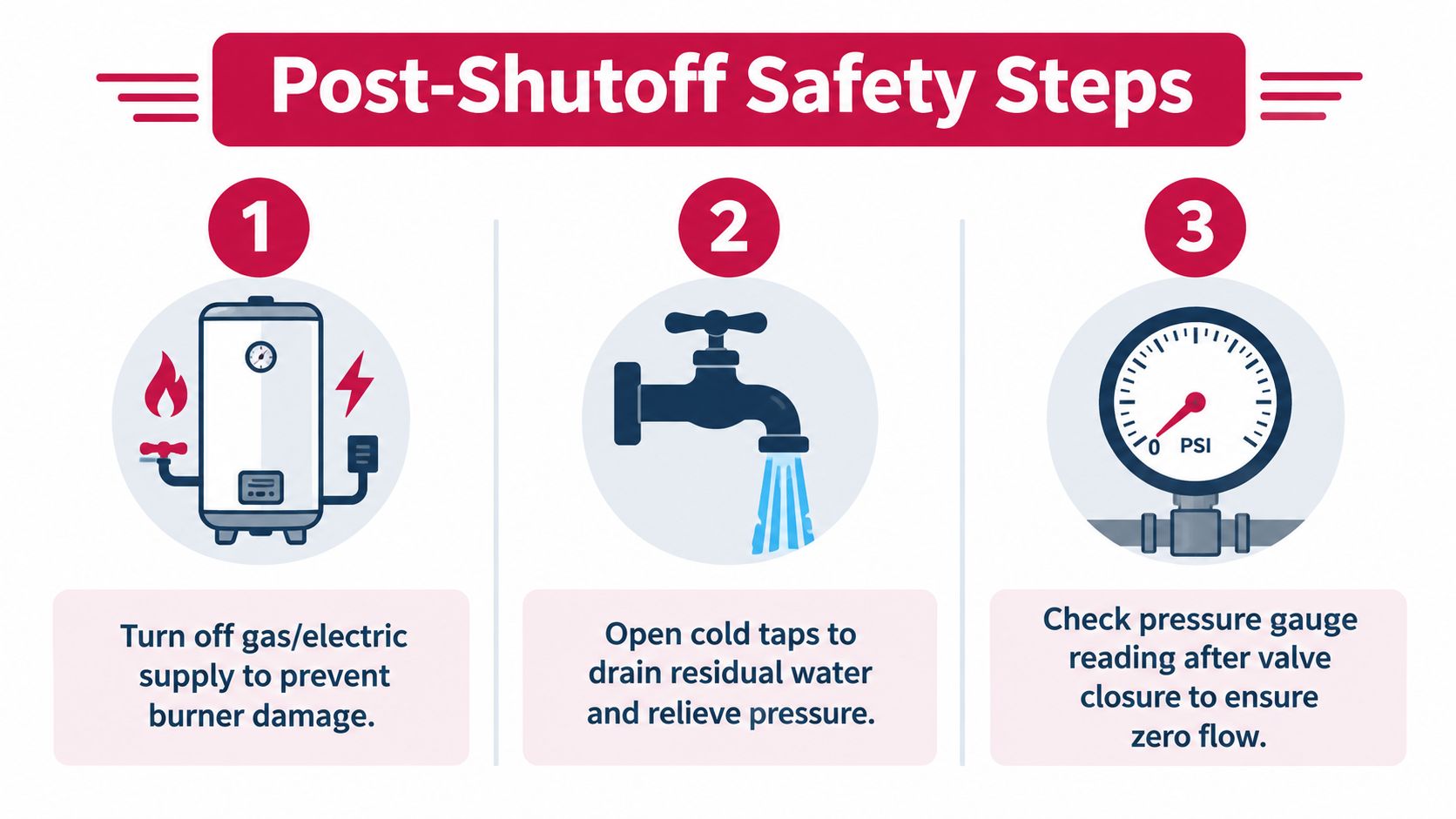
After closing the main valve, open a few cold taps and confirm that the flow fades out. Then check the meter if you can do so safely. If water is still moving after the house should be isolated, the shutoff wasn’t the source or the valve isn’t holding.
Turn off any fixtures or appliances that could keep feeding a problem, including sinks, toilets, washing machines, ice makers, and irrigation controls where applicable. That lets you see whether the leak stops on its own or if another line is still active.
Handle the heater the right way
If the water heater is gas-fired or electric, follow the manufacturer’s instructions before changing its operating state. Don’t improvise with a hot appliance that may be left partially full. For detailed service checks after shutdown, see basic plumbing inspection steps.
The key point is simple. The main shutoff isolates the house supply, but it doesn’t automatically protect every appliance from damage or every line from residual water. Verification is part of the shutoff, not an optional extra.
When to Call a Professional Plumber Instead of Fixing It Yourself
Call a professional when the valve won’t move, the handle breaks, or the shutoff point is a utility-side valve you can’t safely operate. Those are not homeowner “try harder” moments. They’re escalation points.
Know the situations that call for help
A plumber is the right next step if:
- The valve is seized: Corrosion or age has locked it in place, and hand pressure isn’t enough.
- The handle breaks: The stem or lever fails before the water is fully off.
- The leak is at a street-side valve: The curb box is often a utility-controlled point and may need a special tool.
- Water is near electrical gear: Safety comes before access.
- The house valve won’t hold: Closing it doesn’t stop the flow.
Practical rule: If the valve feels wrong, stops halfway, or starts leaking from the stem, stop. That valve needs repair, not more force.
For future prevention, automatic shutoff systems can reduce damage when they’re correctly installed and maintained. They use a sensor, controller, and motorized valve on the whole-home supply, but they still depend on power, placement, and upkeep. A smart system helps, yet it doesn’t replace knowing how to close the manual valve.
If you need help getting a qualified local plumber involved, WhatsDemand can connect you with an independent provider for the next step.
Restoring Water Service and Preventing Future Emergencies
Turn the water back on slowly after the repair is done. A sudden reopen can jolt the plumbing, and there’s no benefit to snapping the valve wide open.
Reverse the shutoff carefully
For a gate valve, turn it counterclockwise. For a ball valve, rotate the handle back until it runs parallel with the pipe. Then check faucets and the valve body for leaks once pressure returns.
If the system sounds noisy at first, let the pressure settle before opening more fixtures. Watch the repaired area closely, because a dry start doesn’t guarantee a dry restart.
Knowing the valve location before an emergency saves time later. The best shutoff is the one you can reach, identify, and close without hesitation.
If you want help connecting with an independent local plumbing provider, contact WhatsDemand and describe the shutoff problem, the valve location, and whether the leak is still active.