

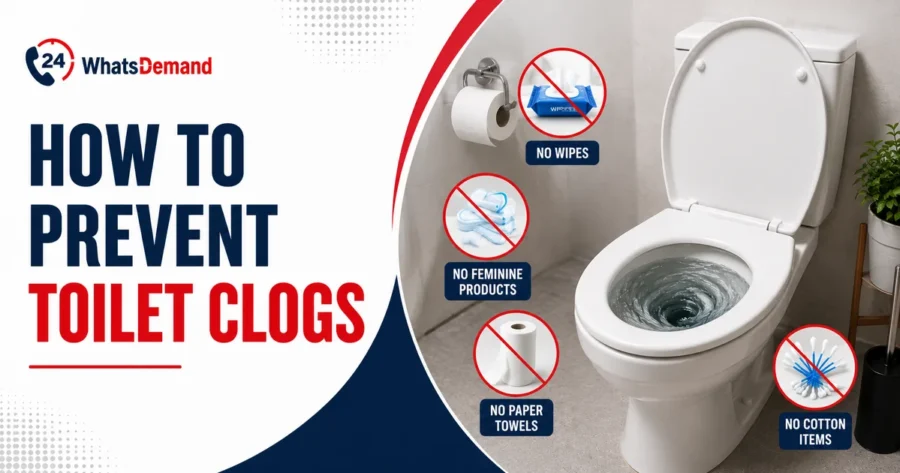
To prevent toilet clogs, residents must flush only human waste and avoid flushing wipes. Never flush foreign objects (toys or hygiene items), perform rim jet cleaning, and address slow drainage with a flange plunger before a partial blockage worsens. The Sunny Isles Beach, Florida pump station removes 500 pounds of non-flushable items daily, reflecting how improper flushing habits strain U.S. residential drain lines and municipal wastewater systems.
Common toilet unclogger methods include a flange plunger for trapway blockages and a closet auger for deeper obstructions. The habits and maintenance routines in this guide give residents steps for keeping drain lines clear year-round to prevent clog toilet.
1. Flush only human waste and toilet paper
Flush only human waste and toilet paper to keep the drain line clear, because they are the two materials a trapway and plumbing system are designed to handle. Wet wipes, cotton balls, and feminine products cause blockages because they do not break down like toilet paper. Every non-waste, non-paper item belongs in a waste bin.
Toilets are not trash cans, and adopting that single rule eliminates calls to a licensed plumber before they ever need to happen.
2. Avoid flushing wipes
Avoid flushing wipes of any kind, including products marketed as “flushable,” because the nonwoven synthetic fibers retain their structural integrity long after entering the drain line. Wipes get caught in bends, joints, or narrow pipe sections, and wipes accumulate after being flushed.
When the non-biodegradable material in flushed wipes meets grease in the sewer system, large masses form that clog vital sewer components and must be removed. A problem that is prevented by tossing wipes in the trash.
3. Do not flush feminine hygiene products
Do not flush feminine hygiene products down the toilet, as tampons and sanitary pads are manufactured from absorbent fibers (cotton and rayon) that expand rather than dissolve in water. Tampons grow on average ten times their size once they absorb fluid, making them prime for clogging sewer drains.
Flushing feminine products easily results in a clogged line, and household plumbing is simply not designed to handle materials other than toilet paper and human waste, so a lidded waste bin kept near the toilet is the correct disposal method.
4. Keep paper towels, tissues, and cotton products out of the toilet
Keep paper towels, tissues, and cotton products out of the toilet, because items are designed for durability and absorbency. The exact opposite of water-soluble toilet paper. Paper towels do not dissolve easily and get lodged in drain pipes, leading to backups or leaks.
Cotton fibers are tough and do not dissolve or compact the way toilet paper does, making them prone to becoming trapped in pipes and creating clogs, deeper in the system where they are harder to address.
5. Use toilet paper in moderate amounts
Use toilet paper in moderate amounts per flush to prevent the trapway from becoming overwhelmed with dense, slow-dissolving paper mass that strains the drain line. Large wads absorb water, expand, and can lodge in the trap or the first feet of piping.
Choosing toilet paper designed for septic systems is advisable, as single-ply varieties dissolve faster than thick, quilted brands. Flushing first and adding more paper before a second flush prevents overloading the plumbing system when more paper is needed.
6. Never flush foreign objects such as toys or hygiene items
Never flush foreign objects such as toys or hygiene items, and keep the toilet lid closed at all times to prevent accidental entry into the drain line. Toys, toothbrushes, and combs fall in accidentally, and when flushed, they lodge in the trapway.
The curved ceramic section at the base of the toilet creates hard blockages. Small toys or air fresheners become wedged in the internal ceramic bends, requiring the toilet to be removed from the floor flange for access, which is a complex plumbing procedure.
7. Clean the toilet regularly to maintain flushing performance
Clean the toilet regularly to maintain flushing performance by clearing the rim jets and siphon jet of limescale and mineral deposits that reduce water flow over time. Mineral deposits clog the small rim jets located in the flush passages under the toilet bowl rim, and when the openings become restricted, less water enters the bowl during a flush, resulting in weak or uneven flushing.
Pouring two cups of white vinegar into the tank and letting it sit for about an hour before flushing helps manage limescale before it hardens and narrows the internal channels.
8. Address slow flushing or minor clogs before they worsen
Address slow flushing or minor clogs before they worsen, as partial blockages develop into full obstructions when left unattended and lead to costlier plumbing repairs. Slow drainage after flushing is one of the common early signs that the toilet is approaching a clog, and addressing it prevents a more severe blockage that results in overflow or complete backup and potential water damage.
A flange plunger with proper technique clears minor and moderate clogs, and a toilet auger reaches deeper blockages in the trap or nearby drain line before a full obstruction requires a licensed plumber.
9. Schedule routine plumbing inspections if clogs occur frequently.
Schedule routine plumbing inspections if clogs occur frequently, because recurring drain problems signal grease accumulation, root intrusion, or pipe degradation. An inspection schedule of every 3 to 5 years is standard, but older homes with clay or cast iron pipes must undergo inspections every 2 to 3 years.
Sewer lines are best assessed using a video camera inspection, which allows a plumber to pinpoint the exact location and nature of any blockage or defect without invasive digging.
Why Does My Toilet Keep Clogging?
Your toilet keeps clogging because of non-flushable materials lodged in the trapway, excessive toilet paper, an aging low-flow fixture with weak flushing pressure, or mineral buildup narrowing the drain line over time.
Clogging points to the main sewer line, where tree roots or collapsed piping restrict the entire drainage system. Camera inspection becomes required when plunging fails to provide lasting relief, as licensed plumbers identify bellied pipes or sewer line collapses that no household tool can resolve.
What Should You Never Flush Down the Toilet?
The things you should never flush down the toilet are listed below.
- Wet Wipes and “Flushable” Wipes: Nonwoven synthetic fibers remain intact inside pipe bends and joints until they form a full blockage, so toss them in a lidded trash bin after use.
- Feminine Hygiene Products: Tampons and sanitary pads expand up to 10 times their original size inside drain lines and lodge firmly in the trapway, so wrapping and discarding them in a waste bin is the correct disposal method.
- Paper Towels and Facial Tissues: High-quality wood pulp construction resists breakdown in water and causes stubborn accumulation inside drain pipes, making the trash can the appropriate disposal point.
- Cotton Balls and Cotton Swabs: Cotton fibers clump together rather than dissolving and build debris-trapping masses deep in the drain system. Placing them in a bathroom waste bin keeps the drain line clear.
- Dental Floss: Nylon and Teflon strands wrap around pipe debris (a net) and form tangled blockages inside the drain line, so discarding floss in a sealed trash bag prevents accumulation.
- Foreign Objects: Non-biodegradable objects lodge in the ceramic trapway and resist plunging. Keeping the toilet lid closed at all times prevents accidental entry.
- Medications: Pharmaceutical compounds bypass wastewater filtration and contaminate groundwater supplies. Returning them to designated drain cleaning services, pharmacy take-back programs, or sealed household trash is the responsible disposal method.
Can Low-Flow Toilets, Old Pipes, or Low Pressure Cause Clogs?
Yes, low-flow toilets, old pipes, and low water pressure can cause clogs. Early-model low-flow toilets generate insufficient flushing force to push waste through drain lines and accumulate grease, hair, and mineral deposits that obstruct water flow.
Homeowners dealing with deteriorating cast iron or clay sewer lines in older homes face clogging risks, as reduced water pressure from corrosion leaves waste stranded in the drain line rather than clearing it through to the main sewer, a problem best addressed by learning more about old plumbing pipes.
Is Hard Water Mineral Buildup Blocking Your Drain Line?
Yes, hard water mineral buildup can block the drain line. Calcium and magnesium deposits gradually coat pipe walls. Narrowing the drain line diameter until backups and standard plunging cannot remove hardened scale from pipe walls.
Monthly vinegar treatments slow early-stage limescale accumulation, but deposits require pipe descaling services to fully restore pipe capacity.
How Much Toilet Paper Is Too Much?
Toilet paper is too much when a single flush carries more paper than the trapway and drain line can dissolve and transport before the next flush. Large wads absorb water, expand, and lodge in the trap or the first feet of piping, restricting water flow until a full blockage forms.
Households benefit from folding paper flat rather than wadding it and limiting each flush to a moderate amount, flushing twice for heavier use rather than loading the bowl in a single flush. Larger residents with high daily toilet traffic reduce drain strain by keeping single-ply, quick-dissolving toilet paper stocked as the standard option over thick, multi-ply quilted brands.
Are Flushable Wipes Really Safe to Flush?
No, flushable wipes are not safe to flush. Flushable wipes stay intact even after 2 hours in water, catching on pipe bends and joints until they accumulate into a full drain blockage. Plumbers identify flushable wipes as one of the biggest contributors to clogged pipes, sewer backups, and emergency plumbing calls. Every used wipe belongs in the trash, not the toilet.
Should You Use a Two-Flush Strategy for Larger Loads?
Yes, a two-flush strategy for larger loads is a practical habit that prevents the trapway from becoming overwhelmed in a single flush cycle. Flushing first and then adding more paper before a second flush prevents overloading the plumbing system and reduces the chance of a blockage forming in the drain line when more paper than usual is needed.
What Maintenance Routine Prevents Clogged Toilets?
The maintenance routine that prevents clogged toilets includes monthly rim jet cleaning with white vinegar, periodic tank inspections, and attention to early warning signs (slow drainage or gurgling sounds).
A cup of vinegar poured into the tank once a month keeps limescale from hardening inside the rim jets and internal channels before mineral restriction weakens flushing performance. Catching partial blockages early through routine cleaning allows homeowners to resolve them with a flange plunger.
How Do You Clean Toilet Rim Jets and Drain Holes?
Clean toilet rim jets and drain holes through regular vinegar treatments, as the small jet ports control the water distribution that generates the siphoning force needed to pull waste through the trapway.
Less water enters the bowl during a flush, resulting in weak or uneven flushing, when rim jet openings become restricted by mineral deposits. Pouring 2 cups of white vinegar into the overflow tube and soaking for 2 to 3 hours dissolves limescale, and you must repeat the process every 1 to 2 months through a proper drain system maintenance schedule.
How Do You Check and Adjust the Toilet Tank Water Level?
Check and adjust the toilet tank water level by lifting the tank lid and confirming the water sits 1 inch below the overflow tube. Turning the fill valve adjustment screw clockwise raises the water level and counterclockwise lowers it.
Flush once after each adjustment to confirm the water stops at the correct mark. A running toilet, incomplete bowl clearing, or an audible refill cycle after flushing signals that the float or fill valve needs immediate adjustment.
How Do You Fix a Toilet That Keeps Clogging or Drains Slowly?
To fix a toilet that keeps clogging or drains slowly, follow the six steps listed below.
- Inspect the Toilet Bowl for Visible Blockages: Check the trapway for lodged non-flushable materials before attempting any mechanical clearing.
- Plunge with a Flange Plunger: Position the rubber flange into the drain opening, then push and pull for 15 to 20 seconds to dislodge trapway blockages.
- Clear Deeper Blockages with a Closet Auger: Insert the auger cable into the drain and rotate the handle clockwise to break up obstructions sitting beyond the trapway.
- Clean the Rim Jets and Siphon Jet: Pour 2 cups of white vinegar into the overflow tube and soak for 2 hours to dissolve limescale restricting jet port flow.
- Check and Adjust the Tank Water Level: Confirm the water rests 1 inch below the overflow tube and adjust the fill valve screw to restore full flushing volume.
- Call a Licensed Plumber for Persistent Clogs: Schedule a sewer camera inspection when multiple drains back up or when augering fails to provide lasting relief.
How Do You Properly Plunge a Clogged Toilet?
Properly plunge a clogged toilet through a flange plunger inserted at an angle so the rubber cup fills with water before sealing over the drain opening. The real clearing force comes from the pull stroke, which creates suction to dislodge the trapway blockage.
Maintain a tight seal throughout 15 to 20 steady push-pull thrusts. Avoid plunging with air trapped in the cup, using chemical cleaners, or flushing repeatedly before confirming the clog has fully cleared.
How Do You Use a Toilet Auger or Drain Snake Safely?
Use a toilet auger or drain snake safely when repeated plunging fails to clear a blockage. Insert the auger cable into the drain opening and rotate the handle clockwise to break up or retrieve the obstruction, applying steady pressure without forcing the cable to prevent cracking the porcelain.
Never substitute a wire coat hanger or standard sink snake, as metal tools without a protective rubber sleeve scratch the toilet bowl and risk damaging the ceramic trapway permanently.
Are Natural Clog Removers Better Than Chemical Cleaners?
Yes, natural clog removers are better than chemical cleaners for routine maintenance, as baking soda and white vinegar dissolve early-stage organic buildup and limescale without corroding pipe walls or degrading rubber flapper and fill valve components.
Chemical drain cleaners damage aging pipes over time and risk skin irritation, making them appropriate for severe organic blockages in PVC drain lines where natural solutions lack sufficient strength. Object clogs and root intrusion require an auger or professional hydro-jetting regardless of which cleaner is applied.
When Should You Call a Professional Plumber for Toilet Clogs?
The signs that require a professional plumber for toilet clogs are listed below.
- Multiple Slow-Draining Fixtures: Slow drainage in fixtures signals a main sewer line blockage. A plumber must inspect the drain line via sewer camera to see the blockage.
- Recurring Clogs After Plunging: A toilet that re-clogs within 2-3 days indicates root intrusion or pipe deterioration. Delaying repairs risks a sewer line collapse.
- Gurgling Sounds from Nearby Drains: Gurgling from adjacent fixtures confirms a partial sewer obstruction. The pipefitter must check the vent stack for blockages.
- Sewage Odors Inside the Home: Sewer gas odors indicate a cracked pipe. Drain vents must be checked, as prolonged exposure poses methane inhalation risks.
- Water Backing Up into Other Fixtures: Wastewater surfacing in a bathtub signals a collapsed main line. Assesses pipe condition and clears it via hydro-jetting to check the water.
- Visible Sewage Overflow: Raw sewage backing up into the bowl requires emergency. Delaying calling a plumbing professional risks water damage and pathogen exposure.
Is a Tree Root or Main Sewer Line Blockage Causing Your Clog?
Yes, tree root intrusion or a main sewer line blockage is causing your clog when fixtures drain slowly, or sewage odors persist inside the home. Cracked pipes and sewer line collapses all impede waste transit and trigger constant toilet backups that no household plunging or augering can resolve, making sewer line repair services and sewer camera inspection the only accurate diagnostic and repair method.
Should You Upgrade to a High-Efficiency, Clog-Resistant Toilet?
Yes, you should upgrade to a high-efficiency, clog-resistant toilet when experiencing frequent clogs from an aging low-flow fixture. WaterSense-certified models deliver superior trapway clearance and flushing force while using 1.28 gallons per flush compared to the 3.5 gallons consumed.
Replacing an outdated toilet with a modern high-performance model eliminates recurring clogs caused by insufficient flushing power in homes where flushing habits and drain cleaning have already been established.