

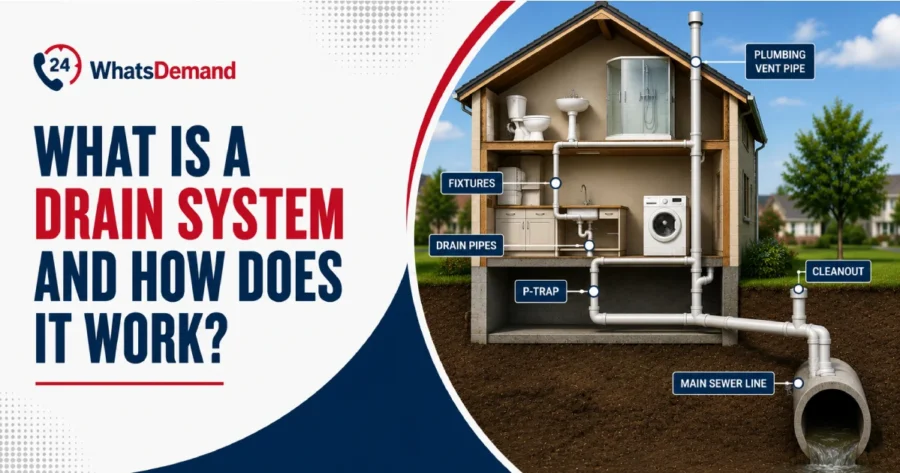
A drain system is a network of pipes that removes wastewater and excess water from a building, and it works through drainpipes, traps, vents, and sewer lines. In the United States, wastewater from homes flows through sanitary sewer systems to treatment facilities, while some properties use septic systems.
Water moves through drainpipes by gravity, with proper pipe slope supporting flow while P-traps block sewer gases and vent pipes balance air pressure. The types of plumbing systems vary based on if wastewater connects to a public sewer or an onsite septic system.
What Are the Main Functions of a Building’s Drain System?
The key functions of a building’s drain system are listed below.
- Water Accumulation Prevention: Drain systems remove wastewater and excess rainwater to prevent standing water, flooding, and waterlogged areas.
- Structural Protection: Proper drainage directs water away from foundations, walls, floors, and other building components that weaken from prolonged moisture exposure.
- Sanitation Maintenance: Drainage pipes carry wastewater, sewage, and other waste away from occupied areas to support clean and sanitary conditions.
Why Is Having a Proper Drain System Essential for Your Property?
Having a proper drain system is essential for your property because effective drainage prevents water damage and flooding by directing wastewater and excess water away from the building.
Proper drainage supports indoor hygiene by removing wastewater and sewage, reducing stagnant water, mold growth, and bacterial contamination, while protecting the structure and helping preserve property value. Poor or damaged drainage causes sewage backups, leaks, flooding, structural damage, and costly repairs.
What Are the Different Types of Drain Systems?
The different types of Drain Systems are listed below.
- Surface Drainage: Surface drainage removes water from the ground using channels, slopes, and surface drains and is used in yards, roads, driveways, and parking areas.
- Subsurface Drainage: Subsurface drainage collects excess groundwater with perforated pipes and drainage layers for lawns and agricultural areas.
- Stormwater Drainage: Stormwater drainage collects and redirects rainwater with gutters, downspouts, catch basins, and storm drains and is used for buildings and streets.
- Sanitary Drainage: Sanitary drainage carries wastewater from toilets, sinks, showers, and other plumbing fixtures into sewer lines for residential and commercial buildings.
- Foundation Drainage: Foundation drainage collects groundwater around a building’s foundation using perforated drain pipes and directs it to a safe discharge point to reduce basement moisture.
What Is the Difference Between Surface and Subsurface Drainage?
Surface drainage is a system that removes excess rainwater from the ground’s top layer using slopes, ditches, and catch basins, while subsurface drainage uses buried pipes to remove water from the soil.
In Texas, both systems can work together on a property because Surface drainage is simpler but does not address underground saturation, while subsurface drainage manages below-ground water but requires proper installation. Drain cleaning services help prevent blocked systems and water buildup for drainage problems.
What Are the Essential Components of a Residential Drain Line?
The essential components of a residential drain line are listed below.
- Residential Drainpipes: Carry wastewater from sinks, showers, toilets, and other fixtures toward the main drain line, providing a clear path for wastewater flow.
- P-Traps Under Fixtures: Retain water inside the curved pipe section to block sewer gases from entering the home and reduce unpleasant drain odors.
- Drain Cleanout Access Points: Provide accessible openings for inspecting and clearing drainpipes, allowing plumbers to reach blockages without removing fixtures.
- Plumbing Vent Pipes: Balance air pressure within the drainage system and help wastewater flow while reducing slow drains and gurgling sounds.
- Main Residential Sewer Line: Collects wastewater from drain lines and carries it away from the property to a municipal sewer system or septic system.
What Are French Drains, Trench Drains, and Catch Basins?
French drains use perforated pipes and gravel to collect underground water and redirect it away from foundations, lawns, and landscaped areas, while trench drains use long grated channels to capture surface runoff from driveways, patios, and other paved areas.
Catch basins collect stormwater, sediment, and debris in a below-ground box before directing water into a drainage pipe, making them useful for yards and low-lying areas. French drains suit foundations, trench drains suit driveways and paved surfaces, and catch basins suit stormwater management.
The comparison between French drains, trench drains, and catch basins is shown in the table below.
| Drainage Solution | Design | Installation | Best Applications |
|---|---|---|---|
| French Drain | Perforated pipe with gravel | Buried below ground with a slight slope | Foundations and landscaping |
| Trench Drain | Linear channel with grate | Set into paved surfaces | Driveways and patios |
| Catch Basin | Drainage box with inlet and outlet | Installed below grade and connected to pipes | Stormwater management and yards |
What Are the Common Signs of a Clogged Drain System?
The common warning signs of a clogged drain system are listed below.
- Slow Drainage: Water drains slowly from sinks, showers, or tubs, which indicate grease, hair, soap residue, or other buildup restricting the drainpipe.
- Standing Water: Water remains around sinks, showers, floor drains, or other fixtures, suggesting a restricted drainage path that worsen into a complete blockage.
- Foul Drain Odors: Persistent sewage or rotten odors indicate trapped waste, organic buildup, or stagnant water inside the drain system.
- Gurgling Drain Sounds: Bubbling or gurgling noises from drains signal trapped air caused by a clog, poor venting, or restricted wastewater flow.
- Recurring Drain Backups: Wastewater returns to sinks, tubs, or floor drains, which indicate a deeper blockage in the main drain line that requires inspection.
How Can You Tell If Your Main Sewer Line Is Blocked?
Your main sewer line is blocked if multiple sinks, toilets, tubs, or floor drains become slow or clogged at the same time. Sewage backups, gurgling sounds, and wastewater pooling around floor drains or outdoor sewer access points indicate a blockage deeper in the main line.
A professional sewer line inspection is required to locate the blockage and determine if cleaning or sewer line repair is needed.
What Should You Do If Water Is Backing Up Into Your Sinks or Tubs?
To stop water from backing up into sinks or tubs, follow the four steps listed below.
- Stop Using Affected Fixtures. Block running water in the backed-up sink or tub to prevent additional wastewater from entering the drain line.
- Limit Household Water Use. Avoid using nearby toilets, showers, washing machines, and other fixtures if multiple drains show backup symptoms.
- Check for a Localized Clog. Remove visible debris from the drain opening and use a sink plunger to loosen a blockage near the affected fixture.
- Check for Recurring Backup. Arrange a professional drain inspection if water continues backing up after basic clearing, when multiple fixtures are affected.
How Often Should a Drain System Be Cleaned and Inspected?
A drain system should be cleaned and inspected every 1 to 3 years, with more frequent service for older pipes, heavy household use, or recurring clogs and backups.
Routine inspections must check drainpipes, cleanouts, sewer lines, and drainage outlets for buildup, leaks, root intrusion, and flow problems. Regular maintenance helps identify drainage problems early and prevent blockages and water damage.
How Can You Prevent Common Plumbing Clogs in Your Home?
The practical ways to prevent common plumbing clogs are listed below.
- Kitchen Drain Prevention: Kitchen sinks use strainers to catch food scraps, while grease, cooking oil, and coffee grounds stay out of the drain.
- Bathroom Drain Prevention: Bathroom drains use hair catchers to collect hair and soap residue before buildup restricts water flow.
- Laundry Drain Prevention: Laundry drains use lint filters to capture fabric fibers and debris before they enter the drain line.
- Outdoor Drain Prevention: Outdoor drains remain free of leaves, dirt, and grass clippings to maintain proper stormwater flow.
- Proper Drain Disposal: Toilets flush only human waste and toilet paper, while drains must avoid grease, oil, wipes, paper towels, chemicals, and other unsuitable materials.
When Should You Upgrade or Replace Your Drain System?
The signs that a drain system needs an upgrade or replacement are listed below.
- Aging Drainpipes: Older pipes develop weak joints, cracks, or material deterioration that increases the risk of drainage failures.
- Pipe Corrosion: Corroded pipes restrict wastewater flow, weaken pipe walls, and contribute to leaks and recurring plumbing issues.
- Frequent Drain Blockages: Repeated clogs indicate damaged, undersized, or deteriorating drainpipes that require more than routine cleaning.
- Persistent Drain Leaks: Ongoing leaks around drain lines or pipe connections signal damage within the drainage system.
- Partial Repairs or Full Replacement: Localized damage only requires partial repairs, while widespread corrosion, recurring failures, or multiple damaged sections justify full drain system replacement.
Should You Clean Your Drain System Yourself or Hire a Professional Plumber?
You should hire a professional plumber when a drain problem involves recurring clogs, multiple blocked fixtures, sewage backups, or suspected sewer line damage.
Homeowners can safely handle minor localized clogs with a plunger or drain snake, but deeper blockages require professional tools and inspection equipment. Call a plumber to identify the cause and prevent pipe damage when basic methods fail or the blockage returns.