

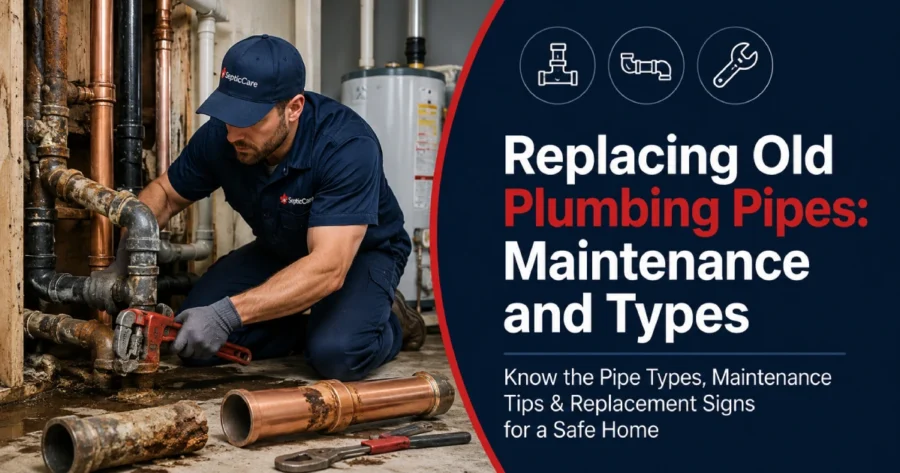
Replacing old plumbing pipes refers to removing and upgrading aging water and drain lines in homes in the USA when metal plumbing pipe systems, galvanized steel pipes, cast iron, or lead start corroding, leaking, or contaminating the water supply. The guide introduces common pipe types found in older homes and provides maintenance tips (pressure monitoring and sediment flushing) to help slow corrosion.
Replacement is recommended once pipes show discolored water because the signs indicate internal damage has reached the point where routine repair can no longer fix it. Reaching out to plumbing services helps pinpoint the right next step before minor issues turn into emergencies.
What Are the Common Types of Old Plumbing Pipes Found in Homes?
The common types of old plumbing pipes found in homes are listed below.
- Cast Iron Pipes: The pipes served drain, waste, and vent lines in homes constructed before the 1970s and corrode internally over decades of use.
- Lead Pipes: Municipal water systems installed lead service lines in homes built before 1986, and the metal leaches into drinking water over time.
- Copper Pipes: Builders favored copper tubing for supply lines starting in the 1960s for its corrosion resistance and long service life.
- Polybutylene Pipes: Manufacturers marketed the grey plastic pipes as a copper alternative throughout the 1970s and 1980s, and chlorine exposure causes premature failure.
- Orangeburg Pipes: Compressed wood pulp bonded with coal tar pitch forms the sewer line pipes, and tree root infiltration leads to collapse.
- Clay Pipes: Vitrified clay sewer laterals are found in homes constructed before the 1970s, a distinction covered in residential and commercial plumbing, and they crack under root pressure and soil shifting.
What Materials Were Historically Used for Old Sewer and Water Lines?
The materials historically used for old sewer and water lines are vitrified clay, cast iron, and bituminous fiber for sewer applications, and lead, brass, and galvanized steel for water supply. Sewer lines required a root-resistant composition, which clay and cast iron provided, while bituminized fiber offered a lightweight alternative in metal shortages.
Water supply demanded corrosion resistance and pressure tolerance, so plumbers relied on lead for malleability before switching to galvanized steel and eventually copper. Clay and cast iron withstand ground pressure for 75 to 100 years, while lead and bituminized fiber degrade faster and pose contamination or structural risks.
How Can You Tell If You Have Steel or Galvanized Metal Plumbing Pipes?
You can tell if you have steel or galvanized metal plumbing pipes when a magnet sticks firmly to the surface, revealing a dull gray color and threaded fittings instead of the reddish tone of copper.
Homes built before the 1960s used the pipes, and rust discoloration or low water pressure near threaded joints can signal decades of internal corrosion. A licensed plumber must confirm the material’s condition through scratch testing or a camera inspection before making any repair or replacement decision.
What Elements and Metals Are Used to Make Traditional Plumbing Pipes?
The elements and metals used to make traditional plumbing pipes are listed below.
- Copper: Copper resists corrosion, exhibits antimicrobial properties, and delivers water without contaminating supply lines, but the piping requires soldered joints with lead-free alloys.
- Lead: Plumbers valued the soft metal for its malleability and leak resistance, yet its toxic effects on the nervous system led to bans on its use in residential water lines.
- Iron: Cast iron withstands heavy structural loads in drain and waste systems, but internal rust buildup reduces water flow over decades of service.
- Zinc: Manufacturers apply a zinc coating to steel through galvanization, but the protective layer wears down over time, exposing pipes to corrosion and rust.
- Brass: Brass resists corrosion in fittings and valves, and older formulations contain trace amounts of lead that leach into water under certain conditions.
What Type of Plumbing Was Commonly Used in 1960s Homes?
The common types of plumbing used in 1960s homes are listed below.
- Galvanized Steel Pipes: The zinc-coated pipes carried water supply lines in most homes built and show internal rust after years of continuous use.
- Brass Pipes: Builders installed brass for fittings and short supply runs, valuing its corrosion resistance, but older formulations release trace amounts of lead into standing water.
- Transite Pipes: Some sewer and vent lines used this asbestos-cement composite for rigidity, and deteriorating fibers pose contamination risks once the material cracks.
- ABS Plastic Pipes: Builders introduced black plastic drainage pipe late in the decade as a lightweight alternative, but early formulations warp under prolonged heat exposure.
- Upgrade Options: Homeowners with aging supply or drain lines must consider replacing them with PEX or PVC, as outlined in the types of plumbing systems, to restore water quality and pressure.
What Type of Plumbing Pipe Was Standard in 1970s Construction?
The types of plumbing pipe standard in 1970s construction are listed below.
- PVC Pipes: Builders adopted white polyvinyl chloride for drain, waste, and vent systems by decade’s end, valuing its corrosion resistance and low material cost.
- CPVC Pipes: Manufacturers developed chlorinated polyvinyl chloride for hot and cold supply lines, offering heat tolerance that standard PVC lacked.
- ABS Pipes: Black acrylonitrile-butadiene-styrene pipe served drain lines with PVC, and solvent-cemented joints replaced older threaded connections in new builds.
- Copper Pipes: Copper supplanted galvanized steel as the preferred supply-line material, prized for its dependability compared with the corrosion-prone metal it replaced.
What Kind of Plumbing Systems Were Installed in 1920s Homes?
The plumbing systems installed in 1920s homes are listed below.
- Gravity-Fed Water Systems: Rooftop or basement tanks moved water through lead and galvanized steel pipes by gravity, and modern demand now requires pressurized municipal connections for adequate flow.
- Single-Stack Drainage Systems: One vertical cast-iron stack collects waste from every fixture in the house, and its narrow diameter causes frequent clogs at current household usage levels.
- Coal- and Wood-Fired Water Heating: Fuel-burning units warmed water via cast-iron and lead connections, and outdated venting fails to meet current safety codes, necessitating gas- or electric-powered replacements.
- Septic and Cesspool Systems: Rural properties relied on cesspools or septic tanks with clay-pipe outlets, and aging leach fields require planned drain-field upgrades to remain compliant.
- Lead and Galvanized Supply Lines: Water reached fixtures through lead piping, then galvanized steel piping, and corroded interiors require replacement with copper or PEX to ensure safe water quality.
When Was PVC Pipe Invented?
Polyvinyl Chloride (PVC) pipe was invented in 1926, when chemist Waldo Semon at B.F. Goodrich developed a plasticized form of the material after earlier German patents had made it too impractical for use.
German manufacturers produced the first PVC pipes in 1935, and US plumbing adoption followed decades later, gaining traction for drain systems by the late 1970s. PVC resists corrosion, weighs less, and never rusts or scales internally, unlike cast iron or galvanized steel.
What Are Old Drain Pipes Made Of Compared to Water Pipes?
Old drain pipes were made of cast iron, clay, and Orangeburg, while water pipes were made of lead, galvanized steel, and copper. Drain systems needed gravity-fed materials that resisted corrosion from waste and root intrusion, while water lines demanded pressure tolerance and non-porous surfaces to protect drinking water quality.
Cast iron dominated vertical stacks and sewer laterals, while lead and copper handled pressurized supply lines throughout the house. Cast iron and clay still serve drainage in older homes, while copper remains standard for water supply after lead fell out of use.
How Do Old Well Pipes Differ From Standard Household Plumbing?
Old well pipes differ from standard household plumbing through casing and drop pipe construction, which relied on galvanized steel to line the borehole and support the submersible pump. The casing prevents collapse and blocks contaminants, while the drop pipe carries water from the pump to the surface under constant pressure from the water column above it.
Household plumbing distributes water through copper or PVC at moderate pressure, a far lighter structural demand than a well’s vertical load. Well owners must schedule casing inspections, pump pulls, and water quality testing every few years to catch corrosion or sediment intrusion before they disrupt the water supply.
What Should You Know About Vintage Split-Level Home Plumbing Diagrams?
The factors you should know about vintage split-level home plumbing diagrams are the staggered-level layout, wet wall placement, vent stack routing, and original pipe materials.
Diagrams route a single main stack through multiple short flights of stairs, connecting the basement, mid-level, and upper floors, while a thick wet wall houses the water lines and clusters kitchen and bathroom fixtures nearby. The vent stack rises from the lowest level, runs through interior walls, and terminates above the roofline, protecting fixture traps on every floor. The original pipe material is galvanized steel or cast iron.
What Preventative Maintenance Steps Protect Old Pipes From Corrosion and Leaks?
The preventative maintenance steps that protect old pipes from corrosion and leaks are listed below.
- Water Pressure Monitoring: Keep supply pressure below 80 PSI, since excess pressure accelerates joint stress, and check pressure monthly with a gauge.
- pH Testing: Acidic water corrodes copper and galvanized steel faster. Annual testing flags when a neutralizer becomes required.
- Anode Rod Replacement: Replace water heater anode rods every 3 to 5 years to slow corrosion in the tank and pipes, and inspect the rod yearly for wear.
- Dielectric Union Installation: Connecting copper to galvanized steel without a dielectric union causes galvanic corrosion between the mismatched metals. Check connections yearly for rust or looseness.
- Water Softener Installation: Hard water scales pipe interiors. A softener reduces mineral buildup in older lines. Check resin and salt levels every 1 to 2 months.
- Sediment Flushing: Draining the water heater twice a year clears sediment that traps moisture against metal.
- Visual Leak Checks: Inspect exposed pipes and valves monthly for discoloration or mineral crust, which can indicate corrosion.
- Insulation Installation: Wrap exposed pipes in unheated spaces to prevent condensation that accelerates rust, and check their condition each fall before winter.
How Long Do Old Plumbing Pipes Last Before They Need Replacement?
Old plumbing pipes last 20 to 50 years for galvanized steel, 50 to 70 years for copper, and 80 to 100 years for cast iron, depending on the material, before they need replacement. Longevity is shaped by water chemistry (acidic or hard water accelerates corrosion), soil and temperature conditions, installation quality, and the consistency with which maintenance, like flushing or pressure checks, is performed.
Replacement becomes urgent once pipes show discolored water, frequent leaks, or persistent low pressure, as the signs indicate internal corrosion has already progressed beyond routine repair.
How Does PEX Lifespan Compare to Copper and Galvanized Steel?
PEX pipes last 40 to 50 years and resist corrosion, scaling, and freezing damage better than metal alternatives, while copper lasts 50 to 70 years but can corrode under acidic water, and galvanized steel lasts only 20 to 50 years due to its zinc coating rusting from the inside out. It makes PEX a common choice for repiping older homes, since it avoids the galvanic corrosion risk that occurs when copper and galvanized steel are connected directly.
What Are the Signs That Old Pipes in Your House Are Deteriorating?
The signs that old pipes in your house are deteriorating are listed below.
- Discolored Water: Brown or rusty water signals internal corrosion. Schedule an inspection before it worsens.
- Low Water Pressure: A persistent drop points to mineral buildup or corrosion narrowing the pipes, and must be checked soon.
- Frequent Leaks: Recurring leaks indicate the pipe walls are already weakened, warranting prompt professional assessment.
- Visible Corrosion: Rust, flaking, or discoloration on exposed pipes indicates worse damage inside and requires a quick inspection.
- Unusual Noises: Banging or rattling in the walls suggests loose or deteriorating pipes, worth a professional check.
- Metallic-Tasting Water: A metallic taste indicates leaching corrosion, which is best confirmed by inspection.
- Foul Odors: Musty or sewage smells can mean failing drain lines, warranting prompt evaluation.
Should You Upgrade Old Plumbing Steel Pipes?
Yes, you should upgrade old plumbing steel pipes, because galvanized steel lasts only 20 to 50 years and corrodes from the inside out, making repairs a temporary fix rather than a real solution. Patching isolated leaks can work for a single pinhole, but once corrosion is widespread, repeated repairs cost more over time than a full repipe.
Modern alternatives like PEX and copper resist rust, scaling, and galvanic corrosion, offering 40 to over 70 years of service with far less maintenance. Upgrading becomes worth it once you notice discolored water, falling pressure, or repairs stacking up, and at that point, calling in plumbing repair for an assessment helps confirm if replacement is needed.