

A flooded toilet needs quick action. Shut off the water supply first, then check whether the bowl is blocked, the tank keeps refilling, or the backup is coming from the drain or sewer line. That stops the overflow from getting worse and limits damage to the floor and subfloor.
Use the toilet's behavior to sort the problem fast. If the bowl is full and the water rises after a flush, treat it as a clog. If the tank never stops running, a tank part has failed. If other drains gurgle or water backs up in more than one fixture, the problem is downstream, not inside the toilet. Clean up the overflow, then dry the area and inspect for hidden moisture before you do anything else.
If the water is spreading beyond one fixture, the problem may extend beyond the toilet. Visit WhatsDemand plumbing help to find plumbing services based on your location and the type of problem.
What Should You Do Immediately When Your Toilet Floods
A flooded toilet needs a fast triage, not random plunging. Shut off the toilet's water supply before you try to clear the blockage. This stops more water from entering the toilet while you identify whether the problem is a bowl clog, tank fault, or drain backup.
Stop the water supply first. Turn the toilet's shutoff valve, which sits behind or beside the bowl near the floor, clockwise fully until it stops. That cuts water to the tank and keeps the overflow from getting worse. If the valve will not stop the flow, lift the tank lid and raise the float or press the flapper closed by hand. If that still fails, go to the main shutoff and stop the water at the house level, following main shutoff backup guidance and the emergency plumbing shutoff steps.
If the toilet keeps filling after you shut it down, the tank hardware is part of the problem. A stuck fill valve or a float that does not rise will keep sending water into the bowl. Leave the main water off and diagnose the fixture before you try to force another flush.
Practical rule: never flush again once overflow begins. A second flush pushes more discharge into an already blocked trapway and makes floor damage worse.
Do not plunge before you isolate the water. If the tank is still refilling, you add more water to the mess and waste time on the wrong fix. Once the supply is off, you can assess whether the blockage is in the bowl or whether the problem has moved beyond the toilet.
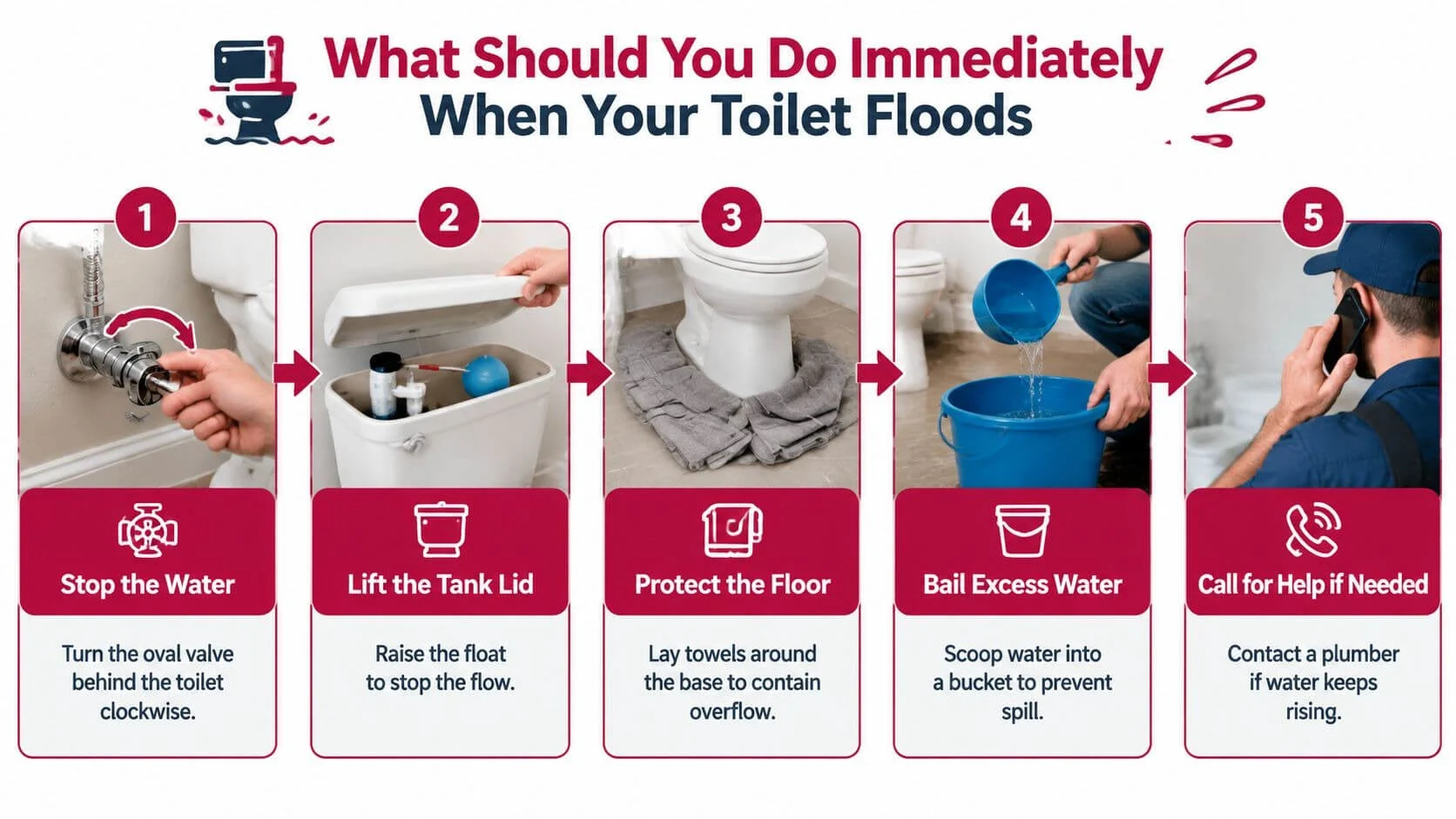
Protect the room next. Put towels around the base, keep people out of the puddle, and avoid direct contact with the water until the situation is controlled. An overflow can carry contamination onto the floor and nearby surfaces.
A good shutdown sequence is simple:
-
Turn the shutoff valve clockwise. Stop the water at the toilet first.
-
Lift the tank lid. Push the float up or close the flapper if the valve keeps running.
-
Lay towels around the base. Keep water from spreading across the bathroom.
-
Remove excess water carefully. Make room for later cleanup and inspection.
-
Call for help if the water keeps rising. Stop DIY work when the fixture will not stabilize.
After the water is off, check the floor, the base, and the trim for hidden moisture. Dry those areas completely before you flush again. If the toilet still refills or the water keeps rising, stay off the fixture and move straight to diagnosis.
Why Is Your Toilet Flooding?
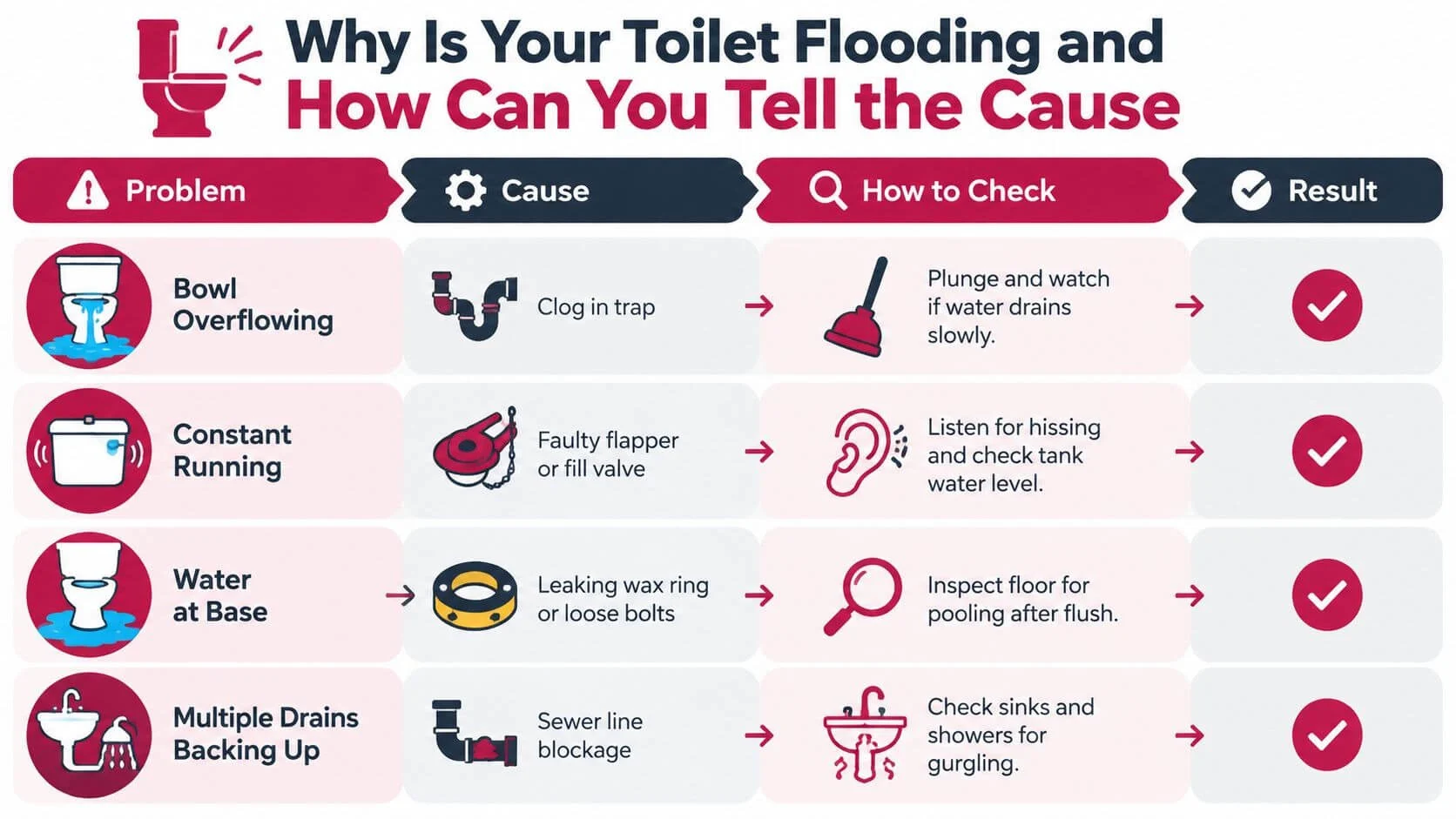
A flooded toilet usually comes from one of four problems: a bowl clog, a tank mechanism failure, a leak at the base, or a sewer or drain backup. Identify the source before you plunge. Look at where the water sits, whether the tank keeps running, and whether other fixtures act up at the same time. That triage saves time and keeps you from forcing the wrong fix.
How Can You Identify the Source of the Flood?
A bowl clog is the simplest case. The bowl rises high, drains slowly, or stops draining because something in the trapway is blocking flow. Too much toilet paper and non-flushable items cause many of these clogs, and a clog frequency summary notes that clogged toilets remain a common household problem.
A tank mechanism failure looks different. If the water keeps running after you lift the float, the fill valve or float assembly is sticking or failing. If the flapper will not seal, the toilet keeps feeding water into the bowl and can overflow even when the bowl itself is not badly clogged. Diagnostic guidance also points to a damaged flapper, faulty fill valve or float, and a downstream drainage issue as the main causes to separate before you force the bowl (diagnostic triage guidance).
Best check: if the tank still runs after you lift the float, treat it as a tank problem until you prove otherwise.
A leak at the base shows up as water on the floor around the toilet, not water over the rim. That pattern usually points to a wax ring or base seal issue, not a bowl blockage. A sewer or drain backup shows up when more than one fixture backs up or gurgles at the same time, especially sinks and showers. That pattern means the problem is likely downstream of the toilet, not inside the bowl.
Low-flow toilets matter here because they use less water but still have to move waste cleanly. Modern design has to balance water savings with waste removal, and a healthy toilet does that without trouble. When the system is not clear or the parts are worn, the toilet floods fast. Older flush toilet design and water-use history show why performance varies by fixture, but the practical issue in your bathroom is simple, clear flow or a mechanical fault, not theory (NKBA flush toilet history).
If multiple drains back up or gurgle at the same time, the blockage may be farther down the drainage system. Sewer line repair services address deeper blockages or damage that cannot be resolved by clearing the toilet alone.
How Do You Fix a Flooded Toilet Step by Step
To fix a flooded toilet, shut off the water, remove excess bowl water, clear the blockage with a flange plunger, and use a toilet auger if the clog does not clear. If the water is confined to one toilet and the tank refills normally, you are likely dealing with a simple bowl clog. If the tank will not refill correctly, the flush parts may be failing. If more than one drain is backing up, stop and treat it as a main sewer issue.
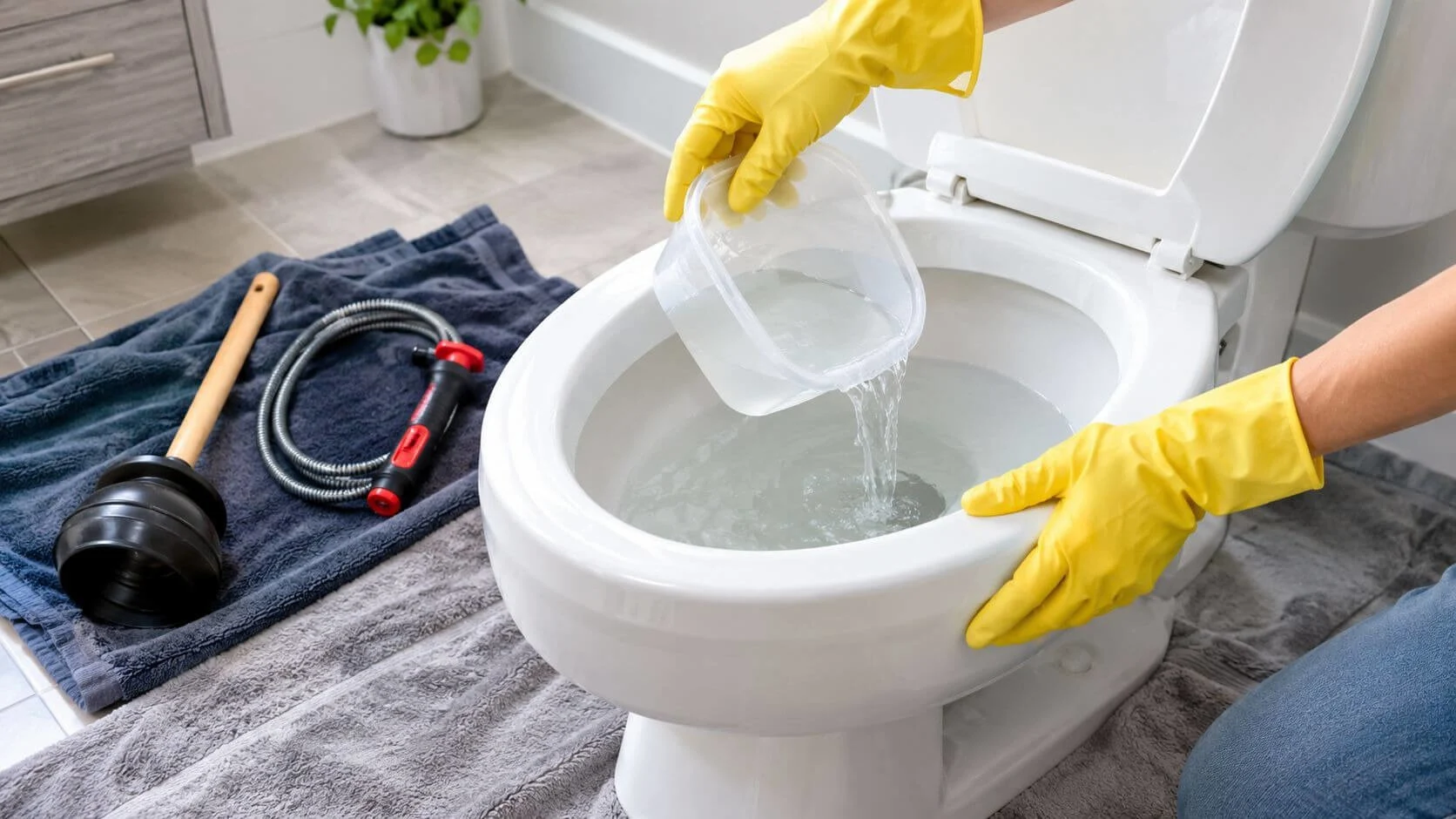
Put on gloves and lay towels around the base before you touch anything. Remove enough excess water to prevent splashing, but leave enough in the bowl to cover the flange of the plunger and maintain a seal over the drain opening. You need room for the plunger to seal over the drain opening without sending contaminated water across the room.
Use a flange plunger, not a flat sink plunger. The flange seals the toilet outlet better and moves pressure where it counts. Work the plunger with firm, steady strokes for about 15 to 30 seconds. That is enough time to break a reachable clog without wasting effort on random thrusts (repair sequence timing). If the bowl level drops, the clog is moving. If nothing changes, stop repeating the same motion.
If plunging does not work, switch to a toilet auger. It reaches deeper blockages that sit past the plunger's range and gives you a mechanical way to pull or break the obstruction. Use the auger before you reach for any chemical cleaner. Chemical guessing in a backed-up toilet usually makes cleanup worse, not better.
After the blockage loosens, restore the water slowly at the shutoff valve. Then run one test flush and watch the bowl and tank once. If the toilet drains normally, leave it alone. Repeated flushing after a partial clear can turn a manageable clog into a fresh overflow.
If the bowl still will not clear, or if sewage is present, stop the DIY work. At that point, use drain cleaning service coordination if the toilet line needs mechanical clearing, or call a licensed plumber if the tank or drain system is failing.
How Do You Clean Up Safely and Prevent Future
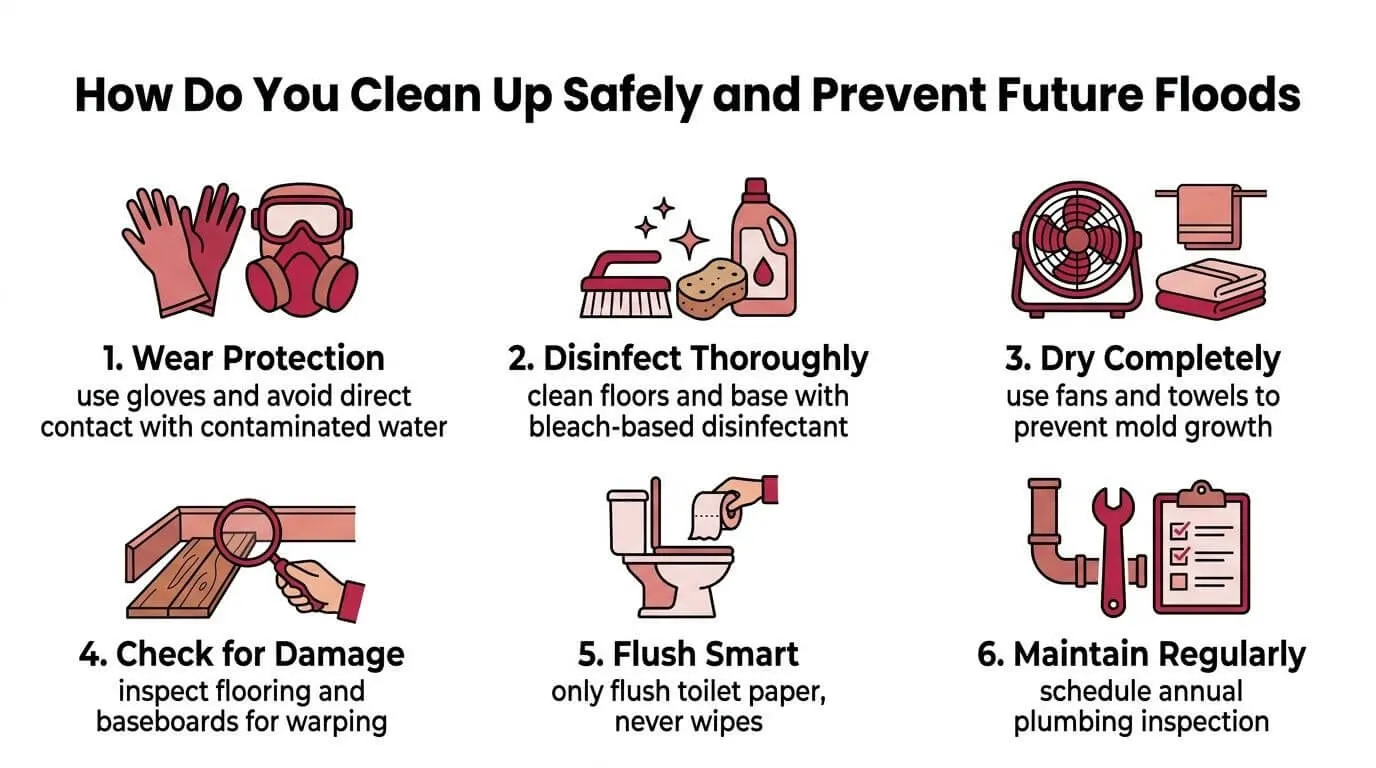
Treat toilet overflow as contaminated water. Put on gloves, keep people out of the bathroom, and remove standing water with towels or a wet vac if you have one. Toilet overflow can carry sewage and bacteria into the floor area and onto nearby surfaces, so do not handle it like a normal spill. contamination guidance
How Should You Clean the Contaminated Area?
Start at the toilet and work outward. Disinfect the bowl exterior, the base, the floor around the toilet, and any surface the water touched. If water ran into an adjacent room or below a finished floor, inspect that area right away. Visible overflow is only part of the job. Hidden moisture behind trim, under flooring, or on the ceiling below creates the bigger cleanup problem later. water-damage coverage guidance
Practical rule: photograph everything before you scrub it dry. Capture the floor, the toilet base, nearby baseboards, adjacent room thresholds, and any stain on the ceiling below.
Drying comes next. Run airflow, open the room, and keep checking the floor for softness, warping, or damp spots after the visible water is gone. If the bathroom floor still feels spongy or stays wet underneath, stop calling it a simple toilet issue. That points to material damage below the surface.
How Do You Prevent a Toilet From Flooding Again?
Use the cleanup to prevent the next overflow:
-
Flush only toilet paper. Keep wipes, paper towels, and other non-flushable items out of the bowl.
-
Check the flapper and fill valve. Replace parts that stick, hiss, or fail to seal.
-
Test the shutoff valve. Make sure the valve behind the toilet turns and closes fully.
-
Watch for repeated running. A toilet that refills by itself is warning you before it floods.
-
Keep the area dry after repairs. Lingering dampness hides damage under the floor.
A toilet flood often starts with a small part failure or a bad flushing habit. If you manage an older bathroom, inspect the tank parts before they fail and keep the floor dry after any cleanup. That lowers the chance of a second overflow.
Can a toilet overflow without being clogged?
Yes. A toilet can overflow without a bowl clog when the fill valve, float, or another tank component fails to control the incoming water. A backup farther down the drain or sewer line can also make a toilet overflow even when the toilet trap itself is clear.
What Other Toilet and Drain Problems Should You Watch For?
Prevent recurring toilet clogs. A partial blockage can eventually restrict the toilet enough to cause another overflow. Learn how to prevent toilet clogs by improving flushing habits, recognizing slow drainage, and addressing minor blockages before they worsen.
When Should You Call an Emergency Plumber for a Flooded Toilet
You call an emergency plumber when the toilet won't stabilize after basic shutoff and clearing steps, or when the problem has moved beyond the toilet itself. If water does not recede after plunging and augering, the blockage is deeper than the bowl. If multiple drains back up or gurgle at once, you're likely looking at a sewer-line issue, not a single toilet clog (sewer backup indicator).
Sewage in the water is a hard stop. So is a failed shutoff valve or fill valve that keeps sending water into the tank after you've tried to stop it manually. If the toilet floods again as soon as you restore water, the problem is not solved, it's active.
Water under flooring, into adjacent rooms, or onto the ceiling below changes the job from unclogging to damage control. That level of spread needs both plumbing and mitigation attention, because hidden moisture creates a second problem after the overflow ends. If the home's main line is suspected, stop using water in the house until the issue is inspected. Every sink, tub, and laundry discharge adds pressure to a system that already failed.
WhatsDemand helps homeowners find plumbing help based on their location and the type of plumbing problem they need addressed. When requesting help for a flooded toilet, explain whether water came over the rim or leaked around the base, whether the tank keeps running, and whether other fixtures are backing up.
If the toilet still floods after a proper shutoff and one round of unclogging, stop there. Call a licensed plumber, keep the main water off if the backup is widespread, and protect the floor until the system is stable again.