

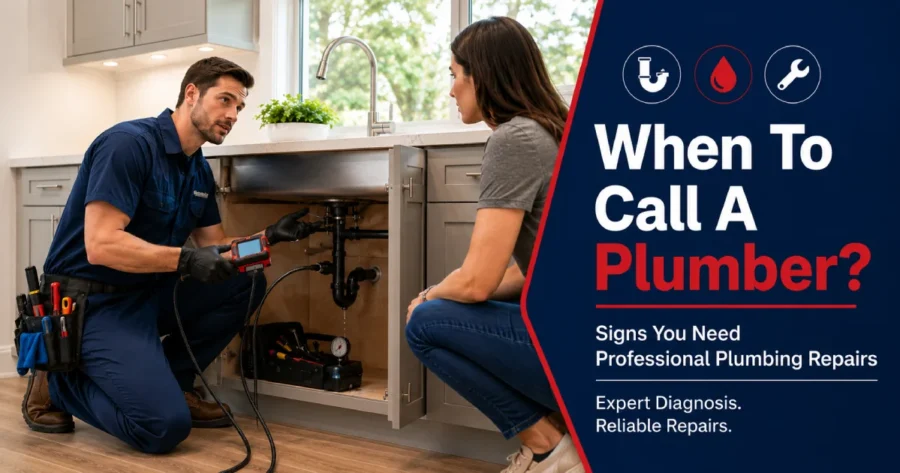
Call a plumber when water pressure drops, drains keep clogging, because the signs point to damage sitting deeper within the plumbing system. Households in the U.S. leak 900 billion gallons of water annually, equal to the water use of nearly 11 million homes, and 10% of homes leak 90 gallons every single day, which shows how it affects homes.
A plumbing fault rots framing, warps subfloors, and drives up that waste until the bill reflects it. Recognizing the signs you need professional plumbing repairs early, paired with routine plumbing services, keeps the system running within safe limits and prevents a minor fault from turning into an emergency.
What Are the Signs You Need to Call a Plumber for Repairs?
The signs that you need to call a plumber for repairs are listed below.
- Persistent Low Water Pressure: Homeowners notice a decline in flow from faucets and showerheads, signaling mineral buildup or a hidden pipe leak.
- Recurring Drain Clogs: Sinks and tubs drain more slowly each week despite chemical cleaner use, pointing toward a blockage deep within the sewer line.
- Unexplained Water Stains: Ceilings and walls develop brown or yellow patches near bathrooms and kitchens, revealing a slow leak behind the surface.
- Sudden Spike In Water Bills: Monthly water costs rise without a change in household usage, exposing a concealed leak somewhere in the plumbing system.
- Gurgling Toilet Sounds: Toilets produce bubbling noises after a nearby sink or shower drains, indicating trapped air from a partial blockage in the vent stack.
- Foul Sewage Odors: Rotten-egg smells emanate from drains or the yard, pointing to a cracked sewer pipe or a dry P-trap.
- Water Heater Rust Stains: Rust-colored water flows from hot water taps, warning of internal tank corrosion that precedes total failure.
When Should You Call a Plumber Instead of Attempting a DIY Fix?
The factors that determine when you should call a plumber instead of attempting a DIY fix are listed below.
- Pressurized Water Lines: Homeowners lose control once a pipe ruptures under pressure, making a plumber the safer option over a temporary patch.
- Gas Line Involvement: Water heaters and fixtures connect to the gas supply, and mishandling the components creates explosion or carbon monoxide risks beyond DIY skill.
- Sewage Backup: Contaminated wastewater exposes occupants to health hazards, so proper equipment and containment from a professional are required instead of a household fix.
- Recurring Blockages: Clogs that return within weeks point to root intrusion or pipe damage down the line, a cause that a plunger or snake does not resolve.
- Hidden Leaks Behind Walls: Moisture trapped inside framing or subfloors spreads unnoticed, and only a trained plumber can trace and repair the source without demolishing the structure.
- Insurance and Warranty Risk: Unlicensed repairs void manufacturer warranties or insurance claims tied to water damage, turning a cheap fix into a liability.
- Time and Tool Limitations: Specialized diagnostic tools and code knowledge sit outside a homeowner’s reach, allowing a professional to resolve the issue faster with less trial and error.
When Should You Call a Plumber for a Leaking Pipe?
You should call a plumber for a leaking pipe when the drip continues past a day or two, because what looks like a minor annoyance hides corrosion or a cracked fitting spreading moisture inside the wall.
Delaying the repair lets that trapped water rot framing, warp flooring, and grow mold, turning a small fix into a repair.
Do Slow or Frequently Clogged Drains Mean It is Time to Call a Plumber?
Yes, slow or frequently clogged drains mean it is time to call a plumber. A blockage that returns within 2 weeks after a plunger or drain snake signals grease buildup, root intrusion, or damage down the sewer line.
Multiple fixtures slowing at the same time point to a shared line problem rather than an isolated clog, a condition that a household tool does not clear. A plumber runs a camera inspection to locate the exact blockage and clears it at the source, preventing repeat backups and sewer line repairs.
Should You Call a Plumber for Low Water Pressure?
Yes, you should call a plumber for low water pressure when flow drops below the standard 40 to 60 PSI range for residential systems, since aging pipes, mineral buildup, or a hidden leak sit behind the reduced flow rather than the fixture itself.
Replacing a showerhead or faucet aerator only masks the symptom and delays finding the actual restriction inside the line.
When Should You Call a Plumber for Water Heater Problems?
You should call a plumber for water heater problems when hot water runs out faster than usual, temperature swings between scalding and cold, or the tank produces popping and rumbling noises from sediment buildup. Rust-colored water, a pooling base, or a pilot light that does not stay lit point toward internal corrosion, a failing thermocouple, or a cracked tank.
Gas-fired units add carbon monoxide and combustion risk, so any burning smell or scorch marks near the unit call for shutoff and inspection. It needs a diagnosis to determine if the issue needs a repair or a full replacement. Scheduling water heater repair before the unit fails prevents a sudden loss of hot water and emergency service.
Is Discolored or Foul-Smelling Water a Reason to Call a Plumber?
Yes, discolored or foul-smelling water is a reason to call a plumber. Brown or yellow tints trace back to rusting galvanized pipes or a corroding water heater tank, while a green or blue tinge signals copper pipe corrosion eating through the line.
A rotten-egg odor points to hydrogen sulfide gas from bacteria inside the water heater, and a sewage-like smell means a dry P-trap. Paying attention to when the smell appears, if from hot taps only or throughout the house, helps a plumber pinpoint the exact source before contamination or pipe failure worsens.
When Should You Call a Plumber for Sewer Line Problems?
You should call a plumber for sewer line problems when multiple drains back up at the same time. Water surfacing in a tub or shower after flushing the toilet points to a shared blockage deep in the main line.
Sewage odors near floor drains, gurgling sounds from toilets, and soggy patches in the yard signal a cracked or root-infested sewer pipe leaking below ground.
Should You Call a Plumber If Multiple Drains Are Backing Up?
Yes, you should call a plumber if multiple drains are backing up, fixtures are slowing or overflowing at the same time, which points to a blockage in the main sewer line rather than an isolated clog at one drain.
Water surfacing in a tub or shower right after flushing the toilet confirms the lines share a common path down, a condition a plunger cannot reach. A plumber runs a camera inspection to locate the exact blockage and clears it before raw sewage backs up.
When Is a Burst Pipe a Plumbing Emergency?
A burst pipe is a plumbing emergency the moment uncontrolled water discharge exceeds what a shutoff valve can contain. Supply lines operate under 40 to 60 PSI of static pressure that turns a single rupture into rapid flooding within minutes.
Compromised copper, PEX, or galvanized lines under slab or behind drywall create hydrostatic damage to framing, insulation, and subflooring before the leak becomes apparent.
Freeze-related ruptures, water hammer failures, and corrosion-induced blowouts all require emergency mitigation, including main shutoff and pressure relief, to prevent mold colonization and rot.
Can Unexplained Water Damage or High Water Bills Mean You Need a Plumber?
Yes, unexplained water damage or high water bills mean you need a plumber, because a spike in monthly usage without a change in household habits traces back to a hidden leak inside a wall cavity, slab, or underground supply line.
Water stains on ceilings, bubbling paint, or soft spots on flooring confirm moisture has been accumulating out of sight long before it becomes visible. An expert plumber uses leak detection equipment to know the exact source of the leak in the plumbing system.
What Plumbing Problems Require an Emergency Plumber Right Away?
The plumbing problems that require an emergency plumber right away are listed below.
- Burst or Ruptured Pipes: Water under 40 to 60 PSI of pressure floods a space within minutes once a line ruptures, requiring immediate main shutoff and rapid repair.
- Sewage Backup: Raw waste surfacing through drains or toilets exposes occupants to contamination, demanding proper extraction equipment rather than a household fix.
- Gas Water Heater Malfunction: A burning smell, scorch marks, or a pilot light that does not stay lit near a gas-fired unit signals a combustion or carbon monoxide risk that needs immediate shutoff.
- Frozen Pipes On The Verge Of Bursting: Pipes that stop flowing in freezing temperatures risk rupturing as ice expands, calling for emergency plumbing services before pressure builds inside the line.
Why Is Calling a Plumber Early Better Than Delaying Repairs?
Calling a plumber early is better than delaying repairs because a small leak or slow drain left unattended keeps spreading moisture behind walls and under floors, turning a minor fix into a repair. Delayed action lets corrosion and pipe damage compound out of sight.
Emergency applies once a delayed issue escalates into a burst pipe or sewage backup, adding urgency to the repair itself. Addressing common plumbing problems the moment they appear keeps the damage contained, rather than reactive and inflated.
How Can Professional Plumbing Repairs Prevent Future Problems?
Professional plumbing repairs prevent future problems through proper diagnosis that traces an issue back to its root cause. A plumber follows the International Plumbing Code (IPC) in the USA, ensuring fittings, materials, and pressure ratings match what the system requires instead of a quick fix.
Correct repairs stop recurring stress on aging pipes, reducing the chance of a small leak turning into a burst line. Scheduling plumbing repair work with a professional keeps the entire system operating within safe pressure and flow standards, extending its lifespan and lowering the risk of repeat emergency calls.
What Should You Expect During a Professional Plumbing Service Call?
The things you should expect during a professional plumbing service call are listed below.
- Initial Problem Assessment: A plumber asks about the symptoms observed, such as when the leak started or which fixtures are affected, before beginning any work.
- Visual and Diagnostic Inspection: The technician inspects the plumbing system using visual checks or specialized camera equipment to determine whether the issue is on the surface or deeper within the pipes.
- Repair or Replacement Recommendation: Based on the inspection, the plumber explains whether the problem can be repaired or if replacing the affected fixture or pipe is the better solution.
- On-Site Repair Work: The plumber completes the necessary repairs using professional tools and code-compliant materials to restore the plumbing system.
- Final System Test: Water flow, pressure, and drainage are tested to verify the repair has resolved the issue before the job is complete.
- Post-Service Documentation: The homeowner receives a summary of the completed work, parts used, and any applicable warranty information for future reference.