

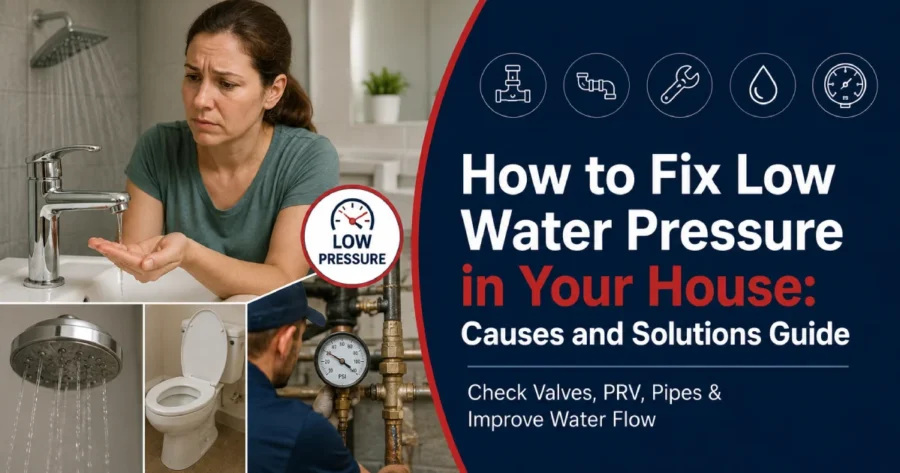
To fix low water pressure in your house, identify the exact cause, as different plumbing issues require different solutions. Whole-house low water pressure in the USA results from a faulty pressure-reducing valve (PRV), a closed shut-off valve, corroded pipes, or a main water supply problem, while low pressure at a single fixture points to a clogged aerator, worn cartridge, or blocked supply line.
Simple maintenance resolves issues, but persistent pressure loss, hidden leaks, or damaged pipes must be inspected by a plumber for low water pressure to ensure an accurate diagnosis and lasting repair.
Why Is the Water Pressure Low in My House?
The common causes of low water pressure are listed below.
- Municipal Supply Shortage: A water utility lowers pressure in a neighborhood due to water main breaks, repairs, or peak demand hours.
- Closed Shut-Off Valve: A main shut-off valve or water meter valve restricts flow when turned away from the fully open position.
- Faulty Pressure Reducing Valve: A malfunctioning PRV fails to regulate incoming supply, dropping pressure throughout the house.
- Corroded Pipes: Galvanized steel pipes develop rust and scale over decades, narrowing the interior diameter and limiting flow.
- Mineral Buildup Inside Pipes: Calcium and magnesium from hard water accumulate on pipe walls, gradually restricting the water passage.
- Hidden Water Main Leak: A cracked or broken supply pipe diverts water underground, lowering pressure without visible signs indoors.
- Clogged Fixture Aerator: Sediment and mineral deposits collect inside a faucet or showerhead screen, weakening flow at that single fixture.
- High Household Water Demand: Multiple fixtures running at once split the available flow, reducing pressure at each tap.
How Can You Fix Low Water Pressure in a House?
To fix low water pressure in a house, follow the seven steps listed below.
- Check Other Fixtures: Turn on faucets in different rooms to confirm if low pressure affects the entire house or a single fixture.
- Test Water Pressure with a Gauge: Attach a pressure gauge to an outdoor spigot and record the reading to compare against the normal 40-60 PSI range.
- Inspect the Main Shut-Off Valve: Locate the main shut-off valve near the water meter and turn it fully counterclockwise to open it completely.
- Clean the Faucet Aerator: Unscrew the aerator from the affected faucet and soak it in white vinegar to dissolve mineral deposits.
- Adjust the Pressure Reducing Valve: Turn the adjustment screw on the PRV clockwise in small increments and monitor the gauge until pressure reaches the target PSI.
- Flush Sediment from Supply Lines: Open an outdoor faucet fully and let water run for 5 minutes to clear loose sediment from the pipes.
- Install a Water Pressure Booster Pump: Mount a booster pump on the main line to raise pressure in homes affected by low municipal supply.
Is Low Water Pressure a Major Plumbing Emergency?
Yes, low water pressure is a plumbing emergency when it appears suddenly and signals a burst pipe, hidden leak, or main water line failure rather than routine mineral buildup.
Warning signs requiring immediate attention include a pressure drop within 2-3 minutes, water pooling near walls or the foundation, discolored water, or a hissing sound coming from inside a wall. Residents who notice the signs must contact emergency plumbing services right away to stop the leak before it causes damage.
What Is Considered Normal Water Pressure for a House?
A considered normal water pressure for a house is 40 to 80 PSI, with 60 PSI as the ideal comfort target at the tap. The Texas Commission on Environmental Quality (TCEQ) requires public water systems to deliver potable water at a minimum pressure of 35 PSI, and residential plumbing codes require a pressure-reducing valve once supply exceeds 80 PSI.
Pressure below 40 PSI produces weak flow at faucets and appliances, while pressure above 80 PSI strains pipes, valves, and fixtures, raising the risk of leaks and premature equipment failure.
How Do You Test Your Home’s Water Pressure Yourself?
To test a home’s water pressure, follow the six steps listed below.
- Purchase a Water Pressure Gauge: Buy a screw-on pressure gauge from a hardware store or home improvement retailer for a low-cost, accurate reading.
- Turn Off All Fixtures: Shut off every faucet, showerhead, and water-using appliance inside the house to isolate the static supply pressure.
- Attach the Gauge to an Outdoor Spigot: Screw the gauge directly onto an outdoor hose bib or spigot located at the front or back of the house.
- Open the Spigot Fully: Turn the spigot handle to the fully open position and let water flow into the gauge to register a reading.
- Read the Dial: Check the needle position on the gauge face and record the PSI number it displays.
- Compare the Reading to the Normal Range: Match the recorded PSI against the standard 40-80 PSI range to determine if the house has low, normal, or high pressure.
Why Did My Water Pressure Suddenly Drop Throughout the House?
Your water pressure suddenly drops throughout the house because a main shut-off valve or water meter valve gets bumped into a closed position, cutting supply to every fixture at once.
A failed pressure reducing valve, a burst pipe underground, or an emergency main break on the municipal line produces the same whole-house symptom without warning. Residents must know the exact trigger by checking valve positions first, then watching the water meter for movement that signals an active leak.
Could Municipal Supply Issues or Peak Usage Hours Be Causing Low Water Pressure?
Yes, municipal supply issues or peak usage hours cause low water pressure by reducing the volume delivered to a neighborhood’s distribution line. Water main breaks, scheduled utility repairs, and heavy demand in weekday mornings and evenings pull pressure down in multiple households sharing the same line.
Verify a supply-side issue by checking with neighbors for a shared drop in pressure, calling the water utility to confirm reported outages, and monitoring if pressure returns after peak hours pass.
Could a Closed Main Water Shut-Off Valve Be Restricting Water Flow?
Yes, a closed main water shut-off valve restricts flow by blocking part of the pipe opening, reducing the volume of water that reaches every fixture in the house.
Residents must locate the valve near the water meter or where the supply line enters the home, then turn the handle fully counterclockwise to confirm it sits in the completely open position. A valve stuck in that position leads to a broader water shutoff valve problem, which a plumber diagnoses through inspection, repair, or full replacement.
How Does a Faulty Pressure Reducing Valve (PRV) Affect Water Flow?
A faulty pressure reducing valve affects water flow through a worn diaphragm or spring that fails to regulate incoming pressure to a safe household level. The valve, mounted on the main line, produces weak flow, sudden pressure spikes, or banging pipes when it malfunctions.
An incorrectly adjusted PRV shows the same inconsistent flow, since the screw setting throttles supply too low or lets excess pressure pass through.
Is a Water Main Leak Causing Your Low Water Pressure?
Yes, a water main leak causes your low water pressure by diverting supply through a crack or break before it reaches the house, lowering flow at every fixture without an obvious source. Check for it by recording the water meter reading, shutting off all fixtures for 1-2 hours, then checking the meter again for movement that signals water escaping underground.
A confirmed main leak overlaps with sewer and water line repair work, since damaged supply lines run close to sewer lines and need a licensed plumber’s inspection.
Why Is Water Pressure Low in Only One Faucet or Fixture?
Water pressure runs low in only one faucet or fixture because of a localized blockage instead of a whole-house supply problem.
A clogged aerator screen traps mineral deposits and sediment right at the spout, while a worn or damaged cartridge inside the faucet body restricts the internal water passage. A closed fixture supply valve under the sink or a section of corroded pipe feeding that line produces the same isolated drop in flow.
Why Is Low Water Pressure Only Affecting Hot Water?
Low water pressure affects only hot water because the fault sits inside the water heater or the hot water line. Sediment buildup inside the water heater tank narrows the outlet, a clogged or partially closed hot water shut-off valve restricts flow, and mineral scale inside the hot water pipes reduces the interior diameter over time.
A failing dip tube, a clogged heating element, or a corroded heat exchanger inside the unit lead to a water heater repair need, which a licensed technician diagnoses and fixes.
Can Corroded or Old Plumbing Pipes Cause Low Water Pressure?
Yes, corroded or old plumbing pipes cause low water pressure by reducing the diameter with rust and mineral scale, restricting the volume of water able to pass through. The pipe descaling clears that buildup in pipes still sound, while pipes with corrosion or pinhole leaks need full replacement instead.
How Do You Fix Low Water Pressure Caused by Aerator Clogs?
To fix low water pressure caused by aerator clogs, follow the six steps listed below.
- Unscrew the Aerator from the Faucet Spout: Turn the aerator counterclockwise by hand or with pliers wrapped in a cloth to remove it from the spout.
- Disassemble the Aerator Components: Separate the screen, washer, and housing pieces to expose every surface holding sediment and mineral buildup.
- Soak the Parts in White Vinegar: Submerge the screen and housing in undiluted white vinegar for 30 to 60 minutes to dissolve mineral scale.
- Scrub the Screen with a Small Brush: Use an old toothbrush to remove loosened debris from the mesh screen after soaking.
- Rinse and Reassemble the Aerator: Flush the parts under running water, then reassemble the washer, screen, and housing in their original order.
- Reattach or Replace the Aerator: Screw the cleaned aerator back onto the faucet spout, or install a new aerator if corrosion or damage prevents proper reassembly.
How Can You Adjust Your Home’s Water Pressure Regulator?
To adjust a home’s water pressure regulator, follow the eight steps listed below.
- Locate the Pressure Regulator: Find the bell-shaped valve on the main water line, near the water meter or where the line enters the house.
- Attach a Pressure Gauge: Screw a pressure gauge onto the nearest outdoor spigot or a hose bib close to the regulator.
- Record the Current Reading: Open the spigot fully and note the starting PSI displayed on the gauge before making adjustments.
- Loosen the Locknut: Turn the locknut on top of the regulator counterclockwise to free the adjustment screw underneath it.
- Turn the Adjustment Screw Clockwise to Raise Pressure: Rotate the screw clockwise in quarter-turn to increase PSI toward the target range.
- Turn the Adjustment Screw Counterclockwise to Lower Pressure: Rotate the screw counterclockwise in small increments to bring excessive PSI back down.
- Recheck the Gauge After Each Adjustment: Watch the gauge reading after every quarter-turn to confirm pressure moves toward the 40-60 PSI target.
- Tighten the Locknut to Secure the Setting: Turn the locknut clockwise once the gauge shows the desired PSI to lock the regulator in place.
How Do You Clear Mineral Deposit Buildup in Supply Lines?
Mineral buildup narrows the inside of a pipe because calcium and magnesium from hard water stick to the walls and slow the flow.
Clears light buildup by flushing the lines through an outdoor faucet left open for 5 minutes, and has a plumber descale pipes with moderate scale. Replaces any section too corroded or blocked to clean. Repeated buildup means hard water is the real issue, and water quality services can install a softener or filter to stop it from coming back.
Can Installing a Water Pressure Booster Pump Fix the Problem?
Yes, installing a water pressure booster pump fixes low pressure caused by weak municipal supply, a long service line, or a multi-story house where flow weakens before reaching upper floors, and it raises psi at every fixture while keeping flow steady when several run at once.
A booster pump does not fix pressure loss from a closed valve, clogged pipe, or hidden leak, since problems block flow instead of reducing it. Installation needs a licensed plumber to size the pump correctly, connect it to the main line, and wire it into the home’s electrical system.
When Should You Call a Licensed Plumber for Low Water Pressure?
You should call a licensed plumber for low water pressure when a hidden water leak keeps draining supply despite every fixture staying closed, when a burst or corroded pipe causes visible water damage, or when a faulty PRV fails to hold a steady PSI even after adjustment.
Persistent pressure loss that returns after cleaning aerators, checking valves, and flushing supply lines points to a deeper issue inside the plumbing system that needs a professional diagnosis. A resident unsure if the problem is DIY-fixable must call a professional plumber for a full inspection before the damage spreads.
How Can You Prevent Low Water Pressure Issues in the Future?
You can prevent low water pressure issues in the future through routine plumbing inspections and regular maintenance. Scheduling a yearly checkup covers testing the main shut-off valve for full range of motion, inspecting exposed pipes for corrosion or scale, monitoring the water meter for signs of a hidden leak, and verifying the pressure regulator holds a steady reading in the 40-60 PSI range.
Cleaning aerators every 3-5 months and flushing supply lines once a year keeps mineral buildup from narrowing pipes before it becomes a bigger problem.