

Commercial plumbing refers to the plumbing systems installed in business and commercial properties to supply clean water, remove wastewater, and support fixtures, equipment, and other water-dependent operations. Unlike residential plumbing, commercial systems typically serve more people, more fixtures, and larger buildings, making reliability essential for daily operations.
Emergency plumbing services are crucial for maintaining smooth operations in commercial settings, as plumbing failures can rapidly disrupt employees, customers, sanitation, and essential business functions. Common issues that necessitate emergency plumbing services include major drain blockages, water heater failures, pressure and valve problems, damaged toilets and urinals, pipe corrosion and leaks, and sewer line backups. Regular inspections and preventive maintenance are vital to identify these problems early, preventing them from escalating into costly disruptions.
1. Major Drain Blockages and Clogs
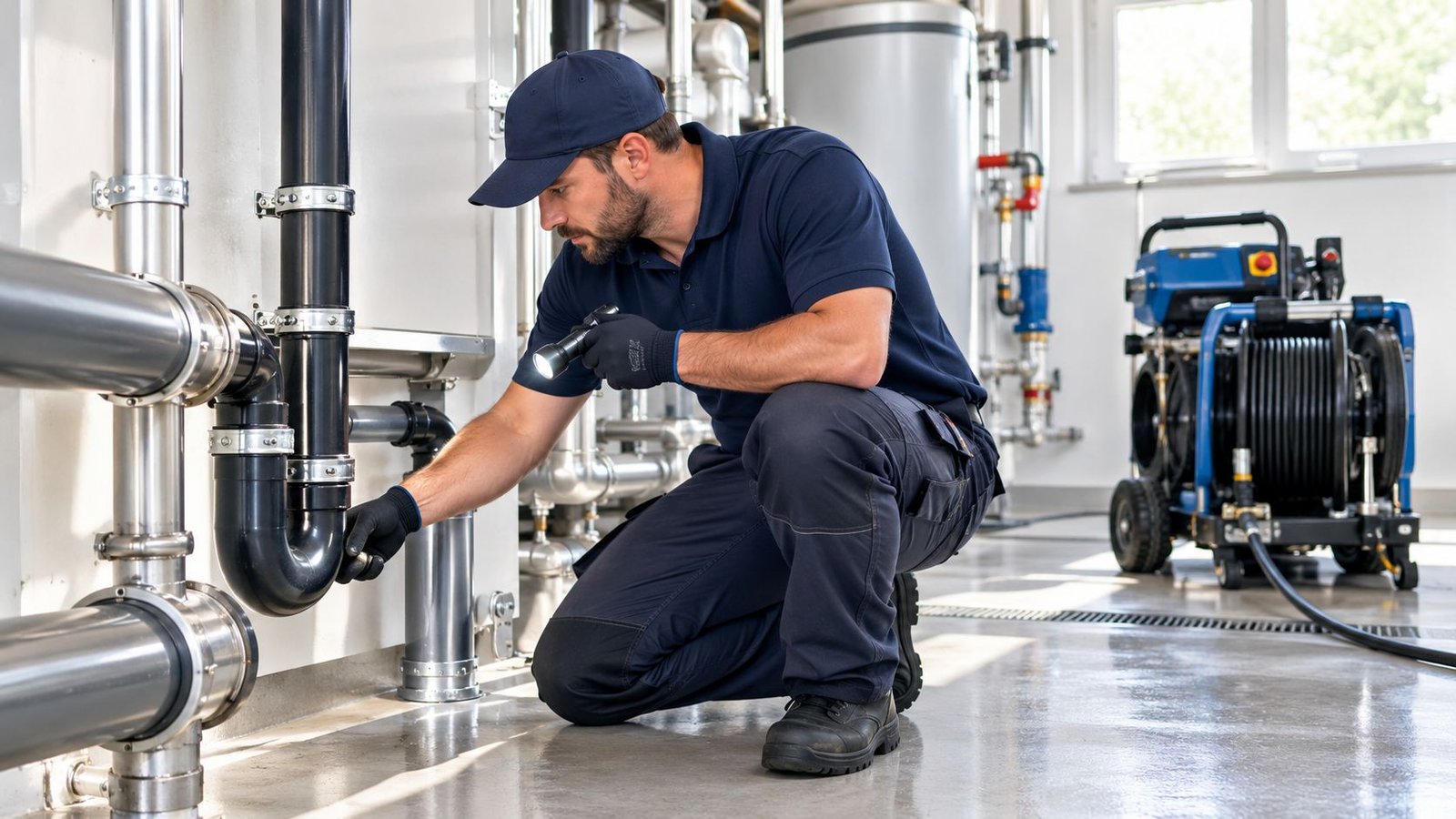
Major drain blockages and clogs are a common commercial plumbing issue because commercial properties handle high volumes of wastewater through frequently used sinks, toilets, floor drains, and other fixtures. Grease, food waste, paper products, hair, sediment, mineral buildup, and foreign objects can accumulate inside drainage pipes and restrict wastewater flow. Structural problems such as damaged pipes or tree root intrusion can also cause recurring blockages. Commercial plumbers typically resolve these problems using mechanical drain cleaning or commercial hydro jetting for drain lines, while recurring blockages may require a camera inspection to identify damaged pipes or other underlying causes.
2. Water Heater and Boiler Failure
Water heater and boiler failure is a commercial plumbing issue because businesses often depend on hot water for sanitation, cleaning, food preparation, heating, and other daily operations. Sediment and mineral buildup, corrosion, faulty heating components, excessive pressure, aging equipment, and inadequate maintenance can cause these systems to perform poorly or fail. A commercial plumber can diagnose the equipment and repair or replace defective components, remove buildup, correct pressure problems, or replace the entire unit when the system is severely damaged or beyond economical repair. For businesses evaluating repair options, commercial water heater repair service guidance can help frame the next step.
3. High Water Pressure and Valve Issues
High water pressure and valve problems are commercial plumbing issues because excessive pressure can damage pipes, fixtures, and plumbing equipment, while faulty valves can prevent businesses from properly controlling their water supply. High pressure from the municipal supply, malfunctioning pressure-reducing valves, corrosion, mineral buildup, and worn plumbing components can contribute to these problems. A commercial plumber can test the system pressure, inspect the valves and regulators, adjust or replace pressure-control equipment, and replace damaged shutoff valves to restore proper water flow and system control.
4. Toilet and Urinal Problems
Toilet and urinal problems are common commercial plumbing issues because these fixtures experience frequent use and can quickly affect restroom availability when they malfunction. Clogs, excessive flushing of inappropriate materials, worn flush valves and seals, mineral buildup, damaged supply connections, and blocked drainage lines can cause running toilets, weak flushing, leaks, or overflows. Commercial plumbers can clear blockages and repair or replace defective components, while recurring problems may require an inspection of the building's larger drainage or sewer system to identify an underlying issue.
5. Pipe Corrosion, Scale, and Slab Leaks
Pipe corrosion, scale, and slab leaks are serious commercial plumbing issues because they can reduce water flow, weaken plumbing infrastructure, and allow concealed leaks to cause extensive building damage. Aging pipes, hard water, mineral deposits, corrosive water conditions, high pressure, shifting soil, and deteriorating pipe connections can contribute to these problems. A commercial plumber can use leak detection and pipe inspection methods to locate the affected area, then repair or replace damaged sections, reroute plumbing, or recommend repiping when widespread deterioration makes repeated repairs impractical.
6. Foul Odors and Sewer Line Backups
Foul odors and sewer line backups are commercial plumbing issues because they can indicate drainage or sewer failures that create sanitation concerns and disrupt normal business operations. Blocked sewer lines, grease and organic buildup, damaged pipes, tree root intrusion, defective traps, and excessive wastewater flow can allow sewer gases or wastewater to enter the property. A commercial plumber can identify the source through professional inspection and clear obstructions using mechanical cleaning or hydro jetting, while damaged or collapsed sewer lines may require repair or replacement to prevent recurring backups.
What Is Commercial Plumbing?
Commercial plumbing is the installation, maintenance, inspection, and repair of plumbing systems used in non-residential buildings and businesses. These systems supply clean water, distribute hot and cold water, remove wastewater, and support plumbing fixtures and specialized equipment. Commercial plumbing serves properties such as office buildings, restaurants, hotels, retail stores, schools, healthcare facilities, industrial buildings, and warehouses. Depending on the property, the system may include water supply and drainage pipes, water heaters, boilers, toilets, urinals, pumps, valves, grease traps, and backflow prevention devices.
How Does Commercial Plumbing Differ from Residential Systems?
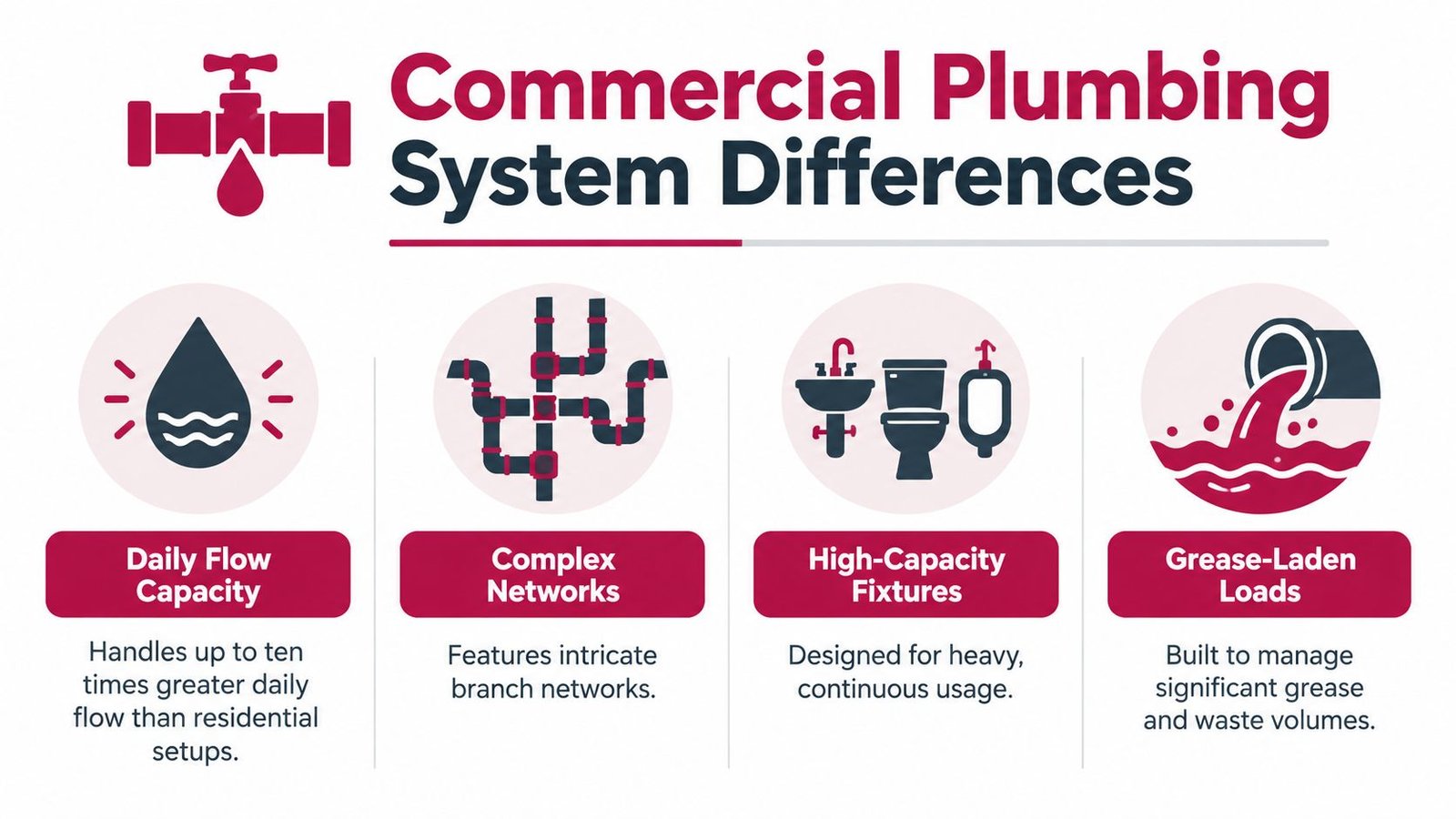
Commercial and residential plumbing systems differ significantly in size and complexity. Commercial plumbing systems are generally larger and more intricate, designed to accommodate a greater number of people, fixtures, and water-consuming equipment. These systems typically experience higher and more frequent water usage, often incorporating specialized equipment and multiple bathrooms or service areas. In contrast, residential plumbing systems cater to fewer occupants and fixtures, resulting in simpler maintenance requirements.
Commercial plumbing systems require structured preventive maintenance due to their complexity and the demands placed on them, while residential systems usually have less complicated maintenance needs. Overall, the differences in water demand, fixture variety, and equipment complexity highlight the distinct nature of commercial and residential plumbing systems.
Why Are Commercial Plumbing Issues More Urgent for Businesses?
Commercial plumbing issues are more urgent for businesses because a plumbing failure can interrupt operations, create health and safety concerns, and lead to property damage or compliance problems. A major leak, sewer backup, or unusable restroom can restrict access to parts of a building and interfere with employees, customers, tenants, or business processes. Water and sewage can also damage building materials and equipment while creating sanitation hazards. Prompt professional repairs help limit damage, maintain safe conditions, and reduce business downtime.
What Are the Most Common Signs of a Commercial Plumbing Problem?
The most common signs of commercial plumbing problems are listed below.
- Slow-draining sinks, toilets, urinals, or floor drains
- Recurring drain blockages
- Unusually high or low water pressure
- Unexpected increases in water consumption
- Damp areas or unexplained water stains
- Persistent foul or sewage odors
- Gurgling sounds from drains or toilets
- Inconsistent hot water
- Leaking pipes, fixtures, or equipment
- Water pooling around the property
How Often Should Commercial Plumbing Systems Undergo Routine Inspections?
Commercial plumbing systems should generally undergo a professional inspection at least once a year, although high-use or higher-risk properties may require more frequent inspections. The appropriate schedule depends on factors such as the building’s age, plumbing complexity, occupancy, water consumption, business type, and history of plumbing problems. Restaurants, healthcare facilities, industrial properties, and older buildings may benefit from more frequent inspections because their plumbing systems experience heavier use or exposure to grease, sediment, chemicals, and other damaging factors. Preventive maintenance between professional inspections can help identify and correct minor problems before they cause operational disruptions.
What Role Do Backflow Preventers and Grease Traps Play in Code Compliance?
Backflow preventers are essential for maintaining the safety of potable water supplies by preventing potentially contaminated water from flowing backward into clean water lines. Grease traps capture fats, oils, grease, and food solids before they enter commercial drainage and sewer systems, helping reduce blockages and wastewater problems. Both systems contribute to public health protection and compliance with applicable local plumbing, health, and environmental requirements. Businesses may need to arrange routine testing, inspection, cleaning, and maintenance of backflow preventers per the requirements that apply to their property and jurisdiction.
When Should You Attempt Calling a Licensed Commercial Plumber?
You should call a licensed commercial plumber when a plumbing problem affects business operations, involves a significant leak or sewer issue, requires specialized equipment, or cannot be safely resolved through basic maintenance. Professional assistance is appropriate for major drain or sewer blockages, significant leaks, sewer backups, water heater or boiler failures, persistent pressure problems, concealed or slab leaks, damaged plumbing lines, backflow prevention issues, and recurring plumbing failures. Commercial systems are more complex than typical residential plumbing, so improper repairs can cause additional damage, downtime, or compliance issues. Calling a skilled plumber immediately helps restore service and prevent a minor plumbing problem from becoming a major business disruption.