

Backflow prevention protects clean water supplies by preventing contaminated or non-potable water from flowing backward into a potable water system. A backflow preventer inspection checks the condition and installation of the device, while professional backflow testing verifies whether the assembly operates within required performance standards. Depending on the property and local requirements, certain backflow prevention devices may need routine testing and certification by a qualified professional.
What Is Backflow and Why Is Prevention Necessary?
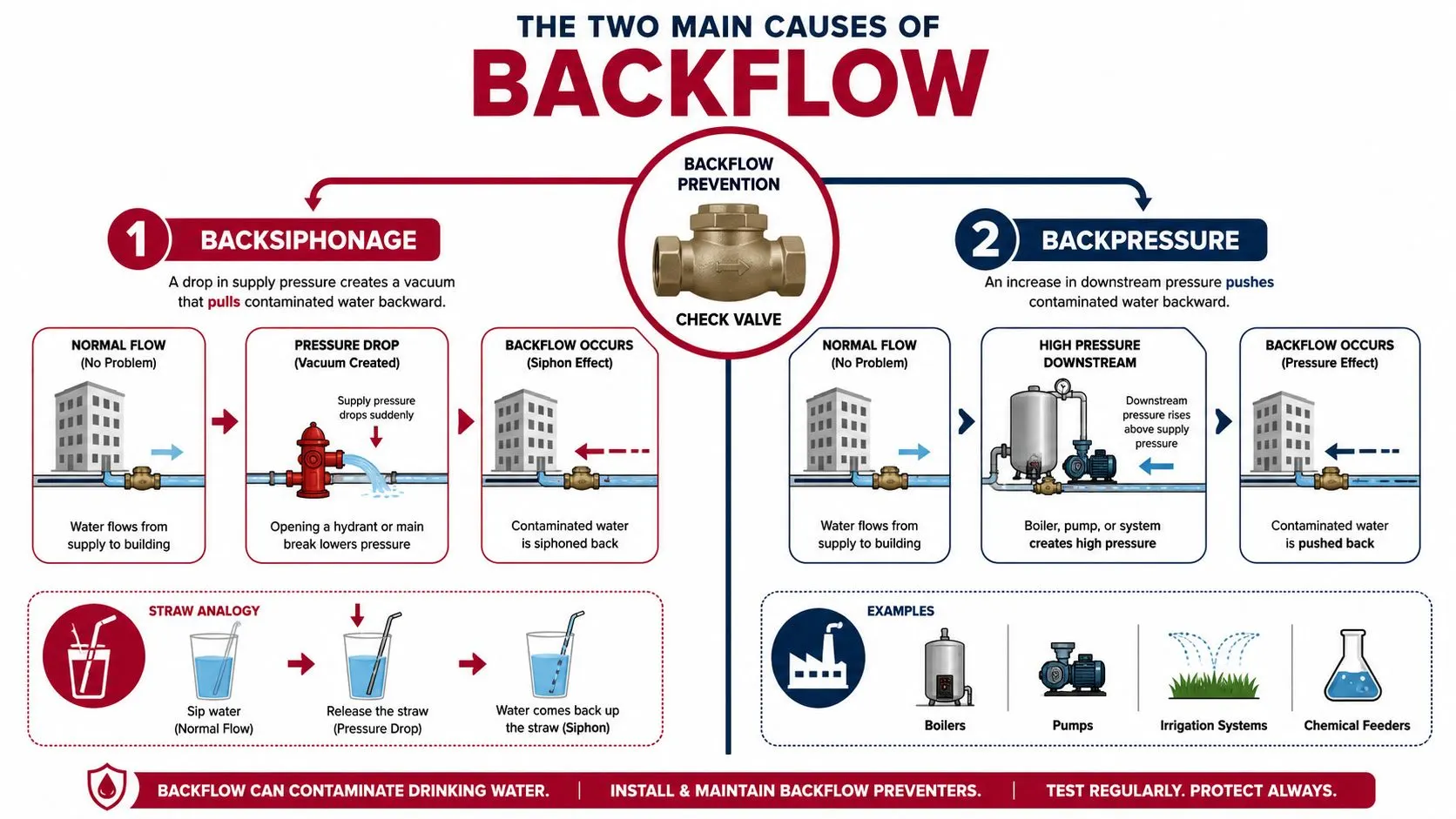
Backflow is the unwanted reversal of water flow that can allow contaminated water to enter a potable water supply. It generally occurs through backpressure, when pressure in a connected system becomes greater than the pressure in the potable water line, or backsiphonage, when negative pressure creates a suction effect that draws contaminated water backward. Sources of contamination can include chemicals, wastewater, fertilizers, irrigation water, and other non-potable substances.
Backflow prevention is essential for safeguarding the water supply system, as contaminated water entering a potable system poses significant public health risks. Various properties, including homes, businesses, industrial facilities, and irrigation systems, may have connections where backflow can happen. Properly selected and maintained prevention devices are crucial for protecting drinking water supplies from contamination and ensuring compliance with relevant plumbing and water-safety regulations, as outlined in EPA guidance.
What Is Included in a Backflow Inspection?
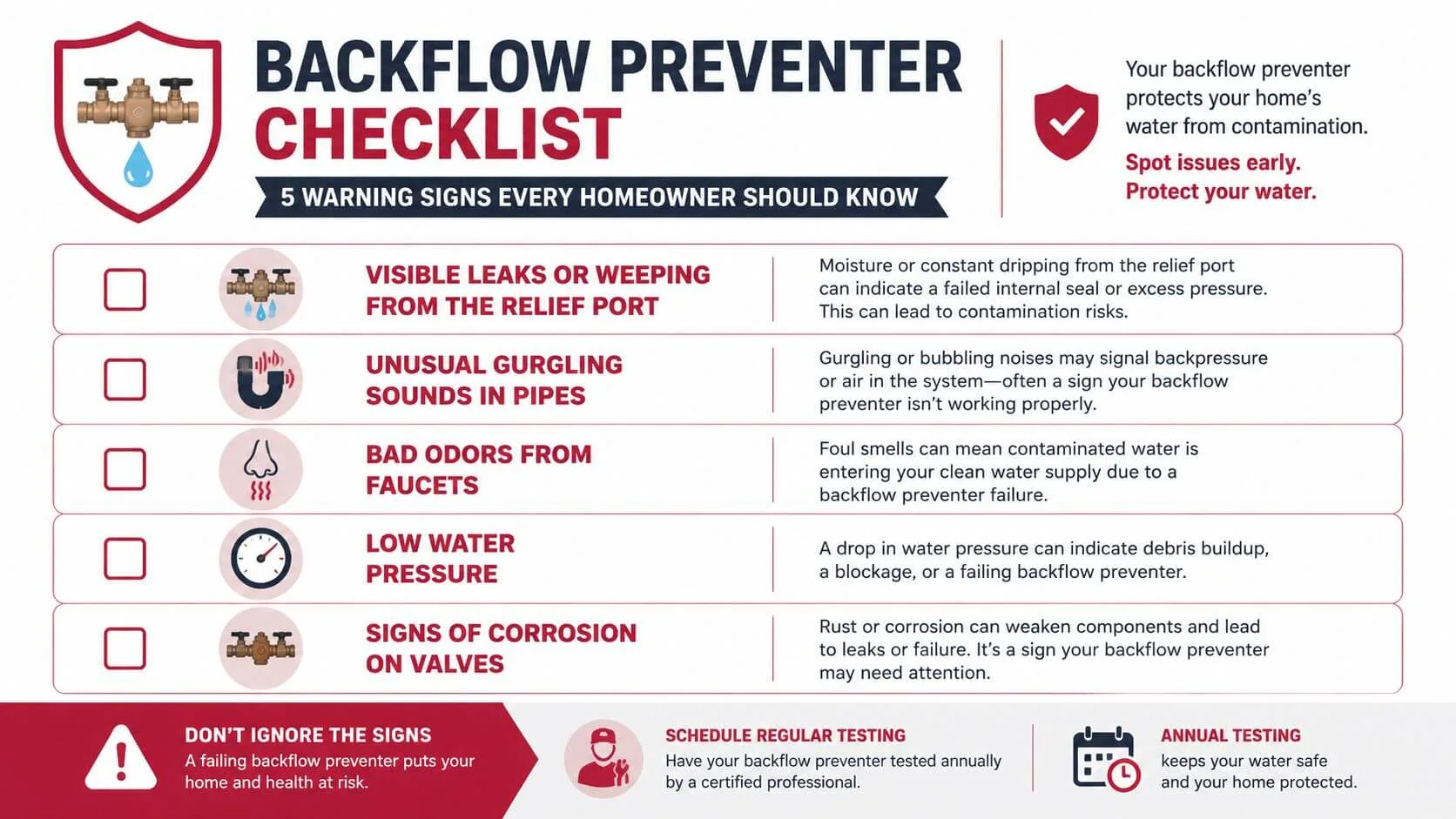
A backflow inspection involves examining the physical condition, installation, and surrounding components of a backflow prevention assembly. A professional typically checks valves, assemblies, connections, and accessible components for leaks, corrosion, visible damage, improper installation, missing components, or other conditions that could affect the device’s performance.
An inspection is different from a backflow test. An inspection evaluates the condition and installation of the device, while testing measures whether the backflow assembly is functioning properly under specified pressure conditions. A plumbing inspection may identify visible problems even when the device has not yet undergone a formal performance test.
How Does a Backflow Prevention Device Work?
Backflow prevention assemblies stop or limit reverse water flow so contaminated water cannot enter the potable water supply. Common prevention methods include air gaps, check valves, and reduced pressure zone (RPZ) assemblies. An air gap creates a physical separation between a water outlet and the receiving vessel, while check valves close when water attempts to flow in the wrong direction. RPZ assemblies use multiple check valves and a relief mechanism to protect against backflow in higher-risk applications.
The appropriate device depends on the type and level of contamination or health hazard associated with the connection. A qualified professional or local water authority can determine which backflow protection method is appropriate for a specific installation. For more detail, see this RPZ checklist and this double check valve procedure.
How Often Is Backflow Testing Required by Law?
Backflow testing requirements vary by state, local authority, water supplier, and property type, so there is no single testing schedule that applies everywhere. Annual testing is a common requirement for certain regulated backflow prevention assemblies and higher-risk connections, but local rules may require a different frequency. Property owners should check the requirements of their local water authority or water supplier and maintain testing records when required.
What Can Cause a Backflow Test to Fail?
The causes of a backflow test to fail are listed below.
- Damaged check valves: Worn or defective check valves may not close or hold pressure correctly.
- Debris and sediment: Dirt or mineral deposits can prevent internal components from sealing properly.
- Corrosion: Corroded components can interfere with valve movement and sealing.
- Leaks: Internal or external leaks can cause pressure readings outside acceptable limits.
- Worn components: Springs, seals, diaphragms, and other parts can deteriorate with use.
- Improper installation: Incorrect assembly, orientation, or connections can affect device performance.
- Pressure problems: Incorrect or unstable pressure conditions can affect testing results.
In the event of a backflow preventer failure, emergency plumbing services may be necessary to perform cleaning, adjustment, component replacement, or other repairs. The device typically requires retesting to ensure it meets the applicable performance standards once these repairs are completed.
What Happens During a Professional Backflow Test?
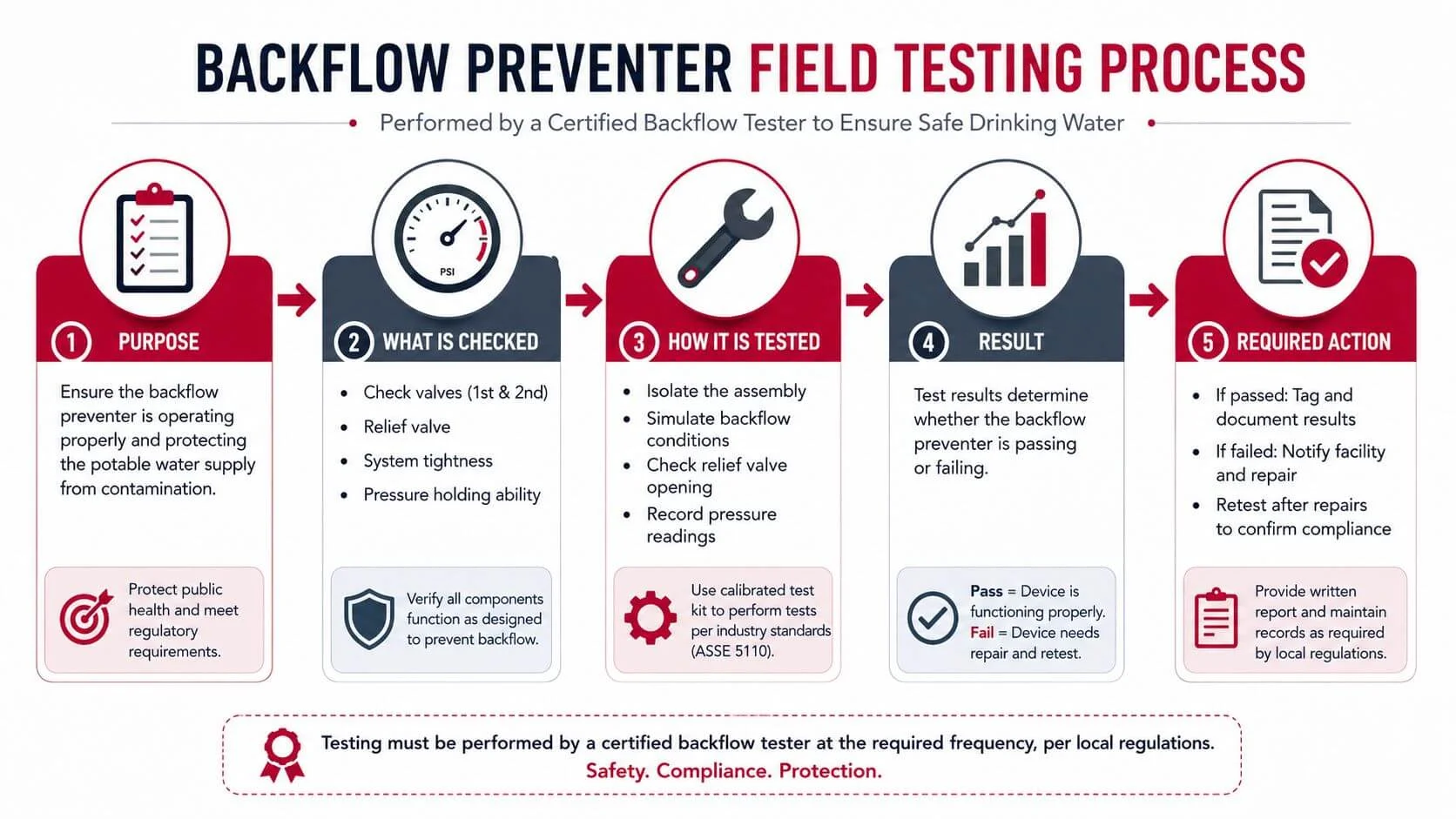
To determine what happens during a professional backflow test, follow the steps below. In some cases, related maintenance such as pipe descaling may also be needed when system conditions affect performance or testing access.
- Identify the assembly: The tester confirms the backflow prevention device, its location, and the type of assembly being tested.
- Inspect the device: The tester checks the assembly and connections for visible damage, leaks, corrosion, and other issues that could affect testing
- Connect testing equipment: Calibrated test instruments are connected to the appropriate test ports on the backflow assembly.
- Check pressure conditions: The tester measures pressure and evaluates the performance of the internal check valves or other protective components.
- Test the assembly: The device is tested according to the applicable procedure for its type and local requirements.
- Record the results: The tester documents the test results and determines whether the assembly passes or fails.
- Complete repairs if necessary: If the device fails, defective components may need to be repaired or replaced before another test is performed.
- Certify the results: Where required, the qualified tester submits or provides the completed test and certification documentation to the appropriate authority.
Who Is Qualified to Perform Backflow Testing and Certification?
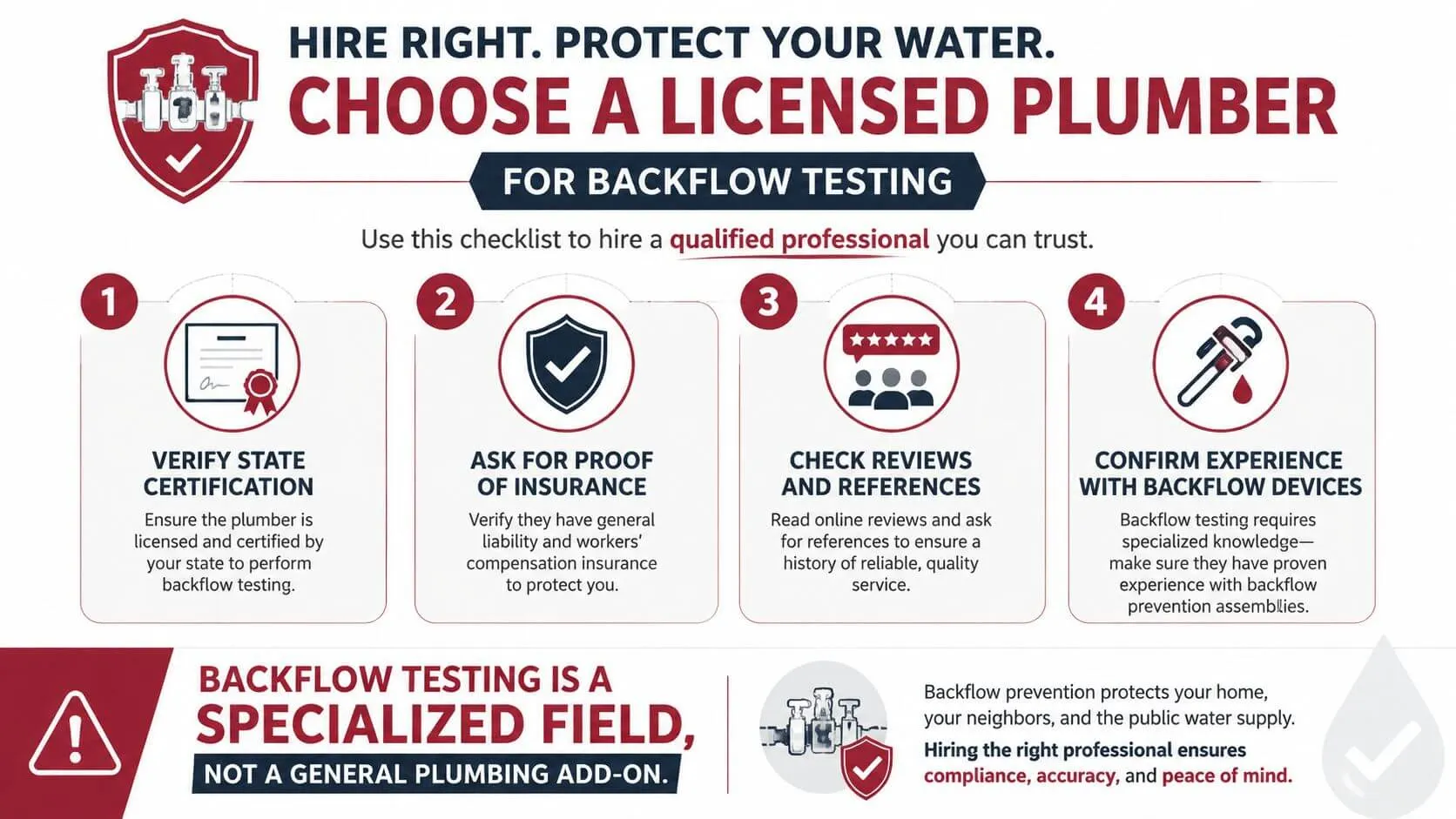
Certified backflow testers are the professionals generally qualified to perform official backflow preventer testing and certification, subject to the requirements of the applicable state, local authority, or water supplier. These professionals receive specialized training in backflow prevention assemblies, testing procedures, pressure measurement, and reporting requirements. Some jurisdictions may also require specific licenses, certifications, registrations, or approved testing equipment.
Property owners should call a qualified plumber recognized by the relevant authority when official testing or certification is required. Engaging an appropriately certified professional helps ensure that the test follows the required procedure and that results are properly documented or submitted.
How Long Does a Backflow Prevention Test Take?
A typical backflow prevention test can take around 30 minutes to an hour for a single, accessible assembly, although the actual time varies by device type and system complexity. Testing may take longer when the assembly is difficult to access, requires additional inspection, involves multiple devices, or has conditions that make testing more complicated. If the assembly fails and requires repairs, cleaning, component replacement, or retesting, the overall service time will increase.
Is Backflow Testing Hard?
Yes, backflow testing can be difficult without specialized training and calibrated testing equipment. The process requires a tester to understand the specific backflow assembly, connect testing instruments correctly, measure pressure accurately, interpret the results, and follow the testing procedure required for that device and jurisdiction. Because an official test may also require certification or reporting, it should generally be performed by a qualified backflow tester rather than someone without the necessary training.
Can You Do a Backflow Test Yourself?
No, you generally should not perform an official backflow test yourself unless you have the certification, training, equipment, and authorization required by your local authority. A property owner can visually check for obvious leaks or damage, but an official backflow test requires specialized procedures and calibrated equipment. If a jurisdiction requires certified testing, using an unqualified person may result in an invalid test or failure to meet the property’s compliance requirements.