

Thermostatic and pressure-balancing shower valves both help control shower temperature and reduce the risk of sudden temperature changes, but they work differently.
A pressure-balancing valve responds to changes in hot and cold water pressure. A thermostatic valve senses water temperature and adjusts the hot and cold supply to maintain a selected temperature in the plumbing system.
Both are used in residential shower systems, but the better choice depends on your water supply, temperature-control needs, installation requirements, and budget.
What Is a Pressure-Balance Shower Valve?
A pressure-balance shower valve is a mixing valve that automatically adjusts the hot and cold water supply when water pressure changes. Maintains a stable shower temperature when other fixtures are in use.
For example, flushing a toilet or turning on a faucet can reduce the cold-water pressure reaching the shower. The valve responds by adjusting the hot-water flow to reduce the resulting temperature change.
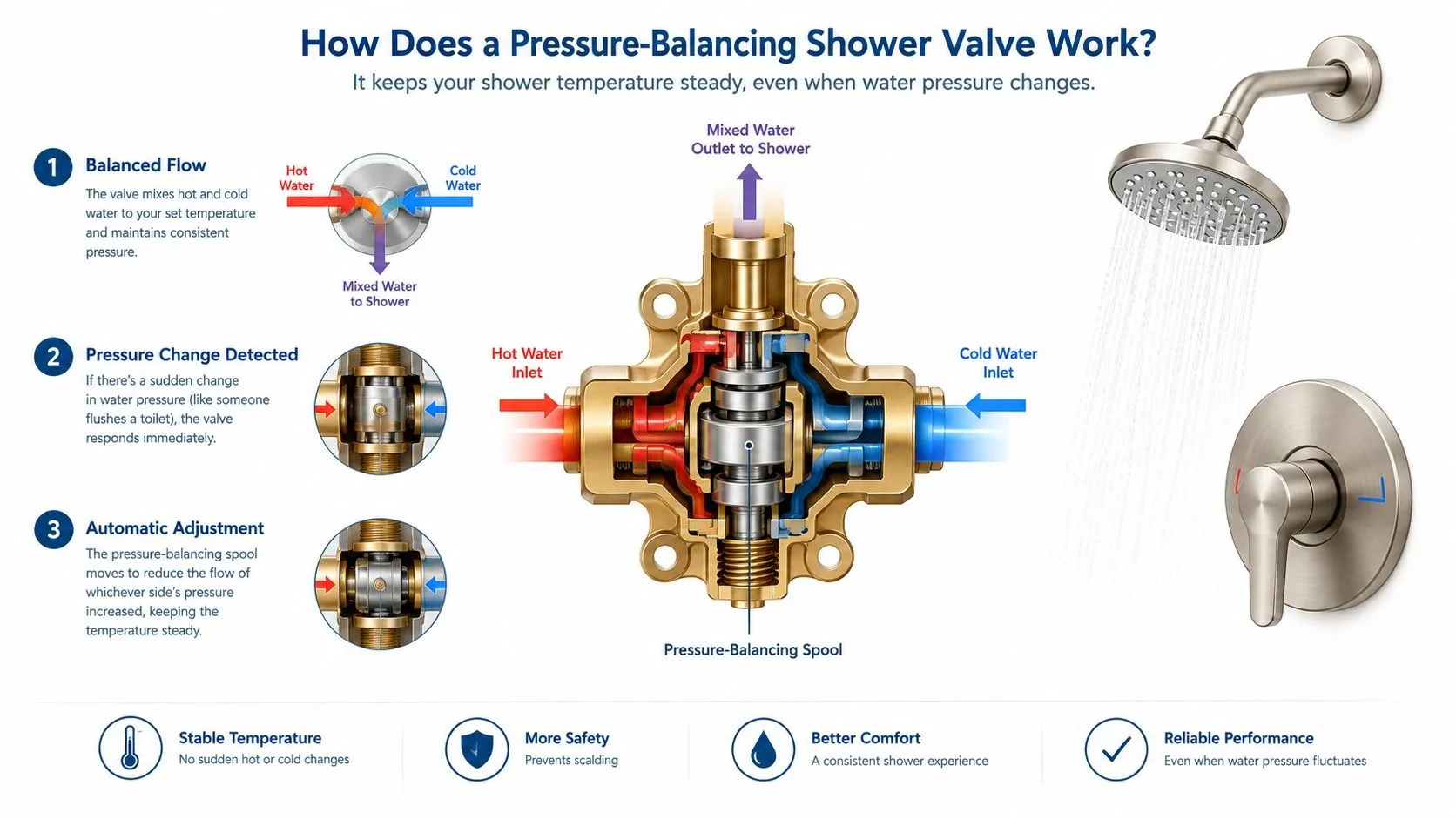
The valve typically uses a pressure-balancing spool or piston inside its cartridge. This mechanism responds to pressure differences between the hot and cold water lines.
Pressure-balancing valves are commonly used in residential showers because they provide basic temperature protection without requiring a more complex valve system.
How Pressure-Balanced Valves Work?
To understand how pressure-balanced valves work, follow the list below.
- Hot and cold water enter the valve. The valve receives both supplies and mixes them before sending water to the showerhead.
- The internal mechanism monitors pressure. A balancing spool or piston responds when the pressure on one side changes..
- The valve adjusts water flow. The mechanism restricts the other supply to maintain a safer temperature balance if a supply drops in pressure.
- The shower temperature changes less abruptly. The system helps prevent a sudden surge of hot or cold water.
A pressure-balance valve does not directly measure water temperature. It depends on maintaining a balance between hot and cold water pressure. Chicago Faucets provides additional technical guidance on pressure-balancing and thermostatic valve standards and how these temperature-control technologies differ.
What Are the Pros and Cons of Pressure-Balance Valves?
The pros and cons of pressure-balance valves are listed below.
| Pros | Cons |
|---|---|
| Helps prevent sudden temperature changes caused by pressure fluctuations | Does not directly control the selected water temperature |
| Simple and widely used for residential showers | Temperature can still change when the incoming water temperature changes |
| Generally less expensive than thermostatic systems | Flow changes can affect the shower experience |
| Familiar installation and maintenance for many plumbers | Less precise temperature control than a thermostatic valve |
| Provides scald protection through pressure balancing | A worn cartridge can cause inconsistent temperature or flow |
What Is a Thermostatic Valve for Shower?
A thermostatic shower valve is a valve that senses water temperature and automatically adjusts the hot and cold water supply to maintain a selected temperature.
Unlike a pressure-balance shower valve, which primarily responds to pressure changes, a thermostatic valve responds directly to water temperature. For broader hot-water distribution systems, ASSE 1017 requirements for thermostatic mixing valves provide technical criteria for temperature-actuated mixing valves used to control distributed hot-water temperatures.
This allows the user to set a preferred temperature while the valve continuously regulates the water mixture. Many thermostatic systems also include a temperature limit stop to help prevent excessively hot water.
Thermostatic valves are often used when precise temperature control, comfort, and independent control of shower temperature and flow are important.
How Do Thermostatic Valves Work?
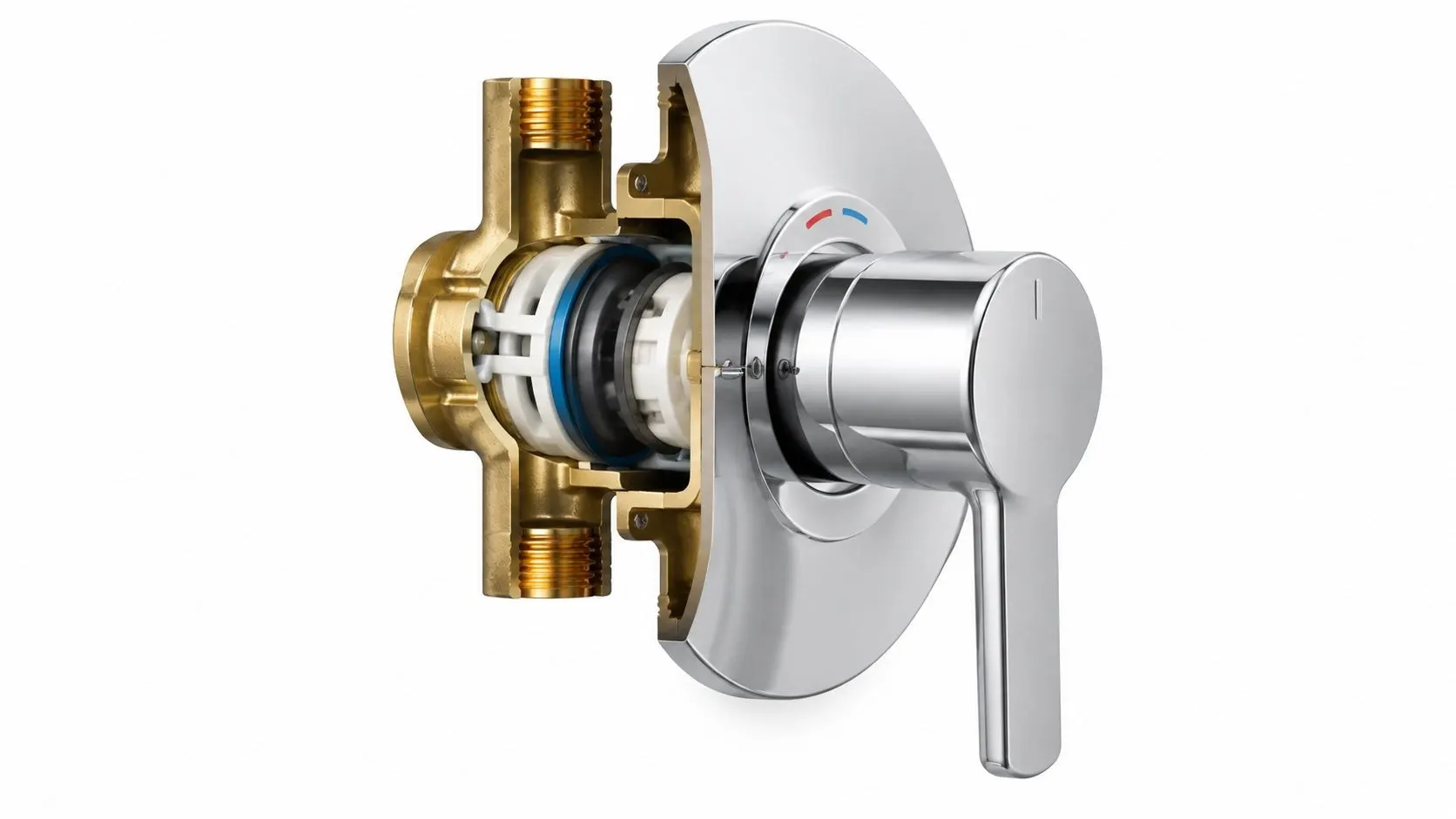
To understand how thermostatic valves work, follow the list below.
- Hot and cold water enter the valve. The supplies enter separate inlets and are mixed inside the valve.
- The thermostatic cartridge senses temperature. The cartridge responds to changes in the temperature of the mixed water.
- The cartridge adjusts the water mixture. It increases or decreases hot and cold water flow to maintain the selected temperature.
- The temperature handle sets the desired level. The user can select a preferred shower temperature rather than manually balancing hot and cold water.
- The temperature limit helps reduce scalding risk. Many valves include an adjustable limit stop that restricts how far the temperature control can be turned.
Because it responds to temperature rather than pressure alone, a thermostatic valve can maintain a more consistent temperature when properly installed and supplied.
What Are the Pros and Cons of Thermostatic Valves
The pros and cons of thermostatic valves are listed below.
| Pros | Cons |
|---|---|
| Provides more precise temperature control | Usually costs more than a pressure-balance valve |
| Responds directly to water temperature changes | Installation can be more complex |
| Allows users to maintain a preferred temperature | Requires compatible plumbing and components |
| Can provide separate temperature and flow control on some systems | Cartridge maintenance or replacement may be more specialized |
| Many models include adjustable temperature limits | Performance depends on adequate hot and cold water supply |
Thermostatic vs. Pressure-Balance Shower Valves: Key Differences
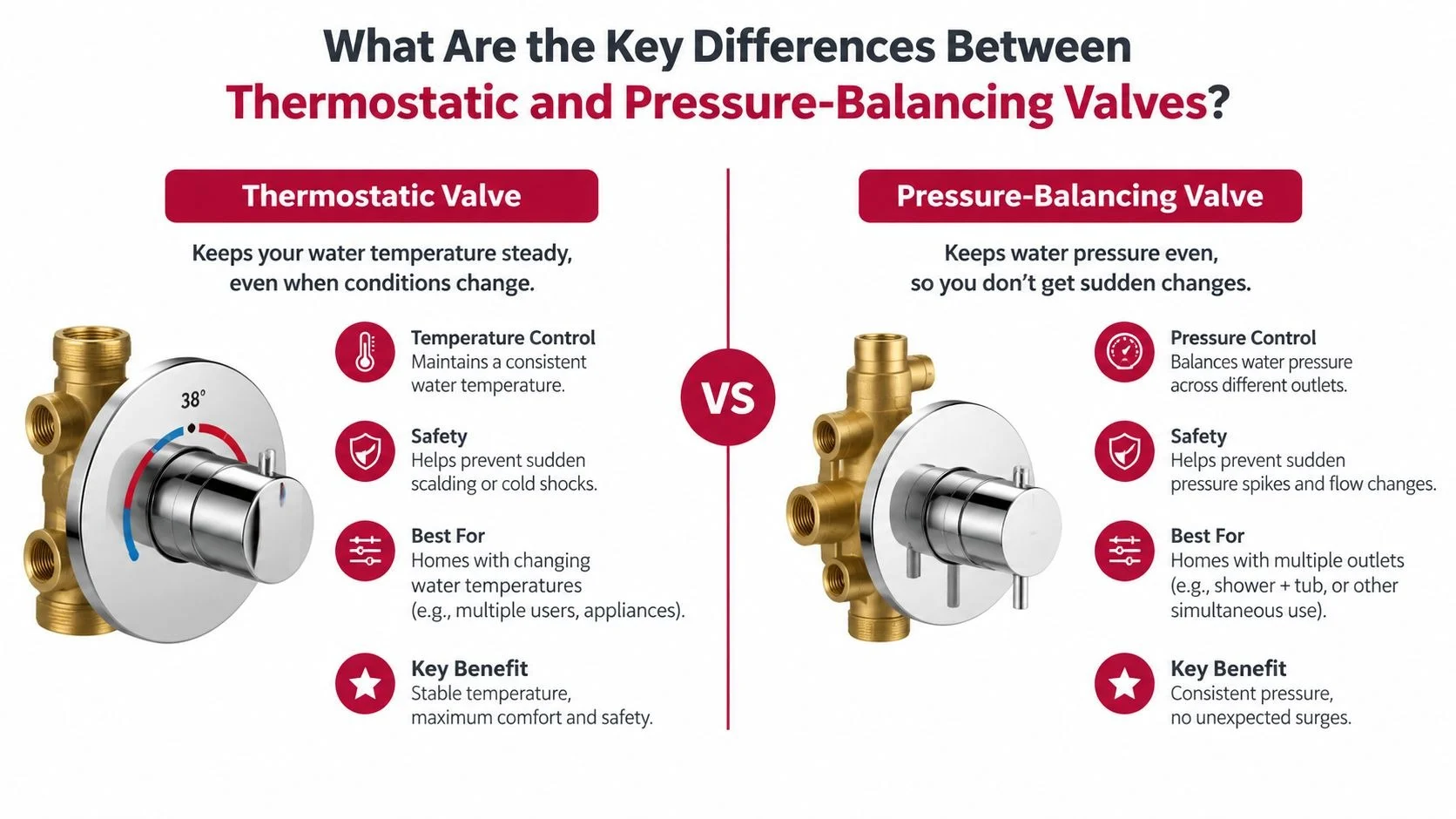
The main differences between thermostatic and pressure-balance shower valves are listed below.
| Feature | Thermostatic Shower Valve | Pressure-Balance Shower Valve |
|---|---|---|
| Temperature Control and Fluctuations | Directly senses and adjusts water temperature for more precise control | Responds to hot and cold pressure changes to limit temperature fluctuations |
| Water Pressure and Flow Control | Can provide independent temperature and flow control on some configurations | Primarily balances hot and cold pressure; flow and temperature are more closely linked on typical setups |
| Safety Features and Scald Protection | Temperature sensing and adjustable limits can provide strong scald protection | Helps reduce scalding caused by sudden pressure changes |
| Installation Complexity | Generally more complex and may require additional components or compatible plumbing | Usually simpler and more common in standard shower installations |
| Upfront Cost | Typically higher | Typically lower |
| Long-Term Value | Useful when precise temperature control and comfort are priorities | Suitable when simple pressure-based temperature protection is sufficient |
How Do Water Heater Affects Shower Valve Performance?
A water heater affects how both types of shower valves perform because it determines the temperature and availability of hot water entering the shower system.
A water heater set too low may limit the temperature available at the shower. A setting that is too high can increase the risk of scalding, making proper temperature controls important. Industry guidance on scald protection and Legionella risk explains why domestic hot-water systems need to balance water temperature, scald protection, and water safety..
The heater’s recovery capacity also matters. If several fixtures use hot water at the same time, the available hot-water supply can decrease. This may cause temperature changes even when the shower valve is operating correctly.
Water pressure affects a pressure-balance valve because it depends on balancing the hot and cold supply pressures.
For a thermostatic valve, a stable hot-water supply helps the temperature-sensing cartridge maintain the selected setting.
For new or replacement water heater work, WhatsDemand can connect homeowners with plumbing partners for water heater installation services.
What Are Essential Bathroom Plumbing Tips for Valve Maintenance?
The essential bathroom plumbing tips for valve maintenance are listed below.
- Clean the showerhead and fixtures. Remove mineral deposits that can restrict water flow.
- Check for temperature changes. Sudden changes can indicate a cartridge, pressure, or water-supply problem.
- Inspect for leaks. Check around the valve trim, showerhead, and other connections for signs of water leakage.
- Clean or service the cartridge when needed. Mineral buildup can interfere with pressure-balancing or thermostatic mechanisms.
- Avoid forcing the handles. Excessive force can damage the valve or its internal components.
- Check the temperature limit setting. Make sure the maximum temperature is appropriate for the household.
- Address changes in water pressure. Persistent pressure problems can affect shower performance and may require plumbing inspection.
For broader bathroom maintenance guidance, see these bathroom plumbing maintenance tips.
When to Call for Plumbing Services for Shower Valves?
Call a professional plumber when a shower valve continues to leak, produces unstable temperatures, has restricted flow, or cannot maintain the selected temperature after basic maintenance.
Professional service may also be necessary when replacing a valve, changing from a pressure-balance valve to a thermostatic system, or modifying the plumbing behind a finished shower wall.
A plumber can determine whether the problem comes from the valve cartridge, water pressure, hot-water supply, or another part of the plumbing system.
If you need professional assistance, WhatsDemand can help connect you with qualified plumbing partners through its plumber service network.
When to Choose a Pressure-Balance Valve
Choose a pressure-balance valve when you want a simpler and generally more economical solution for controlling temperature changes caused by fluctuating water pressure.
It can be a practical choice for a standard residential shower where the main concern is preventing sudden temperature changes when another fixture uses water.
To choose a pressure-balance valve, consider the tips below.
- You want a conventional shower valve setup.
- Budget is an important consideration.
- You need protection against pressure-related temperature fluctuations.
- You do not need highly precise temperature adjustment.
- The existing plumbing is already designed for a pressure-balance valve.
When to Choose a Thermostatic Valve
Choose a thermostatic valve when precise temperature control is more important than minimizing the initial installation cost.
A thermostatic valve is useful when you want to set a preferred temperature and have the valve continuously regulate the hot and cold mixture as conditions change.
To choose a thermostatic valve, consider the tips below.
- Consistent shower temperature is a priority.
- Multiple fixtures may operate at the same time.
- You want separate temperature and flow controls.
- The household has specific temperature preferences.
- You want more direct temperature regulation and an adjustable temperature limit.
Can you replace a pressure-balanced valve with a thermostatic valve?
Yes, in many cases, but the replacement is not always a direct cartridge swap. A thermostatic valve may require different plumbing connections, valve-body dimensions, controls, or installation arrangements. Inspect the existing valve and surrounding plumbing before replacement. A professional plumber can determine whether the thermostatic system will fit the existing configuration or whether plumbing modifications are required.
Are thermostatic shower valves worth the extra cost?
Yes, they can be worth the extra cost when precise temperature control and comfort are important. A thermostatic valve provides more direct temperature regulation than a pressure-balance valve. However, the additional cost may not be necessary for a basic shower where pressure-related temperature fluctuations are the main concern. The best choice depends on the shower configuration, water supply, desired controls, and installation budget.
How long do thermostatic and pressure-balance valves last?
Proper installation and routine maintenance allow both thermostatic and pressure-balance valves to deliver many years of reliable service. While build quality, water conditions, usage frequency, and installation standards determine overall valve longevity, the internal cartridge usually requires service or replacement first. Mineral buildup and poor water quality shorten component life, but regular maintenance preserves valve performance over time. A failing valve or cartridge is usually exposed through inconsistent shower temperatures, sudden heat spikes, restricted water flow, or a stiff handle that resists turning. Furthermore, active leaks from the valve or trim and trouble adjusting the water temperature signal mean that you must inspect or replace the cartridge immediately.
Do You Need Shutoff Valves for Shower Valve Installation?
Yes, having an accessible way to shut off the water supply is important for shower valve installation and future maintenance. The exact arrangement depends on the home’s plumbing system and the valve design.
Some installations have dedicated service stops built into or near the valve, while others rely on a main or branch water shutoff.
Before replacing a shower valve, isolate the water supply and safely remove the old valve. An accessible shutoff can also make future cartridge replacement and repairs easier. If the home’s main shutoff is difficult to operate or leaking, see this guide to common main water shut-off valve problems.