

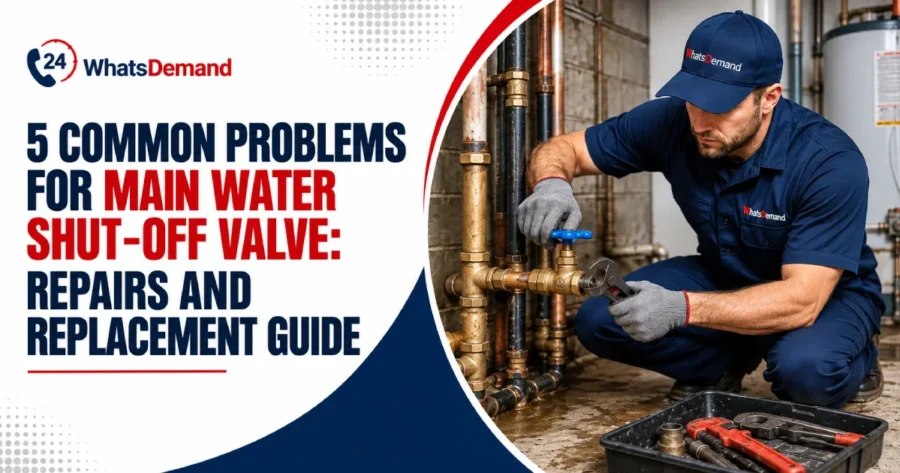
The five common problems for a main water shut-off valve include stuck valves, leaking valve stems, incomplete water shutoff, damaged handles, and pressure or noise issues after operation. A water valve plays a role in every plumbing valves system by controlling water flow during repairs, fixture replacements, and plumbing emergencies.
A toilet shutoff valve isolates a single fixture without interrupting water service to the rest of the property. It becomes stuck, leaks, or fails because of age, corrosion, and mineral buildup. The guide explains troubleshooting, repair methods, maintenance, and replacement options while covering common plumbing problems that commonly affect homes in the U.S.
Valve Stuck Open or Won't Turn
A valve stuck open or won't turn happens when mineral deposits, rust, and corrosion build up inside the valve body and lock the gate or ball mechanism in place.
A seized valve does not stop water flow fast in a burst pipe emergency, and pressure keeps building against fittings until something fails. The stem, packing nut, and gate mechanism take the brunt of the damage. Understanding types of plumbing systems helps residents know which valve type their system uses before attempting repairs.
Water Leaking Around the Valve Stem or Packing Nut
Water leaking around the valve stem or packing nut occurs when the rubber O-ring or packing material wears down, and the seal around the stem loses its grip on water pressure. Minor drips turn into steady leaks that corrode nearby metal fittings, and the constant moisture invites mold growth on drywall and wood framing near the valve.
The O-ring, packing nut, valve stem, and pipe threads suffer, and a plumber resolves it with a simple packing nut tightening or O-ring swap.
Valve Fails to Turn Off Water Completely
Valve fails to turn off water completely happens when sediment, mineral scale, or a worn rubber washer keeps the valve seat from sealing shut against the water line.
Turn the handle fully and still hear water trickling through pipes, leaving no safe way to isolate a leak or swap a fixture. The valve seat, washer, and gate mechanism wear out fastest, and calling 24-hour emergency plumbing services becomes required when a valve fails to stop an active leak.
Stripped, Broken, or Loose Valve Handles
Stripped, broken, or loose valve handles result from metal fatigue, cheap plastic construction, and repeated over-tightening that wears down the grip surface on the handle. A stripped handle spins without turning the stem, leaving the valve stuck somewhere between open and closed positions.
The handle, set screw, and valve stem bear the wear, and a replacement handle kit restores full control within 5 minutes.
Water Pressure Drops or Noisy Pipes After Turning Valve
Water pressure drops or noisy pipes after turning the valve signal a gate that stays closed, trapped air pockets, or mineral scale clogging the pipe opening.
Fixtures throughout the house lose steady pressure, and pipes bang, whistle, or rattle as air and water fight for space inside the line. The valve gate, pipe fittings, and air chambers take the strain, and bleeding the line or fully opening the valve clears noise complaints.
What Is a Supply Shutoff Valve and Where Is It Located?
A supply shutoff valve controls water flow to a single plumbing fixture or appliance, allowing repairs or replacements without shutting off water to the entire property.
Supply shutoff valve located under sinks, behind toilets, near washing machines, beside water heaters, and behind refrigerators where water lines connect. Fixture shutoff valves isolate individual fixtures as part of the water supply system, unlike the home’s main water shutoff valve that stops water to the entire building.
What Are Common Types of Shutoff Valves?
The common types of shutoff valves are listed below.
- Ball Valve: A quarter-turn ball valve is installed on main water supply lines because it provides quick operation, a tight seal, and excellent durability.
- Gate Valve: A gate valve is used on older residential and commercial water lines because it allows unrestricted water flow when fully open.
- Globe Valve: A globe valve is installed on plumbing systems requiring flow regulation because it provides precise control over water volume.
- Compression Shutoff Valve: A compression shutoff valve is used under sinks, toilets, and other fixture supply lines because it installs without soldering and simplifies future replacements.
- Angle Stop Valve: An angle stop valve is fitted behind toilets and beneath sinks because it isolates fixtures while accommodating 90-degree water line connections.
How to Fix a Stuck or Leaking Shutoff Valve
To fix a stuck or leaking shutoff valve, follow the eight steps listed below.
- Shut Off the Main Water Supply: Turn off the main water supply before servicing the valve.
- Relieve Water Pressure: Open the connected faucet to drain remaining water.
- Inspect the Valve Body and Stem: Check for corrosion, mineral buildup, cracks, or leaks.
- Loosen a Stuck Valve Carefully: Apply penetrating lubricant and turn the handle gently.
- Tighten the Packing Nut: Tighten the packing nut by a quarter turn to reduce leaks.
- Replace Worn Internal Seals: Replace the O-ring, packing, or washer if leakage continues.
- Restore the Water Supply Gradually: Reopen the main water supply slowly to restore pressure.
- Test the Shutoff Valve Operation: Open and close the valve to confirm proper operation and leak-free sealing.
How to Loosen a Frozen or Stuck Valve Safely
To loosen a frozen or stuck valve safely, follow the five steps listed below.
- Clean the Valve Stem: Remove dirt, rust, and mineral deposits around the stem.
- Apply Penetrating Lubricant: Spray lubricant onto the valve stem and wait several minutes.
- Turn the Handle Gently: Rotate the handle slowly without applying excessive force.
- Work the Valve Back and Forth: Move the handle in small increments until it turns freely.
- Test the Valve Operation: Open and close the valve to confirm smooth movement.
How to Tighten a Leaking Packing Nut
To tighten a leaking packing nut, follow the five steps listed below.
- Shut Off the Water Supply: Turn off the water supply before tightening the packing nut.
- Locate the Packing Nut: Identify the packing nut behind the valve handle.
- Tighten the Packing Nut Gradually: Turn the nut clockwise by a quarter turn with an adjustable wrench.
- Restore the Water Supply: Reopen the water supply after tightening the packing nut.
- Check for Remaining Leaks: Inspect the valve stem for leaks while the valve is pressurised.
When to Replace a Supply Shutoff Valve
Replace a supply shutoff valve when repairs are no longer practical because the valve has severe corrosion, a cracked body, recurring leaks, or internal damage that affects operation.
A valve that fails to shut off water completely or has a broken stem or handle must be replaced instead of repaired. Installing a new shutoff valve restores dependable water isolation, improves safety, and helps prevent future leaks or water damage.
Should You Replace Your Shutoff Valve with a Ball Valve or Compression Valve?
Yes, a shutoff valve should be replaced with a ball valve or compression valve, depending on the plumbing system and pipe material. Ball valves provide greater durability, a tighter seal, and quick quarter-turn operation, while compression valves offer easy installation on existing copper or plastic water supply lines without soldering.
How Often Should You Exercise Shutoff Valves?
You should exercise shutoff valves every 6 months to prevent mineral buildup and corrosion from seizing. A preventive plumbing maintenance schedule must include exercising every shutoff valve twice a year and inspecting it during routine plumbing checks.
During each inspection, turn the valve fully open and closed, inspect the valve body and packing nut for leaks or corrosion, and verify smooth handle movement.
Can You Over-Tighten a Water Shutoff Valve?
Yes, you can over-tighten a water shutoff valve. Excessive force can damage the valve stem, packing nut, rubber washer, or internal seal, leading to leaks, restricted operation, or complete valve failure. Tighten the valve only until it closes securely, as additional force does not improve the seal and shortens the valve’s service life.
When to Call a Licensed Plumber for a Shutoff Valve?
Call a licensed plumber for a shutoff valve when it has severe corrosion, a cracked valve body, recurring leaks, complete shutoff failure, or damage that requires replacement.
DIY repairs on severely damaged valves can worsen leaks, damage water supply lines, or cause water damage. WhatsDemand connects homeowners with qualified local plumbers who can inspect, repair, or replace faulty shutoff valves safely for situations requiring professional plumbing help.