

Pipework freezing occurs when water inside a plumbing pipe becomes cold enough to freeze and expand. The resulting pressure can damage or rupture the pipe, leading to leaks and water damage as the ice thaws.
Exposed or poorly insulated pipes in areas such as garages, crawl spaces, attics, basements, cabinets, and exterior walls are common plumbing problems during winter. Proper insulation is one way to prevent pipes from freezing during severe cold conditions.
Homeowners should respond carefully rather than applying unsafe direct heat if pipes freeze. The affected section can often be thawed gradually, but inaccessible, extensively frozen, or damaged pipework may require professional assistance.
Why Do Pipes Freeze and Burst?
Pipes freeze when the water inside them reaches freezing temperatures, and they can burst as expanding ice builds pressure within the plumbing system. The water does not need to freeze completely for pressure and blockage to become a common plumbing problem.
As water freezes, it expands. When ice forms inside a confined pipe, it can restrict the flow of liquid water between the ice and the closed section of the plumbing. Continued freezing can increase pressure in the trapped water, potentially causing the pipe to crack or rupture.
Copper, steel, PEX, PVC, and other plumbing materials can be affected when exposed to sufficiently low temperatures. The material itself is only one part of the risk; pipe location, insulation, water movement, and exposure to cold air also influence whether freezing occurs.
The Science of Pipework Freezing
When surrounding temperatures fall below freezing, exposed plumbing loses heat to the colder environment. A pipe located in an unheated space or against an exterior wall can lose heat faster than one surrounded by warm indoor air.
Once the water inside reaches its freezing point, ice begins forming. While indoor heating and water movement help maintain conditions that are less favorable for freezing, insulation helps reduce heat loss. This is why avoiding pipe freezing requires both protecting the pipe from cold exposure and maintaining sufficient warmth around vulnerable plumbing.
Most Vulnerable Plumbing Areas in Your Home
The most vulnerable plumbing areas in your home are listed below.
- Outdoor hose bibs and supply lines: They are directly exposed to cold outdoor temperatures.
- Garages: Unheated garages can become cold enough to freeze nearby water lines.
- Attics: Pipes can be exposed to cold air where insulation is inadequate.
- Basements and crawl spaces: Unheated or poorly insulated spaces can allow pipe temperatures to fall significantly.
- Kitchen and bathroom cabinets: Pipes inside cabinets may receive less warm air, especially when cabinets are against exterior walls.
- Exterior walls: Plumbing installed near poorly insulated exterior walls is more exposed to outdoor temperatures.
How to Prepare Your Plumbing Before Winter?
Preparing before freezing weather arrives is one of the most effective ways to protect from freezing pipes. A seasonal inspection should focus on insulation, air leaks, outdoor plumbing, and other areas where cold air can reach water lines.
The American Red Cross specifically recommends insulating exposed plumbing and draining outdoor hose lines before freezing weather.
1. Insulating Exposed Pipes and Lines
Insulated pipes decrease the chances of heat leaving the water pipe’s surface gradually. Insulating sleeves and other purpose-designed pipe insulation are commonly used around exposed water lines in areas that are vulnerable to cold temperatures.
Insulation does not generate heat, so it should be combined with adequate indoor heating and protection from drafts. Pipes in especially cold locations may require additional measures such as approved heat tape or heat cable.
2. Sealing Drafts, Gaps, and Air Leaks
Cold drafts can rapidly reduce the temperature around plumbing. Sealing gaps around doors, windows, walls, and other openings helps prevent cold outdoor air from reaching vulnerable pipes.
Weather-stripping and caulking can reduce unwanted air movement and improve the home’s overall thermal protection.
3. Winterizing Outdoor Faucets and Garden Hoses
Disconnect and drain garden hoses before freezing weather. Where the plumbing system permits, shut off the interior supply to outdoor hose bibs and open the exterior faucet to drain remaining water.
Outdoor water lines are among the plumbing components most directly exposed to freezing conditions, so winterizing them before a freeze is an important preventive measure.
Use this home plumbing maintenance checklist to review shutoffs, fixtures, exposed supply lines, and other plumbing before winter.
What Are Daily Steps to Prevent Frozen Pipes During Extreme Cold?
Prevention shifts from seasonal preparation to maintaining enough heat and water movement around vulnerable plumbing during extreme cold. Allowing limited water flow where appropriate and allowing warm air to reach enclosed pipes reduces the risk of freezing and keeps the home warm consistently.
1. Letting Faucets Drip
Letting a small amount of water drip from the faucet helps prevent the pipe from freezing. Moving water is less likely to freeze than stagnant water, as it reduces the formation of ice inside the pipeline.
This method is most helpful during cold seasons and should be considered alongside insulation and adequate heating.
2. Circulating Warm Air Around Sinks and Cabinets
Letting the kitchen and bathroom cabinet doors open allows warmer indoor air to warm the pipes. This is useful for plumbing located against the exterior wall. Make sure to remove household cleaning materials and other hazardous products if cabinets are left open, keeping children and pets from harm.
3. Thermostat Settings to Prevent Pipes from Freezing
Avoid immense temperature reductions during extreme cold nights. Maintaining a consistent thermostat temperature helps indoor plumbing conditions stay warm.
It is recommended to leave the heat on at no lower than 55°F (13°C) if a home will be vacant during cold weather.
How to Protect Pipes When You’re Away from Home?
A vacant home is more vulnerable because nobody may be present to notice a drop in indoor temperature, loss of heating, or early signs of a frozen pipe. Before leaving during freezing weather, keep the heating system operating, protect vulnerable plumbing, and consider remote temperature monitoring if available.
The longer the property will remain empty, the more important it becomes to understand the home’s plumbing layout and know where the main water shutoff is located. For long absences from home, draining an adequate amount of water reduces the amount of freezing water in the pipes. Test the shutoff valve before leaving. If it is stuck, leaking, or difficult to identify, arrange inspection through a professional familiar with common shutoff valve problems.
What Is the Ideal Vacation Thermostat Temperature?
Keep the thermostat right around 55°F (13°C) when leaving a home unattended during cold weather. It is also recommended to keep the heat on rather than shutting the system down.
Acquiring a remote or smart thermostat helps you monitor unexpected drops in temperature. However, monitoring does not replace maintaining heat and protecting vulnerable plumbing.
How to Drain Water Lines for Extended Trips?
It is often appropriate to drain water lines when a property will be vacant during severe freezing conditions, particularly when the plumbing system has been designed to be winterized.
Open the appropriate faucets to relieve pressure and drain water, and follow the plumbing system or manufacturer’s instructions for specific equipment; turn off the water supply. Sprinkler systems, pools, outdoor faucets, and other special lines may require separate winterizing.
Homeowners should use professional guidance when the system is complex, or the property will be vacant for an extended period, because improperly draining a plumbing system can create other problems.
What to Do If Your Pipes Are Already Frozen?
Act promptly and safely rather than waiting for it to thaw on its own if you suspect a frozen pipe. Open the affected faucet, identify the frozen section if it is accessible, and apply gentle, indirect heat. Contact emergency plumbing services if the pipe is inaccessible, cannot be safely thawed, or appears damaged.
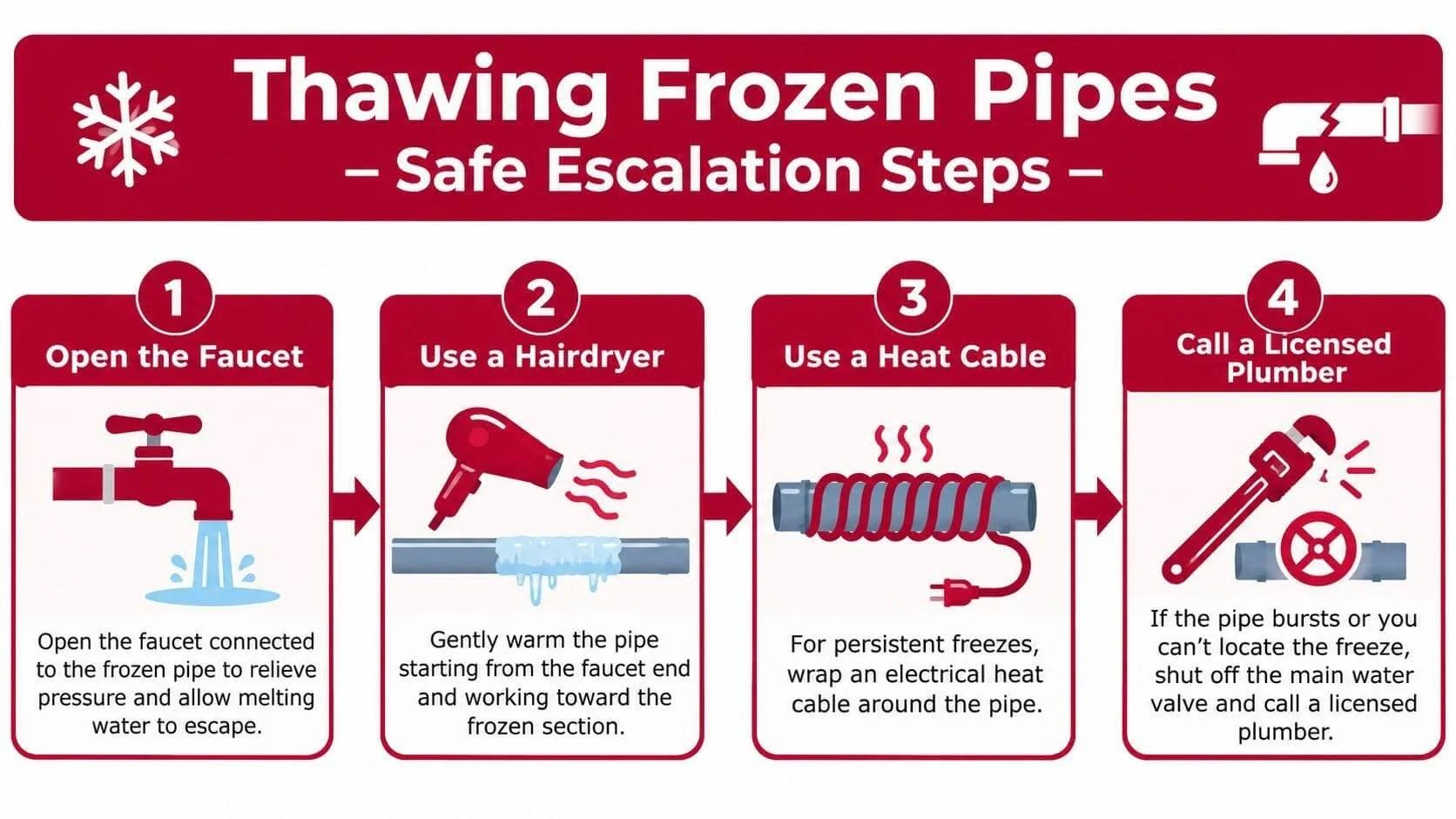
Shut off the home’s main water supply immediately to limit water damage if a pipe has already burst. The Insurance Information Institute also recommends taking prompt steps to protect the property and contacting the insurer after a freeze-related loss.
How to Identify and Locate a Frozen Pipe?
To identify and locate a frozen pipe, check the tips below.
- Little or no water coming from a faucet.
- A faucet produces only a weak trickle.
- Unusual frost or ice on an exposed pipe.
- Bulging, cracking, or visible damage on the pipe.
- Unexpected changes in water pressure.
What Are Safe Techniques to Thaw Frozen Pipes Quickly?
The safe techniques to quickly thaw frozen pipes are listed below.
- Electric heating pads designed for safe use around the pipe.
- A household hair dryer.
- Warm towels applied around the affected section.
- A portable heater positioned safely away from combustible materials.
When to Call a Professional Plumber with Frozen Pipes?
Call a professional plumber when the frozen pipe section is inaccessible, unable to be thawed, or there are signs that the pipe has cracked. Professional assistance is appropriate when multiple sections have frozen, or the plumbing system is difficult to navigate.
Prompt professional help can reduce the risk of a thawed pipe releasing water through an existing crack. It is advised to call a plumber when a frozen section cannot be located, accessed, or thawed.
What Temperature Do Water Pipes Freeze?
Water freezes at 32°F (0°C), but plumbing can be at risk before or around this temperature depending on exposure and conditions. Pipes exposed to outdoor air, drafts, poor insulation, or unheated spaces can reach freezing temperatures even when other parts of the home remain warmer.
The actual risk depends on factors such as the duration of cold weather, pipe location, insulation, indoor temperature, wind exposure, and whether water is moving through the line. Vulnerable plumbing therefore should be protected before temperatures reach freezing rather than waiting for ice to form.
Does Hot Water Freeze Faster than Cold Water?
No, under ordinary conditions, hot water does not simply freeze faster than cold water. The idea is sometimes associated with the Mpemba effect, in which certain experimental conditions have produced faster freezing of initially warmer water, but this does not mean homeowners should expect hot water to freeze first.
The relevant factors are the temperature of the pipe and surrounding environment, insulation, water movement, and exposure, not whether the water started hot or cold, for preventing frozen plumbing.
Will Homeowners Insurance Cover Water Damage from Burst Pipes?
Yes, but coverage depends on the policy and circumstances. Standard homeowners policies commonly cover certain sudden and accidental water damage caused by freezing or burst plumbing, but exclusions and policy conditions can apply. The Insurance Information Institute notes that standard homeowners policies generally cover many freeze-related losses, while maintenance-related damage and certain types of water damage may be excluded.
Homeowners should review their individual policy for requirements concerning heating, vacancy, maintenance, deductibles, and water damage. Insurance coverage should not be assumed solely because a pipe froze.
Do Old Plumbing Pipes Freeze Easily?
Yes, old plumbing pipes are more vulnerable to freezing, but age alone does not determine whether a pipe will freeze. Location, insulation, exposure to cold air, pipe size, water movement, and the condition of the plumbing system have a greater influence on freezing risk.
Older plumbing may also have deteriorated insulation, exposed sections, corrosion, or other conditions that make freeze-related damage more concerning. A professional inspection can help identify vulnerable sections and potential improvements if old plumbing pipes repeatedly freeze.