

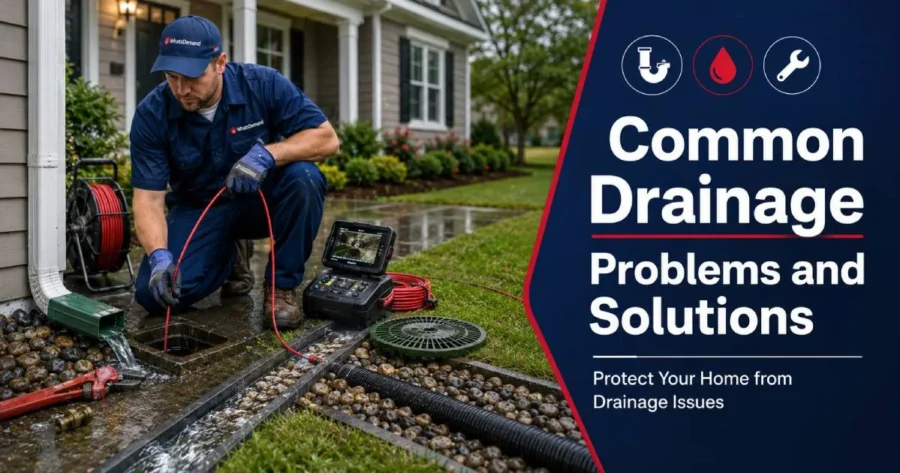
Common drainage problems and solutions explain the common issues that affect residential drainage systems in the U.S. and why proper water management is important for protecting property from flooding, erosion, and damage.
Problems with backyard drainage and lawn drainage develop because water does not flow or infiltrate the soil, while damaged or blocked drainage pipes prevent wastewater and stormwater from draining. It covers the causes, warning signs, and solutions for each issue, while showing how they relate to common plumbing problems that affect the property’s drainage system.
Clogged drains
A clogged drain is a pipe obstruction that blocks water flow through plumbing fixtures (sinks, showers, and toilets). Clogging appears as slow-draining water or a complete backup where wastewater rises instead of flowing downward. Hair, soap scum, grease, food particles, and scale accumulate on pipe walls until water does not pass through.
Residents prevent clogs by installing drain screens, flushing pipes with hot water weekly, and avoiding grease disposal down kitchen sinks. Plumbers clear existing blockages using plungers, drain snakes, hydro jetting, or enzymatic cleaners, restoring proper flow without damaging pipe interiors.
Slow-draining sinks
A slow-draining sink is a plumbing problem where water takes longer than usual to flow through the drain due to a partial blockage. The food particles are stored inside the pipe, restricting water flow before causing a complete clog.
Prevent slow-draining sinks by using drain strainers, cleaning drains, and keeping grease, oil, and food waste out of kitchen sinks. Experts restore normal drainage using plungers, drain snakes, and hydro jetting to remove the obstruction.
Slow-draining showers
A slow-draining shower is a plumbing issue where water pools around the shower floor instead of draining away. Soap residue, shampoo, conditioner, and mineral buildup collect inside the shower drain, reducing the pipe’s capacity to carry wastewater.
Maintain proper drainage by removing trapped hair, using a shower drain cover, and cleaning the drain on a regular basis. Eliminate blockages with drain augers and hydro jetting to restore efficient water flow.
Blocked toilets
A blocked toilet occurs when waste and wastewater do not pass through the toilet drain, causing poor flushing, overflowing, or sewage backup. Common causes include excessive toilet paper, wet wipes, sanitary products, foreign objects, and obstructions inside the drainpipe.
Reduce the risk of blocked toilets by flushing human waste and toilet paper and keeping non-flushable items out of the toilet. Clear the obstruction with a plunger or toilet auger to restore proper flushing.
Sewer line blockages
A sewer line blockage develops when the main sewer pipe becomes obstructed, preventing water from flowing away from the property. Tree roots, grease buildup, and collapsed pipes are common causes of sewer line blockages.
Minimise the risk of sewer line blockages by disposing of waste, keeping grease out of drains, and scheduling routine sewer inspections. Remove it through sewer rodding or sewer line repairs to restore uninterrupted wastewater flow.
Drain backups
A drain backup happens when wastewater reverses direction and flows back into sinks, showers, floor drains, or other plumbing fixtures instead of exiting through the drainage system. Pipe blockages, sewer line obstructions, and damaged drains trigger the problem.
Reduce the risk of drain backups by keeping drains clear and arranging routine drain maintenance. Restore proper drainage by removing the blockage with drain snakes, hydro jetting, or sewer rodding.
Standing water
Standing water refers to water that remains on floors, around drains, or in plumbing fixtures because it does not drain away. Blocked drains, poor drainage design, damaged pipes, or sewer line problems prevent water from flowing as intended.
Prevent standing water by keeping drains free from debris, maintaining drainage systems, and addressing drainage issues. Eliminate the blockage or repair the affected plumbing components to allow water to drain.
Poor yard drainage
Poor yard drainage is a condition where rainwater collects on the ground instead of draining into the soil or stormwater system. Compacted soil, improper yard grading, clogged drainage channels, and inadequate drainage infrastructure cause water to remain on the surface.
Improve yard drainage by keeping outdoor drains clear and maintaining gutters. Correct drainage problems through regrading, installing French drains, or adding suitable yard drainage systems.
Flooding during heavy rain
Flooding during heavy rain occurs when large volumes of rainfall exceed the capacity of drainage systems, causing water to collect around homes. Blocked storm drains, overflowing gutters, saturated soil, and insufficient drainage increase the risk of flooding.
Reduce flooding by maintaining drainage systems, clearing gutters and storm drains, and directing rainwater away from buildings. Control excess water by installing French drains, channel drains, catch basins, or sump pumps where required.
Blocked storm drains
Blocked storm drains prevent rainwater from entering the stormwater drainage network, allowing water to collect on roads and driveways. Leaves, litter, mud, tree branches, and other outdoor debris obstruct storm drain openings and underground pipes.
Keep storm drains functioning by removing surface debris and preventing waste from entering drainage grates. Clear blockages using vacuum trucks, sewer jetting (hydro jetting), or mechanical drain rodding, and repair damaged stormwater pipes to restore runoff.
Gutter and downspout blockages
Gutter and downspout blockages occur when water does not flow from the roof to the stormwater drainage system. Leaves, twigs, roof granules, bird nests, and other debris accumulate inside gutters and downspouts, restricting water discharge and increasing the risk of overflow.
Maintain unobstructed water flow by cleaning gutters, fitting gutter guards, and removing debris from downspout outlets. Flush clogged downspouts with high-pressure water, remove compacted debris by hand or with a drain auger, and replace damaged gutter sections or downspouts to restore proper roof drainage.
Tree root intrusion
Tree root intrusion happens when roots penetrate sewer or underground drainpipes through small cracks, pipe joints, or damaged sections. Intrusion restricts wastewater flow, traps debris, and causes pipe fractures or complete blockages as the roots expand inside the pipe.
Reduce the risk of root intrusion by planting trees away from underground utilities and scheduling periodic drain inspections. Remove invasive roots with mechanical root cutting or hydro jetting, then repair or replace damaged pipe sections to prevent recurrence.
Pipe leaks
Pipe leaks involve the unintended escape of water through cracks, corrosion holes, failed joints, or damaged plumbing connections. Ageing pipes, high water pressure, corrosion, and physical damage are common factors that compromise pipe integrity.
Help prevent leaks by monitoring water pressure, inspecting pipework, and replacing plumbing components before failure occurs. Repair small leaks with epoxy pipe, repair clamps, or joint replacement, and replace cracked parts to restore the plumbing system.
Cracked or collapsed drain pipes
Cracked or collapsed drain pipes occur when underground drainage pipes develop fractures or cave in, disrupting wastewater flow. Ground movement, heavy surface loads, corrosion, and tree root intrusion weaken the pipe until it fails.
Lower the risk of pipe failure through routine CCTV drain inspections and maintenance of ageing pipework. Restore the drainage system by repairing damaged sections with trenchless pipe relining or replacing collapsed pipes through excavation.
Corroded drain pipes
Corroded drain pipes develop when metal pipework deteriorates because of chemical reactions, moisture exposure, and contact with wastewater. Corrosion reduces pipe wall thickness, leading to leaks, restricted flow, weakened joints, and eventual pipe failure.
Extend the service life of drain pipes by inspecting metal pipework and replacing ageing or corroded sections before significant damage occurs. Repair minor deterioration or install new piping where integrity has been compromised.
Improper drain slope
Improper drain slope refers to drainage pipes installed with insufficient or excessive gradient, preventing wastewater from flowing at the correct velocity. Incorrect pipe fall allows solids to settle inside the drain or causes liquids to move too quickly.
Ensure proper drainage performance by installing pipes at the recommended gradient in construction or renovation. Correct the pipe alignment or regrade the affected drain section to achieve consistent wastewater flow and prevent future drainage issues.
Drain vent blockages
A drain vent blockage occurs when the plumbing vent stack becomes obstructed, preventing air from entering the drainage system to equalise air pressure. Leaves, bird nests, debris, and snow disrupt airflow, resulting in slow drainage, gurgling fixtures, and trap seal loss.
Reduce the risk of vent blockages through routine roof vent inspections and by keeping vent openings free from debris. Remove the obstruction or repair damaged vent piping to restore proper ventilation.
Foul odors from drains
Foul odors from drains develop when sewer gases escape through plumbing fixtures instead of remaining contained within the drainage system. Dry P-traps, biofilm accumulation, organic waste decomposition, venting problems, or damaged drainpipes allow unpleasant smells to enter indoor spaces.
Prevent drain odors by maintaining water seals in traps, cleaning drains, and ensuring the plumbing vent system functions correctly. Eliminate the source of the odor by clearing blockages, removing biofilm deposits, and repairing defective pipework.
Grease buildup in kitchen drains
Grease buildup in kitchen drains forms when fats, oils, and grease (FOG) cool and solidify on the interior walls of drainpipes, narrowing the pipe diameter. Food particles adhere to the hardened grease deposits, which restrict wastewater flow and block the kitchen drain.
Minimise grease by disposing of fats, oils, and grease in sealed containers instead of pouring them into sinks and by using sink strainers to capture food scraps. Remove grease deposits with drain cleaning and hydro jetting to restore full pipe capacity.
Mineral scale buildup in pipes
Mineral scale buildup occurs when dissolved calcium and magnesium in water adhere to the internal walls of plumbing pipes. The deposits reduce the pipe’s internal diameter and restrict water flow.
Limit scale formation by treating hard water, flushing plumbing systems, and maintaining water treatment equipment. Remove heavy mineral deposits through descaling, hydro jetting, or replacement of restricted pipe sections.
Sump pump failure
Sump pump failure appears when a pump does not remove groundwater from the sump pit, increasing the risk of basement or crawl space flooding. Power outages, float switch malfunctions, motor failure, and clogged discharge lines are causes of system failure.
Reduce the failure by testing the sump pump, keeping the discharge line unobstructed, and installing a battery backup system. Restore drainage by repairing faulty components or replacing the pump if it no longer operates.
Foundation drainage problems
Foundation drainage problems arise when groundwater or surface water does not drain away. Poor site grading, blocked foundation drains, hydrostatic pressure, or saturated soil cause water to collect and increase the risk of damage.
Avoid drainage issues by maintaining foundation drains, directing rainwater away from the building, and ensuring proper site grading. Resolve drainage failures by repairing foundation drainage systems, installing French drains, or improving subsurface water management.
Soil erosion caused by poor drainage
Soil erosion caused by poor drainage happens when uncontrolled surface runoff washes away topsoil and destabilises landscaped areas around a property. Improper grading, concentrated stormwater flow, blocked drainage channels, and inadequate erosion control measures accelerate soil displacement.
Reduce erosion by maintaining surface drainage, directing runoff through channels, and planting vegetation or ground cover. Stabilize eroded areas by regrading the land, installing catch basins, riprap, or erosion control blankets to redirect stormwater and prevent soil loss.
Overflowing catch basins
An overflowing catch basin arises when stormwater does not enter or exit the basin, causing water to spill onto surrounding surfaces. Sediment accumulation, leaves, litter, blocked outlet pipes, and inadequate maintenance reduce the basin’s drainage capacity.
Block catch basin overflows by removing debris and scheduling routine inspections and sediment cleaning. Restore proper stormwater flow by vacuuming sediment or repairing damaged catch basin components.
Water pooling around foundations
Water pooling around building foundations happens when groundwater collects instead of draining away. Poor site grading, clogged foundation drains, short downspout discharge, compacted soil, or ineffective surface drainage allow water to accumulate around the foundation perimeter.
Stop water pooling by extending downspouts away from the building, maintaining foundation drainage systems, and ensuring the ground slopes away from the structure. Resolve persistent pooling by installing French drains.
Basement flooding
Basement flooding occurs when water enters the basement because the drainage system cannot keep up with groundwater or heavy rainfall. Failed sump pumps, blocked foundation drains, sewer backups, and cracked foundation walls are common causes.
Avoid basement flooding by maintaining foundation drains, testing sump pumps, and directing roof runoff away from the building. Stop water intrusion by repairing foundation cracks, installing interior or exterior French drains, or fitting backwater valves to prevent sewer backflow.
Basement flooding
Basement flooding occurs when water enters the basement because the drainage system cannot keep up with groundwater or heavy rainfall. Failed sump pumps, blocked foundation drains, sewer backups, and cracked foundation walls are common causes.
Avoid basement flooding by maintaining foundation drains, testing sump pumps, and directing roof runoff away from the building. Stop water intrusion by repairing foundation cracks, installing interior or exterior French drains, or fitting backwater valves to prevent sewer backflow.
Erosion around driveways and walkways
Erosion around driveways and walkways happens when flowing rainwater washes away the soil beneath paved surfaces. Poor drainage, concentrated runoff, damaged drainage channels, and improper grading undermine the ground and create voids.
Reduce erosion by controlling stormwater runoff, maintaining drainage channels, and ensuring paved surfaces drain. Repair the area by restoring the soil and improving drainage in the ground to prevent washout.
Sagging or bellied drain pipes
Sagging or bellied drain pipes develop when a section of underground pipe sinks below its original grade, creating a low spot that traps wastewater and solid waste. Soil settlement, poor installation, heavy ground loads, or pipe bedding failure causes the pipe to lose its proper alignment.
Help prevent pipe sagging by installing drainpipes on stable, compacted bedding and inspecting underground drainage systems. Repair the pipes through spot excavation, pipe re-bedding, and replace the bellied drain section if the pipe has deformed or failed.
Frozen drain pipes
Frozen drain pipes arise when wastewater inside drainpipes freezes due to exposure to sub-zero temperatures, restricting or blocking drainage. Inadequate pipe insulation, unheated spaces, and prolonged freezing weather increase the risk of ice forming inside the pipe.
Reduce the risk of frozen drain pipes by insulating exposed pipework, sealing cold air leaks, and maintaining adequate indoor temperatures. Restore drainage by thawing the pipe and replacing any sections that have cracked or burst due to freezing.
Cross-connections or improper drainage installation
Cross-connections or improper drainage installation happen when drainpipes are connected, poorly aligned, or do not meet plumbing code requirements. Incorrect pipe routing and improper fittings lead to recurring blockages, poor drainage, sewer gas leaks, or wastewater backflow.
Prevent drainage problems by following approved plumbing standards and ensuring all drainage work is completed. Resolve the issue by inspecting the drainage layout and correcting improper connections.
What Are the Common Signs of Poor Drainage in Your Lawn?
The common signs of poor drainage in your lawn are listed below.
- Standing Water After Rain: Puddles remain visible on the lawn surface for more than 24 hours after a storm ends. Roots suffocate from oxygen loss within 2 to 3 days if the standing water is not managed. Grading the yard at a 2% slope away from low spots and installing a French drain redirects the excess water.
- Soggy or Muddy Soil: The topsoil stays saturated 4 to 6 inches deep, unable to absorb further rainfall or irrigation. Compaction locks in within weeks, and root growth stalls below 3 inches when the soil condition goes untreated. Core aeration every spring and fall, paired with compost amendments, improves water absorption.
- Yellowing or Dying Grass: Grass blades turn pale yellow within a week where roots sit in waterlogged, oxygen-poor soil. Root rot advances through the crown, and bare patches open the door to crabgrass once the discoloration goes unchecked. Correcting the drainage issue and reseeding with tall fescue or perennial ryegrass restores growth.
- Moss or Algae Growth: Green moss mats or algae film spread in shaded sections, holding moisture for 5 or more days. Turf coverage thins by the next growing season as moss claims more ground without intervention. Pruning overhead branches for sunlight exposure and correcting soil drainage removes the damp conditions moss needs.
- Soil Erosion: Runoff carves visible channels with slopes steeper than 5%, exposing roots and creating uneven terrain. Each passing season strips another 1 to 2 inches of nutrient-rich topsoil and exposes buried utility lines when erosion continues unaddressed. Terracing steep slopes and planting ground cover like creeping juniper slow runoff and hold soil in place.
- Water Pooling Near the Foundation: Water collects within 5 feet of the house foundation instead of draining away from the structure. Hydrostatic pressure mounts against the foundation walls over a single rainy season, cracking concrete once the pooling persists. Extending downspouts 6 to 10 feet and regrading soil away from the foundation diverts the water.
- Foul Odors from Stagnant Water: A musty smell rises from pooled water sitting without circulation for 48 hours or more. Mosquito larvae hatch within a week, drawing pests to the yard if the stagnant water remains untouched. Proper grading and French drain installation eliminate the standing water causing the odor.
Why Is There a Constant Grass Drainage Problem?
There is a constant grass drainage problem because the soil does not infiltrate or transport water at the same rate that rainfall or irrigation is applied. The common causes are compacted soil, high clay content, poor surface grading, and a high water table, all of which reduce soil permeability and leave excess water around the grass roots.
Waterlogging arises after rain or watering unless the site conditions are corrected, leading to persistent drainage problems.
How Do You Spot Hidden Drainage Issues in A Yard?
Spot hidden drainage issues in a yard through a simple percolation test, digging a 12-inch hole and timing how long water takes to drain. Anything past 2 hours signals poor soil permeability. Walk the yard 30 minutes after heavy rain and mark spots where water sits, or soil feels spongy underfoot, since the low points reveal grading flaws maps miss.
Check the soil with a moisture meter around the perimeter, comparing readings in different zones to catch uneven saturation before it surfaces as visible pooling. Look for indicators (mosquito clusters, mushroom growth, or a sunken lawn section), since they precede standing water by 2-3 weeks.
Should I Call a Plumber for Drainage Issues?
Yes, you should call a plumber for drainage issues once symptoms extend beyond a single slow fixture into recurring sewage odors. Licensed plumbers use tools (drain cameras and hydro jetting) and equipment that homeowners lack, letting them diagnose issues (root intrusion or a collapsed pipe) accurately.
DIY methods (plunging or chemical cleaners) address surface-level clogs and fail to reach deeper blockages in the main sewer line. Residents must call a plumber to prevent minor issues from escalating into damage for persistent or worsening drainage problems.
What Causes Severe Backyard Drainage Problems?
The causes of severe backyard drainage problems are listed below.
- Improper Grading: The yard slopes toward the house, directing rainfall into the foundation zone.
- Compacted Clay Soil: Dense clay particles pack, dropping infiltration rates below the percolation threshold.
- High Water Table: Groundwater sits close to the surface, blocking vertical drainage and forcing lateral pooling.
- Undersized Storm Drains: Existing catch basins lack the capacity to handle peak runoff during heavy rainfall.
- Tree Root Intrusion: Root systems crush underground pipes, restricting flow and forcing water back toward the surface.
How Do Storm Water Drains in A Backyard Fail?
Stormwater drains in a backyard fail due to sediment and debris accumulation, where leaves, silt, and grass clippings settle inside catch basins and block the outlet grate over 5 months.
Cracked or misaligned pipe joints let soil infiltrate the drainage line, narrowing the channel and reducing flow capacity year-round. A clogged or crushed outlet at the discharge point traps water inside the entire system, turning the yard into a holding pond instead of moving runoff away.
Why Does Soil Type Lead to A Bad Drainage in A Yard?
Soil type leads to bad drainage in a yard because particle size and pore structure dictate how fast water moves through the profile. Clay soil is composed of particles under 0.002mm, packs into a dense matrix with micropores that slow infiltration to below 0.1 inch per hour and hold water through capillary action long after rainfall ends.
Sandy soil sits at the opposite extreme, with particles up to 2mm creating macropores that let water infiltrate at rates exceeding 1 inch per hour, draining so fast the yard loses moisture before roots absorb it. Silty soil falls between the two, with a smoother texture that retains moderate moisture but compacts, reducing pore continuity.
How To Fix Drainage Issues in A Yard?
To fix drainage issues in a yard, follow the five steps listed below.
- Conduct a Percolation Test: Dig a 12-inch hole and time the water absorption rate to identify the severity of the soil infiltration problem.
- Regrade the Yard Surface: Reshape the soil to establish a 2% slope directing runoff away from the foundation and toward a designated drainage point.
- Install a French Drain: Lay a perforated pipe inside a gravel-filled trench to intercept groundwater and redirect it away from problem zones.
- Amend the Soil Composition: Mix compost and coarse sand into compacted clay soil to increase pore space and improve infiltration rates.
- Install a Catch Basin: Place a drainage grate at the lowest point of the yard to collect surface runoff and channel it through underground piping.
Should You Choose Diy or Professional Drainage Solutions?
You should choose professional drainage solutions because DIY attempts misjudge pipe slope, depth, and grading calculations, worsening the water flow problem instead of fixing it.
The sewer line blockages and foundation-level water intrusion require licensed plumbing services to diagnose the root cause and prevent repeat failures.
Need an Emergency Plumber?
We’re en route — licensed local pros ready to respond now.
How Do You Design an Effective Rainwater Drainage Pipe System?
To design an effective rainwater drainage pipe system, there are five steps to follow. First, calculate the drainage area by measuring the roof, yard, and paved surfaces feeding into the system. Second, determine pipe diameter using local rainfall intensity data and the peak flow rate the system must handle.
Third, establish a proper slope by setting a minimum 1% gradient to maintain gravity flow toward the discharge point. Fourth, select pipe material by choosing PVC or corrugated HDPE based on soil conditions and load requirements. Lastly, install catch basins and cleanouts at strategic points to allow debris removal and prevent blockages.
How Can You Prevent Future Yard Drainage Issues?
The preventive practices to avoid future yard drainage issues are listed below.
- Regular Gutter Cleaning: Homeowners clear leaves and debris from gutters twice a year to maintain unobstructed water flow away from the roofline.
- Downspout Extensions: Extended downspouts direct roof runoff at least 6 feet away from the foundation to prevent soil saturation near the house.
- Seasonal Core Aeration: Aerating compacted soil every spring and fall restores pore space and sustains healthy water infiltration rates.
- Proper Grading Maintenance: Homeowners monitor and restore the yard’s 2% slope to counteract settling that redirects runoff toward the foundation.
- Native Plant Selection: Deep-rooted native plants absorb excess soil moisture and reduce surface runoff in the yard.
What Maintenance Do Yard Drainage Systems Require?
The maintenance yard drainage systems require clearing catch basins and French drain trenches of sediment twice a year, since accumulated silt reduces the outlet’s hydraulic capacity below the design flow rate within months. Homeowners must inspect pipes, joints, and discharge points after any storm producing 2 inches or more of rainfall within 24 hours.
A seasonal check each spring and fall confirms the yard’s 2% slope away from the foundation has not shifted from soil settling, in line with California’s NPDES stormwater program.
How Does Landscaping for Drainage Keep Your Lawn Dry?
Landscaping for drainage keeps your lawn dry by shaping the yard with small hills and shallow paths that push rainwater away from wet areas.
Plants with deep roots soak up extra water from the soil, so the ground dries out faster. Gravel and small stone paths let rainwater sink into the ground instead of staying on top and forming puddles.
Do Drainage Problems Differ from Residential and Commercial Plumbing Systems?
Yes, drainage problems differ from residential and commercial plumbing systems because commercial buildings handle larger pipe diameters, higher wastewater volume, and heavier grease loads.
Residential drainage deals with hair, soap, and household debris, while the scale and code requirements behind residential vs commercial plumbing demand equipment like hydro jetting for commercial sites.