


To clean gutters and downspouts safely, set up a stable ladder or use ground-level tools, remove debris by hand, flush the system with a hose, and check that water flows freely. Gutter cleaning means removing leaves, dirt, and buildup from the channels along your roofline. It also means clearing the downspouts that carry water away.
Gutters and downspouts work as a team. Gutters catch rain from the roof edge and guide it to the downspouts. The downspouts then send water to the ground or into underground pipes, away from your home. Gutters and drains only do this job when nothing blocks the path. A drain system that is clogged anywhere along the line can back up and send water where it should not go. Regular cleaning and a quick gutter inspection keep every part working. This guide covers why cleaning matters, the tools you need, the steps, downspout fixes, ladder-free options, and when to call a pro.
Why Is Regular Gutter Cleaning Important?
Regular gutter cleaning keeps rainwater moving off the roof and away from the house. Clogged gutters stop that flow. Water then spills over the edges, soaks the siding, and pools beside the foundation.
Debris accumulation starts the problem. Leaves, twigs, and shingle grit pack the channel and block the downspouts. Water has nowhere to go, so it overflows. Roof-edge drainage fails next. Standing water backs up under the shingles and soaks the fascia and soffit. The wood rots over time, and the roofline weakens. FEMA's sloped-roof guidance discusses water damage associated with clogged or damaged gutters.
Foundation moisture is the final result. Overflow lands right at the base of the walls. The soil stays wet, and moisture seeps into the basement or crawl space. A regular schedule of cleaning gutters clears the debris before any of this starts. For water that continues to collect around the building, review these home drainage problems.
What Tools Do You Need to Clean Gutters?
The tools you need to clean gutters are listed below.
-
Sturdy ladder with a stabilizer: Gives you safe, steady access to the gutter line.
-
Work gloves: Protect your hands from sharp edges, debris, and bacteria.
-
Safety glasses: Keep dirt and droplets out of your eyes.
-
Gutter scoop or small garden trowel: Lifts out wet leaves and packed debris without scratching the metal.
-
Bucket with an S-hook: Hangs from the ladder and holds debris so it does not fall.
-
Tarp: Catches debris dropped to the ground and makes cleanup faster.
-
Garden hose with a spray nozzle: Flushes fine dirt and tests the flow.
-
Plumber's snake or auger: Breaks up stubborn clogs inside downspouts.
How to Clean Gutters Step by Step?
Cleaning gutters starts with safe ladder access and protective gear. Next, scoop the debris out by hand and drop it into a bucket. Then flush the channels with a hose, working from the far end toward the downspout. Clear any clogged downspouts after that. Finish by inspecting the system for sagging sections, loose brackets, leaks, and proper slope.

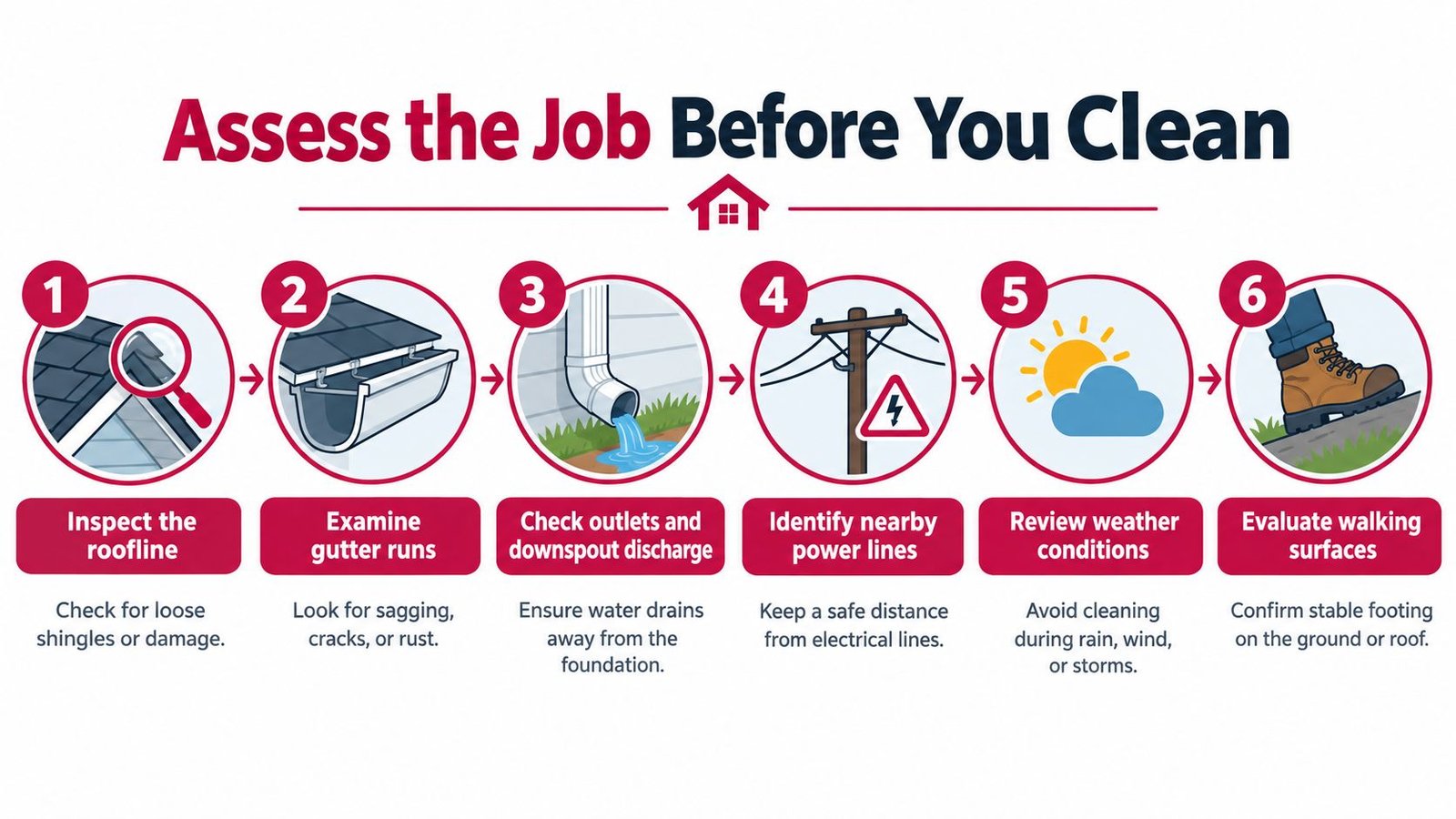
1. Prepare the Area and Set Up Safely
Preparing the area means getting your tools, ladder, and workspace ready before you touch the gutters. Lay a tarp below the work area. Set the ladder on firm, level ground. Use a stabilizer so it does not rest against the gutter itself. Wear gloves and safety glasses. Check for power lines near the roof edge, and never lean out past the ladder rails. Follow the manufacturer's instructions and OSHA's portable-ladder precautions.
This step matters because most gutter injuries come from falls. A few minutes of setup prevent accidents. It also keeps the job organized, so you do not have to climb up and down for forgotten tools. NIOSH's ladder-safety guidance explains the risks associated with ladder use. OSHA's ladder-training guidance also addresses ladder hazards.
2. Remove Leaves and Large Debris
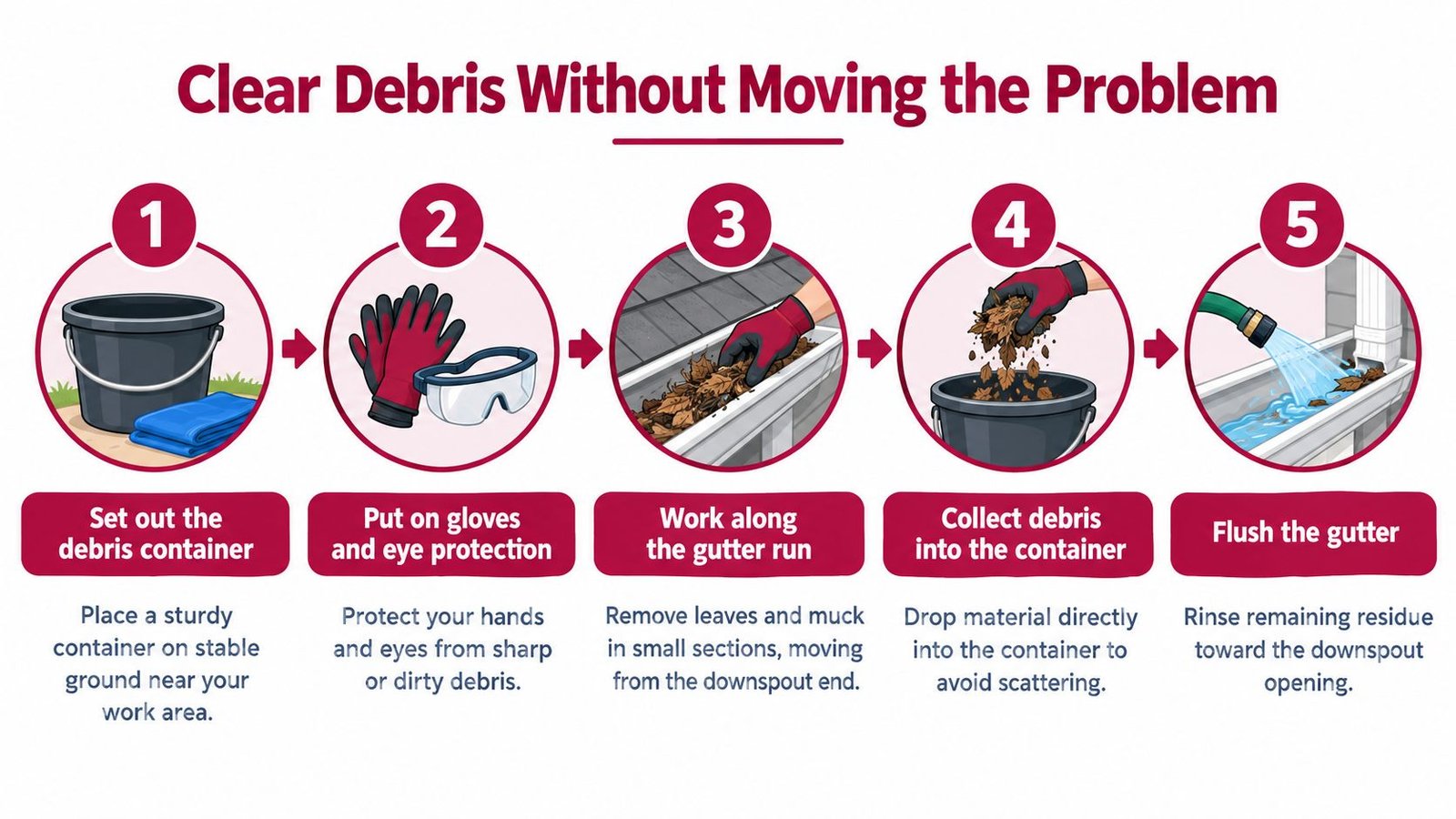
Removing large debris means scooping out leaves, twigs, and clumps by hand or with a scoop. Start near the downspout and work away from it. Drop the debris into the bucket or onto the tarp. Move the ladder as you go instead of stretching sideways.
This step matters because large debris is the main cause of blockages. Clearing it first lets you see the real condition of the gutter. It also stops big clumps from washing into the downspout during flushing. For additional precautions, see West Virginia University Extension's gutter-safety guidance.
3. Clear Fine Debris and Dirt
Clearing fine debris means removing the packed dirt, shingle grit, and sludge left at the bottom of the gutter. Use a trowel or a gloved hand. A stiff brush loosens what sticks to the metal.
This step matters because fine debris forms a dense layer that holds water. Left behind, it hardens and clogs the downspout opening. It also speeds up rust in metal gutters.
4. Flush the Gutters With Water
Flushing means rinsing the gutters with a garden hose. Start at the end farthest from the downspout. Work toward the downspout so the water carries loose dirt along. Use steady pressure and avoid a harsh blast that could loosen joints. For more on gutter and downspout cleaning, see RBM Services' gutter and downspout guidance.
This step matters because flushing removes what your hands cannot reach. It also tests the system. Slow-moving water or pooling in one section points to a clog or a slope problem.
5. Check Water Flow and Gutter Condition
Checking flow means watching the water as it moves through the gutter and exits the downspout. The water should run freely, with no pooling and no leaks at the seams. Look at the downspout outlet. Water should leave in a steady stream and drain away from the foundation.
This step matters because it confirms the job is done. A gutter can look clean and still hold water. If the flow is weak or the gutter holds standing water, fix the problem before you take down the ladder.
The accompanying video provides a visual reference for gutter cleaning.
How to Clean a Clogged Gutter Downspout
To clean a clogged gutter downspout, follow the steps below.
-
Water spilling over the gutter edge: Water pours over the sides instead of flowing down the spout. The gutter fills faster than it drains.
-
Slow or no flow at the outlet: Only a trickle leaves the bottom of the downspout in heavy rain. A healthy spout releases a steady stream.
-
Leaks at seams and elbows: Water drips from joints and bends. Pressure builds behind the clog and forces water out.
-
Sagging or separated downspouts: The spout pulls away from the wall. Trapped water adds weight and loosens the brackets.
-
Streaks or stains on the siding: Dark lines run down the wall below the gutter. Overflowing water carries dirt with it.
-
Pooling water near the foundation: Puddles form at the base of the wall. Water that cannot leave the spout lands beside the house.
-
Standing water in the gutter: The channel stays wet long after the rain stops. Plants or mosquito larvae may even start to grow there.
What Are Signs of a Clogged Downspout?
The signs of a clogged downspout are listed below.
-
Overflowing gutters: Water spills over the gutter edge even though the channel is clean.
-
Little or no water at the outlet: The downspout stays dry or drips slowly during rain.
-
Water pooling near the foundation: Water collects at the base of the downspout instead of draining away.
-
Gurgling or hollow sounds: Trapped air and water move around a blockage.
-
Stains or streaks on siding: Overflow leaves dirt marks on the wall behind the downspout.
-
Sagging downspout: Water weight bends or pulls the pipe from its brackets.
How to Unclog a Downspout?
To unclog a downspout, follow these steps.
-
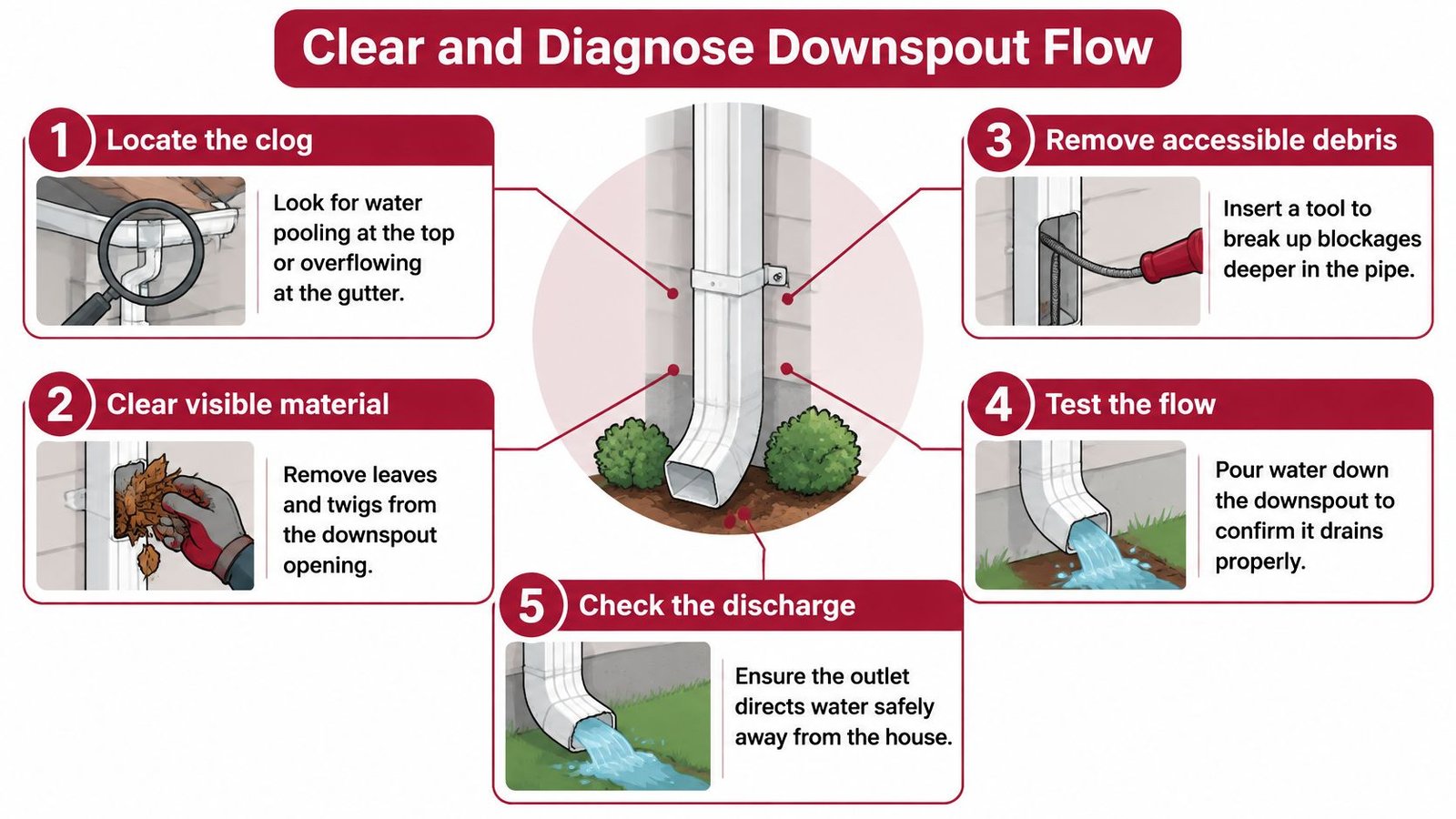
Disconnect the lower elbow or extension so you can reach inside.
-
Remove any debris you can see by hand.
-
Flush the downspout from the top with a garden hose and steady pressure.
-
Feed a plumber's snake from the bottom or top to break up a stubborn clog.
-
Flush again to carry out the loosened material.
-
Reattach the elbow, then run water to confirm the flow.
Never use harsh chemical cleaners in a downspout. They can damage the metal and the pipe joints. They also harm plants and soil when the water drains out.
How to Clean Underground Gutter Drains?
To clean underground gutter drains, follow the steps below.
-
Disconnect the downspout: Detach the downspout from the underground drain inlet. This gives open access to the pipe.
-
Remove surface debris: Pull leaves, silt, and grit from the inlet or catch basin. Clear the grate if there is one.
-
Flush the pipe with a hose: Push the hose into the drain opening. Run water at full pressure. Loose debris moves toward the outlet.
-
Clear blockages with a drain snake: Feed a drain snake into the pipe. Rotate it as you push forward. Pull out roots, mud, and packed debris.
-
Use a pressure jetter for heavy buildup: Attach a drain-jetting nozzle to a pressure washer. Feed it slowly through the line. The jets scour the pipe walls clean.
-
Test the drain: Run water down the line for several minutes. Check the outlet or discharge point. Water should exit freely.
-
Reconnect the downspout: Fit the downspout back into the inlet. Seal the joint so debris stays out. A mesh strainer at the inlet helps prevent new clogs.
If the problem appears to involve plumbing rather than a stormwater drain, a home plumbing inspection may help identify the appropriate service.
How to Clean Gutters Without a Ladder
To clean gutters without a ladder, follow these steps.
-
Choose the right tool for the debris. Use a wand for packed leaves and a hose attachment for loose dirt.
-
Lay a tarp or clear the ground below the gutter.
-
Extend the pole and place the tool in the gutter near a downspout.
-
Work slowly along the gutter and pull or flush debris out.
-
Flush the gutter with the hose when you finish.
-
Check the downspout outlet to confirm water flows freely. If you have a roof drain cleanout, make sure the cap is secure and the opening is clear.
How to Inspect Gutters for Damage and Drainage Problems
A gutter inspection checks that the system holds water and moves it away correctly. To inspect gutters for damage and drainage problems, check these things below.
-
Leaks: Look for drips at seams, corners, and end caps. Run water and watch for wet spots.
-
Loose fasteners: Check that hangers, brackets, and screws hold the gutter tightly to the fascia.
-
Sagging sections: Look for dips or gaps along the gutter line. Sags trap water and strain the fasteners.
-
Standing water: Water left in the gutter after rain means the slope is wrong or a clog remains.
-
Slope: Gutters should tilt slightly toward the downspout, about a quarter inch for every 10 feet.
-
Downspout discharge: Water should exit well away from the foundation. Add an extension if it pools near the house.
How Often Should You Clean Your Gutters?
You should clean your gutters at least twice a year. Clean them in late spring and again in late fall, after most leaves have dropped. Some homes need more frequent cleaning.
Several factors change the schedule. Homes near many trees collect debris faster, especially pine needles and seeds. Areas with heavy rainfall need clear gutters more often. Heavy debris buildup between cleanings is a clear sign to clean sooner. Check your gutters after major storms as well. Keep these checks alongside your home plumbing maintenance checklist, while treating roof runoff and household plumbing as separate systems.
When Should You Hire a Professional Gutter Cleaning Service?
You should hire a professional gutter cleaning service when the work is unsafe or beyond a simple cleaning. Common situations include the following.
-
Unsafe roof access: Steep roofs, multi-story homes, and wet or icy conditions make ladder work risky.
-
Persistent blockages: Clogs that return after flushing point to a deeper problem.
-
Damaged gutters: Leaks, sagging, and rusted sections need repair, not just cleaning.
-
Inaccessible underground drains: Buried lines need cameras and specialty tools. A trained expert from a professional plumbing company can find and clear the blockage without digging up your yard.
If you suspect the issue involves household plumbing, see when to call a plumber before choosing a service provider.