

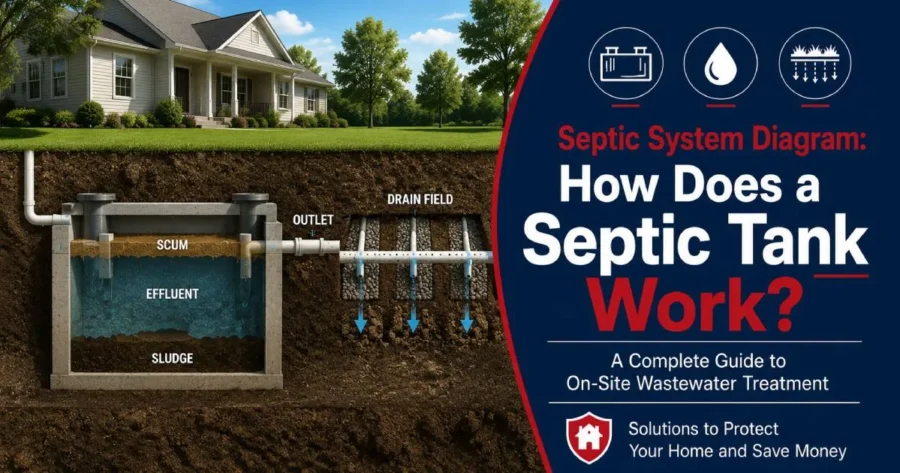
A septic system is an onsite wastewater treatment system that collects, treats, and disperses household in the U.S wastewater without connecting to a municipal sewer. Septic system is used by rural homes, off-grid properties, and areas where public sewer infrastructure is unavailable.
Septic system diagram helps identify how each component functions, making maintenance and troubleshooting easier, while the guide explains the wastewater journey, major system components, problems, and their relationship to the plumbing system.
Septic System Diagram
What Is a Septic Tank
A septic tank is a buried, watertight container that serves as the core treatment component of an on-site wastewater system for homes not connected to a municipal sewer line. Understanding the meaning of septic tanks starts with receiving wastewater from sinks, toilets, and drains, separating solids from liquids, and then letting bacteria break down waste before the effluent moves to the drain field.
Septic tanks keep solids from clogging the soil absorption system and prevent sewage from contaminating groundwater. Septic tanks are made of concrete, fiberglass, or plastic, each chosen for durability underground.
How Does a Septic Tank Work
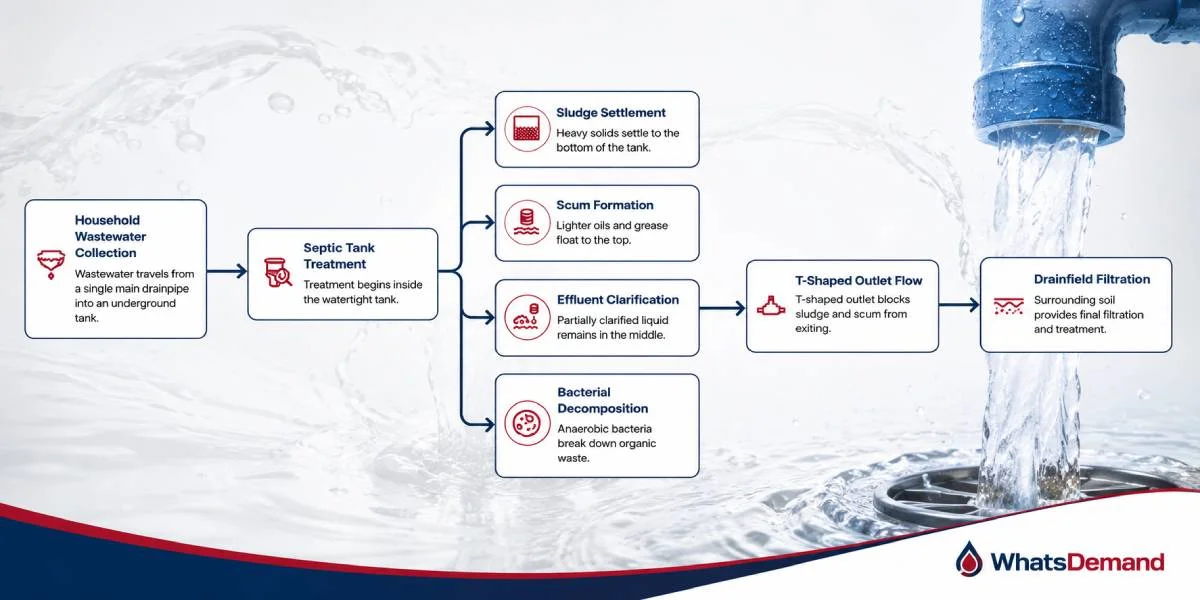
A septic tank works through a system that carries all wastewater from a single main drainpipe into a tank, where treatment begins before the water reaches the drainfield. Heavy solids settle to the bottom as sludge, lighter oils and grease float to the top as scum, and the liquid, called effluent, remains in the middle while occurring anaerobic bacteria break down a portion of the organic waste and reduce solid accumulation.
The treated effluent then flows through a T-shaped outlet that blocks sludge and scum from escaping, continuing to the drainfield where the surrounding soil provides additional filtration and treatment, completing the onsite wastewater process described in types of plumbing system
Do I Have a Septic Tank?
Yes, you have a septic tank if your home is not connected to a municipal sewer and instead treats wastewater through an onsite septic system. Septic tanks are common in rural areas, newer developments without public sewer service, and properties where installing sewer lines is impractical. Property records, septic permits, inspection reports, or the local health department can confirm if the house uses a septic tank.
What Are the Main Components of A Septic System?
The main components of a complete septic system are listed below.
- Septic Tank: The tank holds wastewater long enough for solids to settle as sludge and grease to rise as scum.
- Inlet and Outlet Baffles (or T-shaped Outlet): The baffles direct incoming wastewater downward and block sludge and scum from exiting the tank into the drainfield.
- Effluent Filter: The filter screens remaining solids from the liquid before it exits the tank toward the drainfield.
- Drainfield (Soil Absorption Field): The drainfield disperses pretreated effluent through piping into unsaturated soil for natural filtration.
- Distribution Box: The box divides effluent flow evenly among multiple drainfield lines or trenches.
- Soil Absorption Area: The soil removes harmful bacteria, viruses, and nutrients as effluent percolates toward groundwater.
What Happens Inside a Septic Tank During Treatment?
Inside a septic tank, incoming wastewater settles into three layers, where heavy solids sink and form sludge at the bottom, fats and grease rise to form scum on top, and clarified effluent remains in the middle.
The bacteria digest the organic solids in the sludge, breaking them down and reducing their volume over time. Only the middle effluent layer is allowed to exit through the outlet baffle toward the drainfield, while the sludge stays trapped inside until the tank is pumped.
What Do Septic Tanks Look Like Structurally?
A septic tank looks like a large watertight underground chamber, built in single-compartment or two-compartment configurations from concrete, fiberglass, or high-density polyethylene (HDPE), with residential capacities ranging from 750 to 1,500 gallons. The structure includes an inlet pipe, outlet pipe, inlet and outlet baffles or sanitary tees, access lids, and risers, which regulate wastewater flow, retain solids, and provide maintenance access without excavation.
Residential tanks measure about 8 to 12 feet long and 4 to 6 feet wide, with the outlet positioned slightly lower than the inlet to maintain gravity flow toward the drainfield.
What Is a Drain Field and How Does It Filter Effluent?
A drain field called a “leach field is the final component of a conventional septic system that receives partially treated effluent from the septic tank through perforated pipes buried in gravel-filled trenches. It filters effluent through gravel that distributes the flow through unsaturated soil that traps contaminants while aerobic bacteria break down remaining organic matter and pathogens.
How Can You Tell if Your Septic Tank Is Full or Failing?
A septic tank can be full when solids have accumulated beyond normal levels, while a failing septic system means wastewater is no longer being treated or absorbed properly by the tank or drain field.
The common warning signs that your septic tank is full or failing are listed below.
- Slow Drains: Wastewater moves slowly through sinks, tubs, showers, or toilets because the tank or drain field does not handle normal flow.
- Sewage Odors: Foul smells near drains, the tank, or the yard indicate gases or wastewater are escaping from the system.
- Toilet or Drain Backups: Wastewater returning into plumbing fixtures shows the septic tank, pipes, or drain field is overloaded or blocked.
- Standing Water Above the Drain Field: Pooled water or soggy soil means effluent is not infiltrating the soil properly.
- Bright Green Grass Above the Drain Field: Unusually lush vegetation results from excess wastewater and nutrients reaching the surface.
- Gurgling Plumbing Fixtures: Unusual sounds from drains or toilets indicate restricted wastewater flow or pressure imbalance.
- Contaminated Well Water: Elevated nitrate or bacteria levels indicate untreated effluent is reaching groundwater.
How Often Should a Septic Tank Be Pumped?
A septic tank should be pumped every 3 to 5 years under normal household use, but larger families, garbage disposals, and smaller tank capacities shorten the service interval.
The U.S. Environmental Protection Agency recommends regular inspections and pumping before sludge and scum occupy excessive tank volume, preventing solids from entering and damaging the drain field. Following a routine pump tank septic maintenance schedule, as explained in when to pump your septic tank, helps extend system life, prevent repairs, and maintain proper wastewater treatment.
Holding Tank vs Septic System
A holding tank is a underground container that stores wastewater for removal, while a septic system treats and disperses wastewater onsite through a septic tank and drain field. A modern septic system uses natural biological treatment to reduce contaminants before releasing effluent into the soil, unlike a holding tank.
The main differences between a holding tank and a septic system are shown below.
| Feature | Holding Tank | Septic System |
|---|---|---|
| Primary Function | Stores wastewater until it is pumped out. | Treats and disperses wastewater onsite. |
| Wastewater Treatment | No treatment occurs inside the tank. | Separates solids and biologically treats wastewater before soil filtration. |
| Wastewater Storage | Stores 100% of household wastewater. | Stores wastewater temporarily before treatment and discharge. |
| Pumping Frequency | Every 4-6 weeks to months, depending on usage and tank size. | Every 3-5 years under normal household use. |
| Installation | Requires only a watertight holding tank and access for pump trucks. | Requires a septic tank, drain field, distribution piping, and suitable soil. |
| Maintenance | Frequent pumping and leak inspections. | Regular inspections, pumping, and drain field maintenance. |
| Common Applications | Seasonal cabins, temporary buildings, high water table sites, or locations where drain fields are not permitted. | Permanent homes with land and no access to a municipal sewer. |
Do Septic Tank Treatments Work?
Yes, septic tank treatments work in limited situations, but they do not replace routine pumping or repair of a failing septic system. Biological treatments contain live bacteria, enzyme-based treatments contain enzymes that help break down organic material, and chemical additives use acids or solvents that can disrupt the natural microbial balance inside the tank.
The U.S. Environmental Protection Agency states that a properly functioning septic system normally contains enough naturally occurring bacteria for treatment, making additives unnecessary in most cases. Regular inspections, pumping, and plumbing services remain the most effective methods for maintaining long-term septic system performance.