

Mineral scale and rust buildup can gradually accumulate inside plumbing pipes, reducing the space available for water to flow. Left untreated, heavy deposits can contribute to low water pressure, restricted flow, and poor plumbing performance.
Pipe descaling removes hardened deposits from the internal surfaces of pipes. Understanding what causes buildup and recognizing the warning signs can help determine when professional pipe descaling services are appropriate.
Homeowners dealing with overlapping mineral and corrosion deposits can review this explanation of mixed pipe deposits for additional background on how buildup forms inside plumbing lines.
What Is Pipe Descaling?
Pipe descaling is the process of removing mineral deposits, scale, rust-related buildup, and other hardened material from the inside of plumbing pipes. The treatment restores more of the pipe's internal passage so water can flow more freely, eliminating common plumbing problems.
Descaling is different from simply clearing a clog. Instead of targeting an isolated obstruction, the process addresses deposits that have accumulated along the interior pipe walls. For technical background on how corrosion scale can affect plumbing systems, research on corrosion scales and metal release provides useful context.
How Does Scale Build up Inside Pipes?
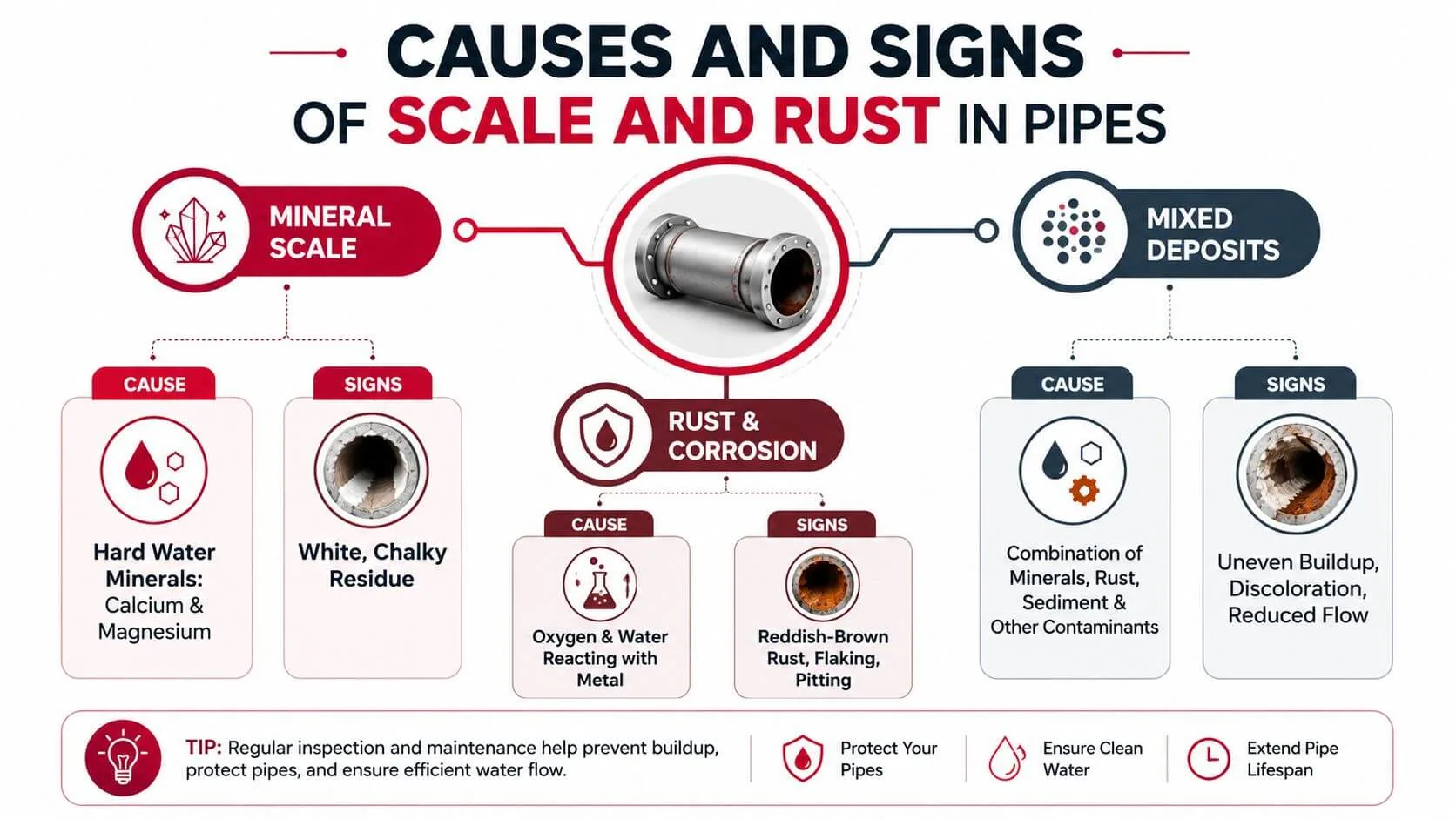
Scale builds up inside pipes when dissolved minerals in water, mainly calcium and magnesium, precipitate out of the water and attach to the pipe wall. This process is more common in hard-water areas, in hot-water lines, and in sections of plumbing where low flow or stagnation allows deposits to settle and harden over time.
Several conditions can accelerate scale formation:
- Hard water: Higher mineral content increases the amount of material available to form deposits.
- Heat: Warm surfaces encourage minerals to come out of solution and stick to the pipe.
- Slow movement: Low-flow branches and infrequently used lines give minerals more time to settle.
- Pipe condition: Rough, corroded, or damaged interior surfaces make it easier for deposits to accumulate.
What Signs Indicate Your Pipes Need Descaling?
The signs that indicate your pipes need descaling are listed below.
- Low water pressure: Reduced flow at showers, faucets, or multiple fixtures can point to narrowing inside supply lines.
- Recurring clogs or slow drainage: Hardened deposits inside drain lines can trap debris and contribute to repeated blockages.
- White or chalky residue: Visible mineral residue on aerators, showerheads, or nearby fixtures often suggests hard-water scale is also forming inside the line.
- Rust-colored or discolored water: Brown, orange, or reddish water may indicate corrosion deposits or rust-related disturbance in older metal piping.
- Noisy plumbing flow: Whistling or restricted water movement can occur when the internal passage becomes smaller.
- Uneven fixture performance: If some fixtures are weak while others are normal, buildup may be affecting specific branches or fittings.
These symptoms do not always confirm scale alone, but they are common indicators that internal pipe buildup should be inspected.
How Is the Pipe Descaling Process Performed?
To perform the pipe descaling process, follow the steps below.
- Inspect the plumbing line: A plumber identifies the affected section, pipe material, and likely type of buildup.
- Evaluate the pipe condition: Older lines, visible corrosion, weak joints, or wall loss may change whether cleaning is safe.
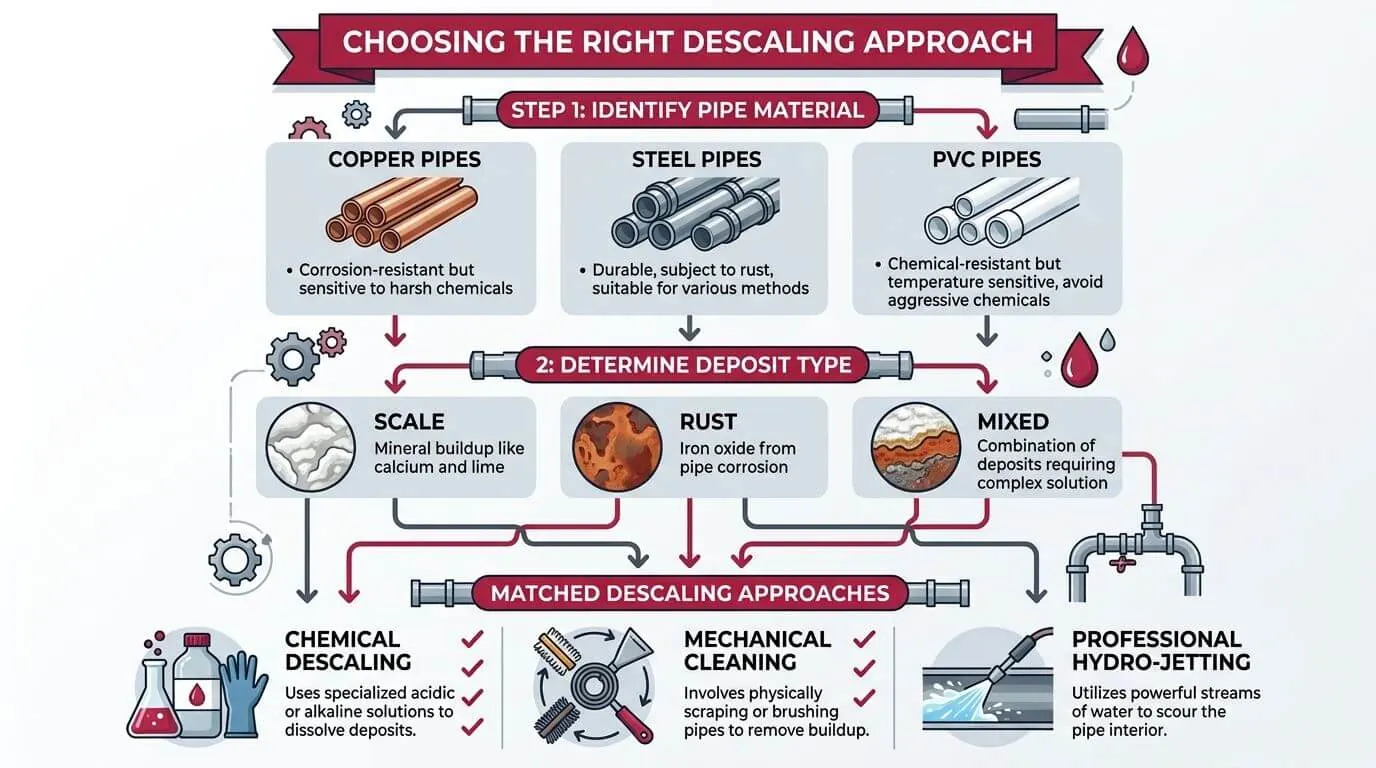
- Select the method: The contractor chooses chemical descaling, mechanical descaling, or hydro-jet cleaning based on the deposit and the pipe.
- Isolate the section if needed: Parts of the system may be shut off or separated to control the cleaning process.
- Remove the buildup: The selected method dissolves, scrapes, or flushes away internal deposits.
- Flush the line thoroughly: Loose debris and residue are washed out of the system.
- Verify function: Flow, drainage, and sometimes visual inspection are used to confirm the result.
The method is selected based on deposit type, pipe material, severity of restriction, and whether the line is structurally sound enough to be cleaned.
What Are the Main Benefits of Pipe Descaling?
The main benefits of pipe descaling are listed below.
- Improved water flow: Removing internal buildup can reduce restriction and help restore stronger fixture performance.
- Better drainage performance: In drain lines, clearing hardened deposits can reduce slow flow and recurring clogs.
- More efficient plumbing operation: Valves, fixtures, and connected plumbing components can work more predictably when scale is reduced.
- Less debris circulation: Removing loose mineral and corrosion deposits can help limit recurring sediment at fixtures.
- A clearer picture of pipe condition: Once buildup is removed, a plumber can better evaluate whether the line is still serviceable or needs repair.
As explained in this mechanical descaling guide, mechanical cleaning can be effective for removing hardened buildup from pipe walls when the line is still structurally sound. Descaling improves performance, but it does not rebuild pipe material that has already been lost to corrosion.
How Does Descaling Differ from Hydro Jetting or Snaking?
In plumbing maintenance, pipe descaling, hydro jetting, and drain snaking are various methods. Pipe descaling is the removal of hardened deposits from the walls of pipes. It effectively removes mineral scale and other deposits that impede water flow. This method is most frequently used in plumbing systems where scale buildup is a major issue.
Hydro jetting, however, uses high-pressure water to clean the interior surfaces of the pipes. It’s especially good at cutting through grease, sludge, debris, and some kinds of deposits, making it a handy option for a variety of plumbing issues.
However, drain snaking is mostly used to break up or clear localized blockages. This is a good method to use for certain kinds of clogs that prevent water from flowing in drains.
It is important to keep in mind that these methods are not always mutually exclusive. A professional may recommend one or a combination of these methods depending on the condition of the plumbing system for the best results.
Which Types of Pipes Can Be Descaled?
The types of pipes that can be descaled are listed below.
- Copper: Standard metal piping widely used for supply lines. It handles mineral scale buildup well and can generally tolerate mild chemical or mechanical descaling methods if structurally sound.
- PVC (Polyvinyl Chloride): A common, durable plastic pipe used mainly for drainage and water lines. While resistant to corrosion, safe descaling requires non-abrasive methods or chemical agents specifically formulated not to melt or weaken plastic.
- CPVC (Chlorinated Polyvinyl Chloride): Similar to standard PVC but engineered to handle higher temperatures, making it common in hot-water lines. It requires gentle descaling solutions that do not react negatively with heat-rated thermoplastic materials.
- Cast Iron: Heavy-duty iron piping frequently found in the main drain and sewer lines of older buildings. It is prone to heavy rust, scale, and tuberculation, requiring mechanical milling or high-pressure flushing to restore flow.
- Steel or Galvanized Steel: Strong metal pipes coated with zinc to prevent rust, often found in older plumbing systems. Over time, the protective layer wears down, leading to rust buildup and scale that requires careful assessment before treatment to avoid puncturing thin, corroded pipe walls.
A pipe should only be descaled if inspection shows it can tolerate the process safely.
How Long Does Pipe Descaling Take?
There is no universal time for pipe descaling because service duration depends on the size, accessibility, condition, and severity of the affected plumbing.
A short section with moderate buildup may require less work than a large system with extensive scale. Pipe material, treatment method, flushing requirements, and the need for additional inspection can also affect the overall service time.
Can I Descale My Own Pipes?
Yes, you may be able to remove minor deposits from accessible fixtures, but extensive pipe descaling is generally better handled by a professional.
DIY chemical treatments can damage incompatible pipe materials or create hazardous reactions if products are mixed incorrectly. Mechanical treatment can also be risky when older pipes are already weakened by corrosion.
For significant internal buildup, professional descaling allows the pipe condition and deposit type to be evaluated before treatment.
What Dissolves Calcium Buildup in Pipes?
Acidic descaling agents can dissolve calcium-based deposits, but the appropriate product depends on the pipe material and the composition of the buildup.
Citric acid and professionally formulated descaling products are used for certain mineral deposits. Stronger acids are not automatically more effective or safer because they can damage plumbing materials and create handling or disposal hazards.
The safest approach is to select a descaling agent that is compatible with the deposit, pipe material, and manufacturer's requirements.
A peer-reviewed laboratory study found that a 5% hydrochloric acid solution effectively dissolved tested pipeline scale. However, descaling agents must be selected according to the deposit, pipe material and system compatibility (study)
Is Descaling Pipes Necessary?
Yes, when internal buildup is materially reducing plumbing performance or contributing to water-quality and flow problems. Descaling may be necessary if scale or corrosion deposits are causing low pressure, repeated restrictions, visible sediment, or recurring drainage issues that inspection traces back to internal buildup.
It is not necessary in every case. If the problem is a single fixture, a failed component, severe pipe deterioration, or a line that is better replaced than cleaned, descaling may not be the right solution. The need depends on buildup severity, pipe condition, and whether cleaning can restore function safely.
Is Hydrojetting Bad for Pipes?
No, hydro jetting is not inherently bad for pipes, but excessive pressure or improper equipment can damage plumbing that is already weakened.
The safety of hydro jetting depends on factors such as pipe material, age, corrosion, structural condition, water pressure, and nozzle selection. Old pipelines may not be suitable for high-pressure cleaning.
A professional can evaluate the plumbing before selecting an appropriate pressure and cleaning method.
Can I Do Hydro Jetting Myself?
No, DIY hydro jetting is generally not recommended for residential plumbing because the equipment operates at high pressure and can cause damage when used incorrectly.
Improper nozzle selection, excessive pressure, or treating a deteriorated pipe can turn a cleaning attempt into a plumbing repair. Professionals can also identify whether a blockage is hiding damaged or weakened piping before performing high-pressure cleaning.
Professional assessment helps determine whether hydro jetting services, pipe descaling, snaking, or pipe replacement is the appropriate solution for significant buildup or recurring blockages.