

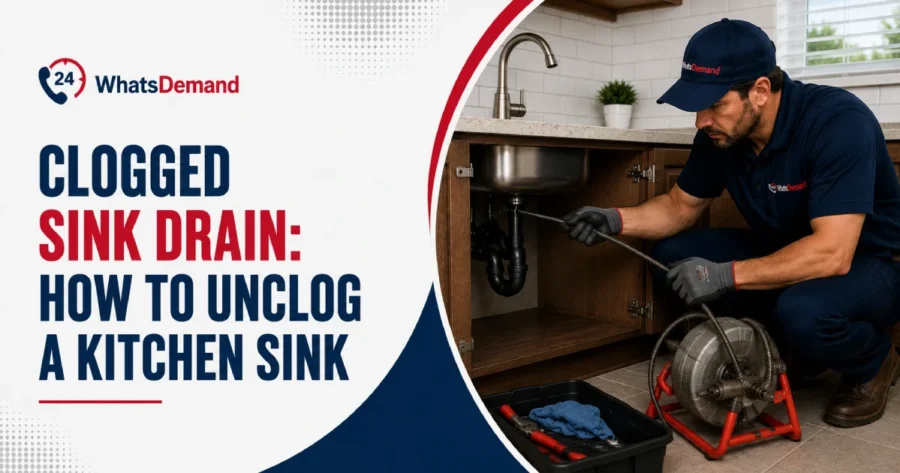
Clogged sink drain is a common kitchen problem in USA homes caused by grease, food debris, soap scum, or buildup inside the P-trap and drainpipe. A clogged drain are cleared with safe DIY methods (plunging, baking soda and vinegar, P-trap cleaning, or drain snaking), depending on the blockage location.
Knowing the cause and location of the blockage helps you choose the right method without disturbing the plumbing system. Professional help through a plumbing service are needed to resolve a severely clogged sink safely, when the methods fail or multiple drains back up.
1. Clear Standing Water and Try a Plunger
Clear standing water and try a plunger to unclog a kitchen sink by first removing excess water, which allows the plunger cup to form a tighter vacuum seal over the drain.
Proper plunging requires rapid push-and-pull strokes held firmly over the drain, which must result in water draining freely within 10-15 pumps.
To prepare a kitchen sink for plunging, follow the five steps listed below.
- Remove standing water. Bail out excess water using a cup or bucket until only 2-5 inches remain above the drain.
- Put on rubber gloves. Wear rubber gloves before handling the sink area to protect hands from bacteria-laden water and debris.
- Clear the sink strainer basket. Remove and rinse the strainer basket, discarding any visible food scraps or grease buildup blocking the drain opening.
- Plug the secondary drain. Block the second basin opening with a wet rag to prevent air pressure from escaping during plunging.
- Select the correct plunger type. Use a flat-bottomed cup plunger rather than a flange plunger, as the flat cup forms a proper seal on a kitchen sink basin.
How Do You Use a Plunger to Unclog a Kitchen Sink with Standing Water?
To use a plunger to unclog a kitchen sink with standing water, follow the five steps listed below.
- Position the Cup Plunger Directly Over the Drain. Press the rubber cup flat over the drain opening until no gaps remain between the rim and the sink basin surface.
- Push Down Slowly on the First Stroke. Press the plunger down gently on the initial stroke to expel trapped air from inside the cup without breaking the seal.
- Pump in Rapid Consecutive Strokes. Drive the plunger down and pull up sharply 10-15 times in quick succession while keeping the rubber cup sealed against the basin.
- Pull the Plunger Away on the Final Stroke. Yank the cup upward on the last pull to release suction and dislodge the clog from the drainpipe.
- Run Hot Water to Verify Clog Clearance. Flow hot water for 30-60 seconds and confirm the drain is clear when water flows down without pooling in the basin.
What Should You Do First When Your Kitchen Sink Is Backed Up with Water?
The first things you should do when your kitchen sink is backed up with water are to shut off the faucet handles immediately and put on rubber gloves to prevent overflow and protect hands from bacteria-laden water.
Use a cup or ladle to bail out standing water into a bucket until the basin reaches a manageable level for drain-clearing. Remove the strainer basket and discard visible food scraps or grease buildup to eliminate blockages before using a plunger or drain treatment.
2. Use Baking Soda and Vinegar
Use baking soda and vinegar to unclog a kitchen sink by combining 1 cup of baking soda followed by one cup of white vinegar into the drain, triggering a chemical reaction that breaks down grease and organic buildup coating the drainpipe walls.
The method works best on minor clogs caused by grease, soap scum, or food residue, but is ineffective against solid blockages (food chunks) requiring mechanical removal.
How Do You Unclog a Sink Drain Naturally Using Baking Soda and Vinegar?
To unclog a sink drain naturally using baking soda and vinegar, follow the five steps listed below.
- Pour Boiling Water Down the Drain. Flow one pot of boiling water into the drain opening to soften grease and loosen debris coating the drainpipe walls.
- Add One Cup of Baking Soda. Pour 1 cup of baking soda into the drain and allow it to sit for 2 minutes before adding vinegar.
- Pour One Cup of White Vinegar. Add 1 cup of white vinegar into the drain immediately after the baking soda to activate the fizzing reaction that breaks down organic buildup.
- Cover the Drain and Wait 15 Minutes. Place the strainer basket or a drain cover over the opening to force the fizzing reaction downward into the clog rather than upward.
- Flush With Hot Water. Run hot water for 60 seconds to flush loosened debris and residual baking soda and vinegar solution out of the drainpipe.
Do Baking Soda and Vinegar Really Dissolve Kitchen Sink Grease Clogs?
Yes, baking soda and vinegar really dissolve light kitchen sink grease clogs by producing a carbonic acid reaction that loosens grease films, soap scum, and organic residue from drainpipe walls, but the fizzing action is too weak to break down thick grease deposits.
The solution works best as a maintenance treatment rather than a heavy-duty clog remover, and for persistent grease blockages that the method fails to clear, contacting a drain cleaning service is the most effective solution to fully restore kitchen sink drainage.
3. Clean the P-Trap
Clean the P-trap to remove the curved pipe section beneath the kitchen sink that holds standing water to block sewer gases from entering the home while catching grease and food debris that cause drainage blockages.
Place a bucket underneath, unscrew the slip-joint nuts on the ends by hand or with pliers, pull the curved pipe free, flush out the debris, and reattach it securely before running water to test for leaks.
How Do You Remove and Clean a Kitchen Sink P-Trap?
To remove and clean a kitchen sink P-trap, follow the six steps listed below.
- Place a Bucket Under the P-Trap. Position a bucket beneath the curved pipe to catch standing water and debris during removal.
- Unscrew the Slip-Joint Nuts. Loosen slip-joint nuts on each end of the P-trap by hand or with slip-joint pliers.
- Remove the P-Trap. Pull the curved pipe free from the drain tailpiece and the wall drain pipe.
- Flush Out Debris. Rinse the P-trap over the bucket, removing grease, food scraps, and soap scum from inside the pipe.
- Reattach the P-Trap. Align the curved pipe back onto the drain tailpiece and wall drain pipe openings.
- Hand-Tighten the Slip-Joint Nuts. Secure nuts firmly by hand to avoid overtightening and cracking the pipe threads.
Where Is the Clog Located If Your Kitchen Sink Won’t Drain?
The clog is located in the drain opening, P-trap, or deeper inside the drainpipe if your kitchen sink will not drain. Check if water backs up immediately at the opening, remains in the P-trap, or drains slowly to identify the blockage location.
Use a plunger for clogs near the drain opening, clean the P-trap for trapped debris, or use a drain snake for deeper blockages that occur with drainage problems.
4. Use a Drain Snake / Auger
Use a Drain Snake or Auger to break through stubborn clogs located deeper inside the drainpipe. Insert the cable slowly, rotate it to catch or break apart the blockage, then pull it out carefully to remove the debris. Flush the drain with hot water afterward to wash away remaining buildup and check that water flows freely.
How Do You Use a Drain Snake or Auger on a Stubborn Sink Clog?
To use a drain snake or auger on a stubborn sink clog, follow the six steps listed below.
- Insert the Snake Cable Into the Drain Opening. Feed the drain snake cable into the kitchen sink drain opening until it meets resistance from the clog.
- Tighten the Lock Screw on the Handle. Secure the lock screw on the drain snake handle to hold the cable firmly in place before rotating.
- Rotate the Handle Clockwise. Turn the drain snake handle clockwise to drive the auger tip into the clog and break apart grease buildup or food debris.
- Push and Pull the Cable to Dislodge the Clog. Work the cable back and forth to break the blockage apart or hook onto the debris for extraction.
- Slowly Retract the Cable. Pull the drain snake cable back out, removing any debris attached to the auger tip along with it.
- Flush the Drain With Hot Water. Run hot water for 60 seconds to clear remaining debris from the drainpipe, and for clogs that the drain snake fails to remove, contacting a plumbing repair service ensures blockage removal without risking pipe damage.
What Do You Do When Baking Soda and Plunging Don’t Clear the Drain?
To address a clogged kitchen sink drain when baking soda and plunging fail, follow the eight steps listed below.
- Inspect the P-Trap for Blockages. Unscrew the P-trap and check for compacted grease or food debris inside the curved pipe.
- Use a Drain Snake. Feed a drain snake cable into the drainpipe to break apart blockages beyond a plunger’s reach.
- Check the Garbage Disposal Unit. Press the reset button on the disposal base and run it briefly to rule out a jammed unit.
- Pour Boiling Water Down the Drain. Flow a full pot of boiling water into the drain to soften and flush hardened grease from the pipe walls.
- Apply an Enzyme-Based Drain Cleaner. Pour enzyme-based drain cleaner into the drain and allow it to sit overnight to dissolve organic buildup.
- Check Adjacent Drains for Slow Drainage. Test nearby bathroom or laundry drains to determine whether the blockage affects the main sewer line.
- Remove and Clean the Drain Stopper Assembly. Lift out the drain stopper assembly and remove soap scum and grease buildup coating the stopper rod.
- Call a Licensed Plumber. Contact a licensed plumber through WhatsDemand when all household methods fail, as the blockage requires hydro-jetting or pipe inspection equipment.
Why Is My Kitchen Sink Clogged and Won’t Drain?
The reasons why your kitchen sink is clogged and won’t drain are listed below.
- Grease and Fat Buildup: Cooking oil and fat solidify on drainpipe walls over time, narrowing the pipe until water flow stops completely.
- Food Debris Accumulation: Small food particles bypass the strainer basket and compact inside the drainpipe, forming a dense blockage that restricts drainage.
- Soap Scum Deposits: Dish soap residue combines with hard water minerals and coats the interior drainpipe walls, gradually reducing water flow.
- Blocked P-Trap: Grease and food debris collect inside the curved P-trap pipe beneath the sink, causing water to pool and drain slowly.
- Garbage Disposal Buildup: Food waste accumulates inside a garbage disposal unit, restricting water flow into the drainpipe.
- Foreign Object Lodged in Drain: Small utensils, bottle caps, or non-food items dropped into the drain create a blockage.
- Main Sewer Line Blockage: A clog in the main sewer line causes multiple drains throughout the home to back up, including the kitchen sink.
When Should You Call a Professional Plumber for a Clogged Sink?
You should call a professional plumber when DIY methods (plunging, drain snaking, and enzyme cleaners) fail to restore drainage, or when warning signs like foul sewer odors, gurgling sounds from multiple drains, or wastewater backing up into adjacent fixtures indicate a sewer line blockage. Call a plumber to prevent pipe damage and ensure the blockage is fully resolved using professional hydro-jetting or pipe inspection for severe plumbing issues that exceed household repair.
How Can You Prevent Food and Grease Clogs in Your Kitchen Drain?
You can prevent food and grease clogs in your kitchen drain by scraping food scraps into the trash before rinsing dishes, pouring cooled cooking grease into a sealed container for disposal, and running hot water for 30 seconds after each use to flush residual grease from the drainpipe.
Use a fine-mesh strainer basket to catch food particles and treat the drain with enzyme-based cleaner, and for kitchens handling large grease volumes, considering a grease trap installation is the most effective long-term prevention method.
Does Dawn Really Unclog Drains?
Yes, Dawn really does unclog drains, but only for light grease films and soap scum when combined with boiling water. It lacks the strength to break down compacted grease or solid food debris, making it a maintenance flush instead of a heavy-duty clog remover.
Does Vinegar Work Better than Drano?
No, vinegar does not work better than Drano for severe clogs, as Drano’s sodium hydroxide dissolves grease, food debris, and organic matter faster than vinegar’s mild acetic acid reaction.
Vinegar and baking soda are safer for PVC pipes and septic systems, while Drano is more effective for stubborn blockages but risks warping pipe joints with repeated use.
Will Pouring Boiling Water Down a Drain Unclog It?
Yes, pouring boiling water down a drain can unclog minor blockages caused by light grease buildup and soap scum by melting and flushing deposits through the drainpipe.
It is ineffective against solid food debris or compacted grease, and must not be used on PVC pipes, as temperatures above 140°F soften and warp pipe joints over time.