

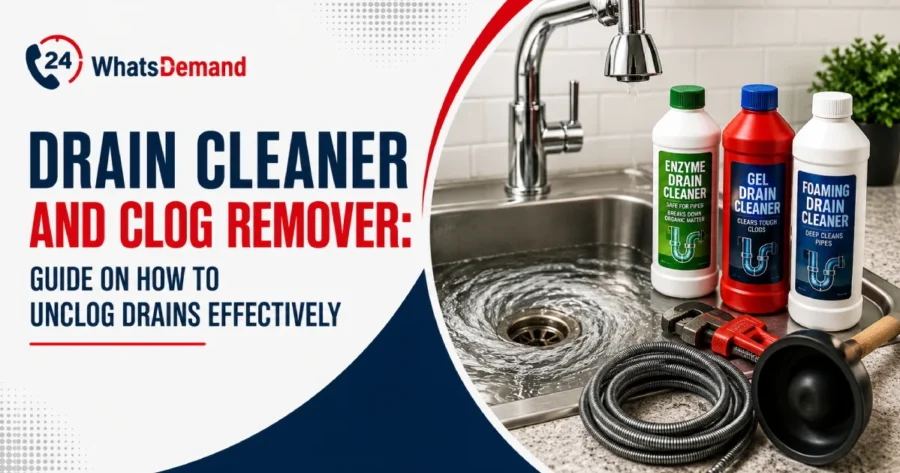
Drain cleaner and clog remover struggles hit homeowners in the US every day, as pooling water, foul odors, and slow drainage turn a small nuisance into a stressful household problem.
Choosing a good drain cleaner matters more than most realize, since the National Institutes of Health reports that drain cleaners cause 3,000 injuries a year nationwide, a third of them skin burns from improper handling. Understanding what triggers a clog and how to treat it safely is the first step to solving common drainage problems without harming your pipes or yourself.
Clog Too Stubborn or Risking Flooding?
If chemicals failed, you have absolute standing sewage, or your toilet is overflowing, do not wait. Get connected with a vetted licensed emergency plumber in your zip code immediately.
TOLL-FREE • 24/7 DISPATCH
The drain cleaner you should use for clogged drains is an enzymatic liquid drain clog remover, effective for breaking down organic waste without damaging pipe walls. Pour it into the drain, allow the dwell time stated on the label, then flush with hot water, slower-acting than caustic formulas but safer for older or fragile plumbing.
Wear gloves, keep the area ventilated, and avoid mixing chemical solutions, as improper handling triggers fumes or pipe corrosion.
The drain cleaner you should use for bathroom sinks are gel-based formulas, because they cling to pipe walls instead of running straight through standing water caused by hair and soap scum. Gel formulas cling longer and dissolve buildup thoroughly, but they need more sitting time than liquid types and can still irritate skin if handled without gloves.
Run cold water first to clear excess hair, then apply the gel per the label and rinse with warm water once it finishes working.
The drain cleaner you should use for kitchen sinks is enzyme and bacteria culture liquids, poured in overnight so the active cultures have time to digest grease and food buildup on the pipe walls. It works slower than caustic soda-based cleaners, but they do not pit or corrode metal pipes and are safer for septic-connected homes, while caustic types clear grease fast in minutes yet generate heat that can warp PVC joints.
Flush the line with hot water before treatment to soften existing grease, and skip pouring oil, coffee grounds, or eggshells down the drain afterward.
The drain cleaner you should use for a clogged toilet is an enzyme-based bio treatment, because caustic and acidic types can crack porcelain or damage the wax ring seal. It digests waste and paper buildup safely but takes hours to fully clear the line, making it suited to slow drains rather than full stoppages.
Skip chemical cleaners and use a plunger or toilet auger instead for a complete blockage.
The drain cleaner you should use for clogged pipes is a foaming solution. Foam expands to coat the entire pipe circumference instead of just tracing the water's path like liquids do. It reaches biofilm buildup on the upper pipe walls that other formats miss, but it works best on lighter buildup and struggles against solid, compacted blockages.
Pour it in slowly to let the foam expand, then leave it for the time stated on the label before flushing with water.
The drain cleaner you should use for septic systems is a bacterial culture additive, because caustic and acidic types kill the bacteria your septic tank needs to break down waste. It replenishes the tank's microbial balance while clearing organic buildup in the connecting pipes, but it works gradually and will not resolve a full blockage on its own.
Use it as regular maintenance rather than a one-time fix, and avoid pairing it with any chemical cleaner in the same drain.
The drain cleaner you should use for bathtubs is a caustic gel treatment, clinging to the pipe walls of the tub's longer, more angled drain line to break down hair and soap scum. It clears buildup fast through the heat it generates, but repeated use wear down older or metal piping over time.
Remove any visible hair clog by hand first, then apply the gel and rinse with hot water once it finishes working.
Are Chemical Drain Cleaners Safe for Your Pipes?
Yes, chemical drain cleaners are safe for your pipes when used on healthy, modern PVC with a minor clog, but repeated use softens joints and corrodes older metal piping over time. Cleaners must never be used on septic systems, since the reaction kills the bacteria the tank needs to break down waste.
An enzyme-based cleaner or professional snaking is the safer route, for older galvanized steel or cast iron lines.
Enzyme Drain Cleaners: The Safe, Eco-Friendly Alternative
Enzyme cleaners use bacterial cultures to digest organic waste biologically, working gently on cast iron, PVC, galvanized steel, and septic-connected lines without any corrosive reaction.
Enzyme cleaners take 1-4 hours, sometimes a full day, to clear buildup and do not break through a full stoppage, making them a maintenance tool rather than an emergency fix. It is the safest and only recommended option once pipe age or material is unknown or a home is on septic.
Liquid vs. Gel vs. Powder: Which Formula Wins?
Liquid cleaners move fast through standing water but trace only the bottom of the pipe, missing buildup higher on the walls, making them suited to fresh, minor clogs. Gel formulas cling to the pipe’s surface and coat vertical or angled sections more thoroughly, so they perform better on shower and bathtub drains where hair collects along the walls.
Powder types generate the strongest heat reaction and clear dense, compacted blockages fastest, but that same intensity makes them the riskiest choice for older metal piping or any drain connected to a septic tank.
What to Check Before Cleaning a Drain?
The things you need to check before cleaning a drain are listed below.
- Pipe Material: Older galvanized steel or cast iron corrodes under strong chemical reactions, while modern PVC tolerates occasional use.
- Clog Type: Grease, hair, soap scum, or mineral buildup each respond best to a different cleaner chemistry.
- Standing Water Level: Excess water dilutes cleaners before they reach the clog, so bail it out first.
- Septic Connection: Caustic and oxidizing chemicals kill the bacteria a septic tank needs to function.
- Label Compatibility: The product label confirms whether it suits the fixture, pipe type, or septic system.
- Ventilation: Fumes from chemical reactions build up quickly in enclosed bathrooms or laundry areas.
- Blockage Severity: A full stoppage needs mechanical removal first, since chemicals do not dissolve dense, compacted clogs.
- Fixture Age: Older sinks, tubs, or toilets have worn seals or fittings prone to chemical damage, a detail covered in plumbing maintenance checklist resources.
How to Use Drain Cleaners Safely and Effectively?
To use drain cleaners safely and effectively, follow the eight steps listed below.
- Wear Protective Gloves. Put on chemical-resistant gloves to shield skin from splashes before opening any drain cleaner container.
- Open a Window or Vent. Ventilate the bathroom or laundry area to disperse fumes released in the chemical reaction.
- Clear Standing Water. Bail out excess water from the sink, tub, or shower so the cleaner reaches the clog undiluted.
- Read the Product Label. Check the label to confirm the cleaner suits the pipe material and fixture before pouring.
- Pour the Cleaner Slowly. Apply the product directly into the drain opening to limit splashing onto surrounding surfaces.
- Wait the Recommended Dwell Time. Let the cleaner sit for the duration stated on the label to fully break down the clog.
- Flush with Hot Water. Run hot water through the drain once the dwell time ends to clear dissolved residue.
- Avoid Mixing Chemicals. Never combine different drain cleaner types in the same drain, since mixing acidic and caustic products generates toxic fumes and dangerous heat.
Alternative DIY Drain Unclogging Methods
Alternative DIY drain unclogging methods include the baking soda and vinegar reaction and mechanical tools like a drain snake or plunger, both of which clear minor clogs without any chemical risk to pipes.
The Baking Soda and Vinegar Method
The baking soda and vinegar method works by triggering a fizzing acid-base reaction that loosens grease and light organic buildup clinging to pipe walls.
Pouring one cup of baking soda down the drain, followed by one cup of vinegar, creates carbon dioxide gas that foams up the pipe and dislodges debris within 10 to 15 minutes. Flushing with hot water afterward clears the loosened residue, but the method does not affect hair mats, solid blockages, or deep buildup.
Utilizing a Drain Snake or Plunger
Utilizing a drain snake or plunger works by applying direct physical force or mechanical hooking to break apart or extract the material causing the blockage. A plunger needs enough standing water to cover its rubber cup, then 15 to 20 firm pumps to build the suction that dislodges clogs near the drain opening.
A drain snake threads 3 to 6 feet into the pipe, twisting on contact with the blockage to hook hair, debris, or foreign objects before pulling them out.
When to Put Down the Cleaner and Call a Professional Plumber?
Put down the cleaner and call a professional plumber when the clog returns repeatedly despite treatment, when multiple fixtures back up at once, or when standing water refuses to drain after several attempts.
Sewage odors, gurgling sounds from other drains, or slow drainage throughout the house all point to a deeper blockage in the main line that no store-bought product can fix.
What Are the Signs of a Main Sewer Line Blockage?
The signs of a main sewer line blockage are listed below.
- Multiple Drain Backups: Fixtures in the house clog or drain slowly at the same time.
- Gurgling Sounds: Toilets or nearby drains make bubbling noises whenever another fixture runs water.
- Sewage Odor: A persistent foul smell rises from indoor drains or the yard near the sewer line.
- Water Backing Up in Other Fixtures: Flushing the toilet or running the sink causes water to surface in the tub or shower drain.
- Toilet Water Level Changes: The bowl fills unusually high, drains sluggishly, or gurgles after each flush.
- Lush or Soggy Yard Patches: Unusually wet, greener grass forms in a strip over the underground sewer line.
- Pest Activity: Rodents or insects gather near floor drains, drawn in through cracks in the sewer line.
- Slow Drainage Throughout the House: Every sink, tub, and toilet drains slower than usual despite no local clog.
What Are the Risks of Repeated Chemical Use?
The risks of repeated chemical use are corroded metal pipes, softened PVC joints, and weakened seals from the repeated heat and reactive exposure each treatment generates.
Frequent exposure to fumes and residue raises the risk of skin burns, eye irritation, and respiratory issues beyond plumbing damage in poorly ventilated bathrooms.
How Does Hot Water Help Clear Minor Drain Clogs?
Hot water helps clear minor drain clogs through heat that melts soft grease and softens soap scum clinging to pipe walls, letting the loosened residue flush through with the water flow. It works best on light buildup from cooking fats, soap film, and minor food particles, but has no effect on hair, mineral scale, or solid blockages.
The method suits kitchen sinks and bathroom drains with fresh, minor clogs, not full stoppages or deep-line blockages.
Can Baking Soda and Vinegar Unclog a Drain?
Yes, baking soda and vinegar can unclog a drain, as the fizzing reaction between them loosens light grease and organic buildup clinging to pipe walls. It only works on minor, fresh clogs and has no effect on hair mats, mineral scale, or solid blockages.
Is Dish Soap Effective for Grease Clogs?
Yes, dish soap is effective for grease clogs, since it breaks down and emulsifies fat when combined with hot water, allowing it to flush through the pipe instead of hardening on the walls. It works best on fresh, minor grease buildup, but repeated grease clogs still need professional cleaning to clear the root buildup.
How Do You Use a Wet/Dry Vacuum to Remove a Blockage?
To use a wet/dry vacuum to remove a blockage, follow the six steps listed below.
- Clear the Sink Area. Remove the drain stopper and bail out any standing water so the vacuum has direct access to the drain opening.
- Set the Vacuum to Liquid Mode. Switch the wet or dry vacuum to its wet or liquid setting to protect the motor and filters from moisture.
- Attach a Snug Nozzle. Fit a nozzle small enough to reach into the drain while still forming a tight seal around the opening.
- Form a Tight Seal. Press the nozzle firmly against the drain opening, using a wet rag around the edges to block air leaks.
- Turn On the Vacuum. Switch on the vacuum and let it run for 3-6 seconds to a couple of minutes as the suction pulls the clog upward.
- Remove the Hose Slowly. Withdraw the hose gently once the motor sound shifts, since a sudden pull risks cracking a PVC drain pipe.
Can a Drain Snake or Zip Tool Clear Hair Clogs?
Yes, a drain snake or zip tool can clear hair clogs, since the barbed or hooked edges catch strands directly and pull the mass out of the pipe. It works especially well in shower and bathtub drains, where hair tends to collect near the trap within easy reach of the tool.
When Should You Avoid DIY Drain Unclogging Methods?
You should avoid DIY drain unclogging methods because they cannot clear blockages deep in the main sewer line, and repeated attempts risk pushing debris in or damaging pipe joints.
Multiple clogged fixtures, recurring backups, or sewage odors signal a problem beyond what a plunger, snake, or vacuum can fix. Professional drain cleaning services use camera inspections and hydro jetting to clear the line without risking the pipes at that point.