

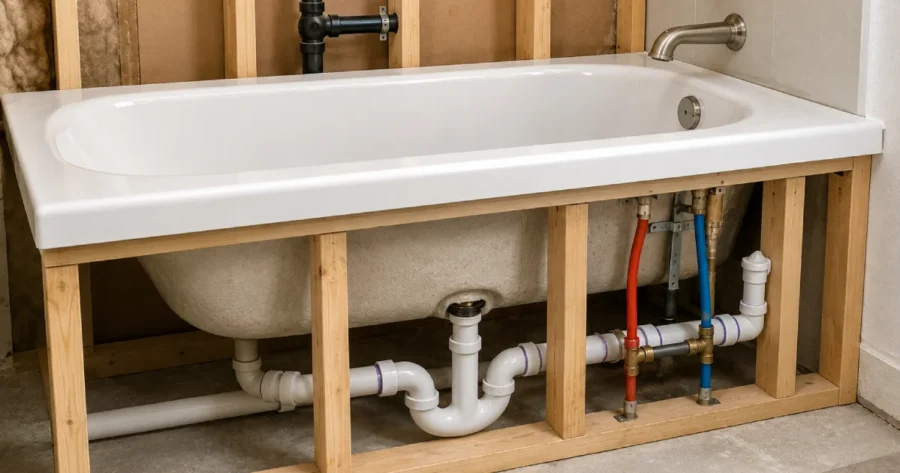
Bathtub plumbing is a system of water supply, drain, overflow, P-trap, and vent components that delivers water to the bathtub, and prevents sewer gases from entering the home in residential properties in the United States. A bathtub plumbing system includes plumbing diagrams, rough-in requirements, standard drain and pipe dimensions, installation methods, system components, and repair guidance that support safe, code-compliant plumbing installations.
The water supply, drain, and vent systems work together to maintain water flow, proper drainage, and balanced air pressure, while correct installation helps prevent leaks, and sewer odors and supports plumbing systems throughout the home.
What is a Bathtub Plumbing Diagram?

A bathtub plumbing diagram is a labeled schematic that maps the drain flange, overflow tube, P-trap, and supply lines making up a tub’s water and waste system. The diagram guides correct pipe slope, trap depth, and rough-in spacing for repair installation.
A diagram helps plumbers trace a leak or clog back to the fitting without opening the entire wall. The side view showing the tub’s position and pipe connections, a top view offering a bird’s-eye look at the area, and a rough-in view detailing the setup before the tub goes in.
How Do You Install and Rough-In Bathtub Plumbing?
Rough-in bathtub plumbing is the phase where the drain, waste, overflow, and supply lines get positioned and connected inside the wall or floor cavity before any finish surface goes on. Plumbers use it to confirm pipe placement and slope, while the framing stays open and accessible. Getting the rough-in right prevents costly tear-outs once tile, drywall, or subfloor covers the work.
To install and rough-in bathtub plumbing, follow the five steps listed below.
- Gather Tools and Materials. Assemble a tub wrench, PVC pipes and fittings, a level, Teflon tape, and plumber’s putty or silicone before opening the wall.
- Position the Drain and Overflow. Align the drain shoe, tailpiece, and overflow tube with the tub’s factory openings, securing each fitting to the framing.
- Install the P-Trap. Connect the P-trap to the drain shoe and waste pipe, keeping the trap arm within code-approved length and slope.
- Run Supply Lines. Route hot and cold water lines toward the mixing valve location and clamp them firmly to nearby studs.
- Test the Assembly. Fill the tub and drain the water fully, checking every joint for leaks and scheduling a licensed plumbing inspection before closing the walls.
What are the Standard Bathtub Drain and Pipe Dimensions?
The standard bathtub drain and pipe dimensions are a 1 1/2-inch (38 mm) drain opening, 1 1/2-inch drain pipe, 1 1/2-inch overflow pipe, 1 1/2-inch P-trap, and a minimum 1 1/2-inch vent pipe, which comply with the International Plumbing Code adopted or amended by jurisdictions of Houston, Texas.
The 1 1/2-inch drain pipe is the standard diameter for carrying wastewater from residential bathtubs, while the 1 1/2-inch overflow pipe matches the drain size to help prevent water from exceeding the tub’s maximum fill level. Local plumbing codes modify vent sizing, trap-arm length, approved materials, or installation requirements, so compliance with local code requirements must be verified.
How Do You Properly Plumb a Bathtub Drain and Overflow?
Properly plumb a bathtub drain and overflow through a waste-and-overflow assembly that directs wastewater to the drain system while preventing the bathtub from overflowing. Connect the overflow tube to the drain tee beneath the tub, then connect the outlet to a properly aligned P-trap installed below the drain to maintain a water seal that blocks sewer gases.
Seal the drain flange with plumber’s putty or an approved silicone sealant, use rubber gaskets at overflow connections, tighten slip-joint fittings securely, and perform a full leak test by filling and draining the tub before use.
What are the Main Components of a Bathtub Plumbing System?
The main components of a bathtub plumbing system are listed below.
- Bathtub Drain Flange. The drain flange forms the watertight opening at the bottom of the bathtub and directs wastewater into the drain assembly.
- Drain Shoe. The drain shoe connects the drain flange to the waste tee beneath the bathtub.
- Overflow Plate. The overflow plate covers the overflow opening and provides access to the overflow assembly.
- Overflow Tube. The overflow tube carries excess water from the overflow opening to the drain tee to help prevent bathtub overflow.
- Waste Tee. The waste tee joins the drain shoe and overflow tube into a single drain outlet.
- Tailpiece. The tailpiece connects the waste tee outlet to the P-trap.
- P-Trap. The P-trap retains a water seal that blocks sewer gases from entering the bathroom.
- Trap Arm. The trap arm carries wastewater from the P-trap to the branch drain while maintaining proper drainage flow.
- Drain Pipe. The drain pipe transports wastewater from the bathtub plumbing assembly to the building’s sanitary drainage system.
- Vent Pipe. The vent pipe equalizes air pressure in the drainage system to support proper flow and protect the trap seal.
How Do You Troubleshoot and Repair Common Bathtub Plumbing Problems?
Troubleshoot and repair common bathtub plumbing problems by inspecting the drain, faucet, and walls for the specific symptom before choosing a fix. Clogged and slow drains trace back to hair and soap buildup in the P-trap, clearing with a hand snake worked through the overflow tube or drain opening. Leak detection starts at the slip nuts, drain flange, and overflow gasket, since water stains on the ceiling below or a musty smell signal a failed seal.
Low water pressure points to a clogged showerhead or worn cartridge, while a dripping faucet points to a degraded washer or O-ring inside the valve. Sewer odors indicate a dry or cracked P-trap, and noisy pipes stem from loose mounting straps or water hammer from a closing valve. Residents tighten fittings, replace washers, or run water to refill a dry trap themselves, but must call a plumber for hidden leaks or corroded pipes.
What Are Common Bathtub Problems?
Common bathtub problems are listed below.
- Slow Drain. Hair and soap scum accumulate inside the P-trap and restrict water flow toward the main line.
- Overflow Leak. A cracked gasket behind the overflow plate lets water seep into the wall cavity during a full bath.
- Sewer Odor. A dried-out P-trap loses its water seal and allows sewer gases to rise through the drain.
- Dripping Faucet. A worn washer or O-ring inside the valve cartridge fails to seal the water flow completely.
- Low Water Pressure. Mineral deposits clog the showerhead or aerator and reduce the faucet’s output volume.
- Cracked Caulk. Deteriorated silicone along the tub’s edge lets water penetrate the subfloor and framing below.
- Rust Stains. Corroded drain flange threads leave orange discoloration around the drain opening over time.
- Noisy Pipes. Loose mounting straps or sudden valve closure cause vibration and banging inside the wall.
How to Plumb a Tub Drain?
To plumb a tub drain, follow the seven steps listed below.
- Apply Plumber’s Putty. Roll a bead of plumber’s putty or silicone around the drain flange’s underside to create a watertight seal against the tub floor.
- Thread the Drain Flange. Insert the flange into the tub’s drain opening and hand-tighten it into the drain shoe below.
- Tighten with a Tub Wrench. Secure the flange fully using a tub wrench or dumbbell wrench to prevent cross-threading the fitting.
- Connect the Drain Shoe. Attach the drain shoe to the tailpiece, aligning it toward the overflow tee for a straight downward path.
- Install the Overflow Tube. Fasten the overflow tube between the tub’s overflow opening and the tee connection above the drain shoe.
- Attach the P-Trap. Join the P-trap to the tailpiece outlet, keeping the bend level and within code-approved trap-arm length.
- Test for Leaks. Fill the tub and drain the water fully while checking every joint for drips before closing the wall.
Should You Hire a Bathtub Plumber?
Yes, you should hire a bathtub plumber because drain, overflow, and P-trap connections demand fitting to prevent hidden leaks and code violations. An expert plumber diagnoses issues (sewer odors or venting problems) that homeowners do not trace behind the wall. Reaching out to plumbing services ensures the work meets code and holds up long-term for installations or repairs beyond basic fixes.