

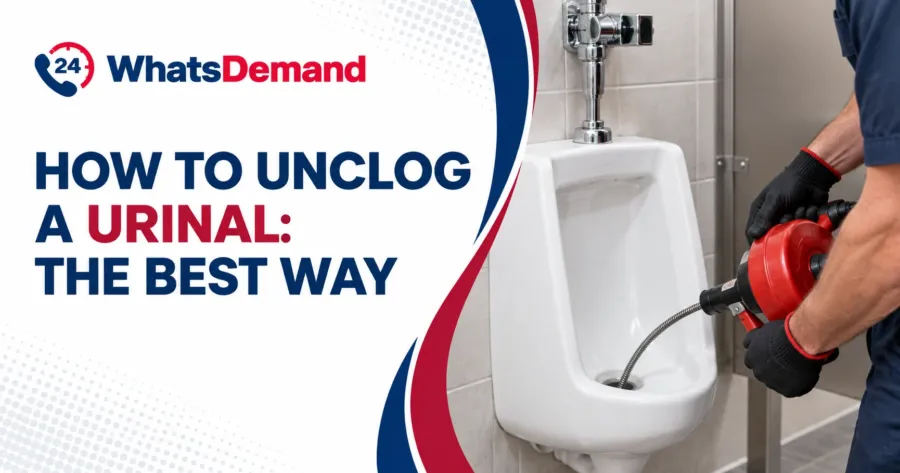
A clogged urinal usually clears with a plunger, a urinal auger, or a thorough scrub to remove built-up mineral and uric scale. Most homeowners or facility staff can fix it themselves in well under an hour without calling a professional plumber.
This guide walks through how to identify the cause of the clog, the tools you’ll need, how to shut off the water and clear standing water from the bowl, how to break up and remove the blockage, how to restore water flow and clean the fixture afterward, and when a clog that won’t budge means it’s time to call a professional plumber instead. A urinal is one fixture in a building’s larger plumbing system, and understanding how it fits together can help you catch small problems before they become bigger repairs.
1. Identify the Cause of the Urinal Clog
Mineral and uric scale buildup along the drain walls is the most common cause of a urinal clog, followed by foreign objects like paper towels, cigarette butts, or feminine hygiene products that get flushed down by mistake. Over time, uric salts crystallize inside the trap and drain line, narrowing the passage until water drains more slowly or stops moving altogether. A vent blockage or a problem with the building’s main drain line can also cause a urinal to back up; however, this is less common in a single-fixture home installation than it is in commercial restrooms with multiple urinals sharing one line.
2. Gather the Necessary Tools
The tools and materials to unclog a urinal are listed below.
- Rubber gloves and eye protection: Protect your hands and eyes from wastewater, cleaning chemicals, and splashback while you work.
- Urinal plunger or standard toilet plunger: Creates the suction needed to dislodge a soft clog near the surface of the trap.
- Urinal auger or drain snake: Reaches deeper into the trap and drain line to break up a blockage a plunger can’t clear.
- White vinegar and a stiff brush: Dissolves mineral and uric scale buildup along the drain walls and trap.
- Bucket and old towels: Catch and clean up any standing water or overflow during the process.
- Adjustable wrench: Needed if you have to shut off a dedicated stop valve or, in rarer cases, remove the fixture from the wall.
3. Turn Off the Urinal’s Water Supply
Locate the shutoff valve for the urinal, usually a small valve on the supply line behind or below the fixture, and turn it clockwise until it stops to cut off the water. If the urinal doesn’t have its own dedicated valve, shut off the main water supply to the bathroom or building instead. Turning off the water first prevents the bowl from refilling or overflowing while you work on the clog.
4. Remove Standing Water from the Bowl
Scoop or sponge any standing water out of the urinal bowl and into a bucket before you start plunging or snaking, since a full bowl makes it harder to get a tight seal with the plunger and increases the risk of splashback. Removing the water also lets you see the trap opening clearly, which makes it easier to spot the clog or feed in an auger.
5. Break Up the Clog with a Plunger
To break up a urinal clog with a plunger, follow these steps.
- Position the plunger cup directly over the drain opening at the bottom of the bowl, making sure it forms a full seal.
- Push down firmly and pull up sharply several times without breaking the seal, since the pulling motion does most of the work of dislodging the clog.
- Repeat for 15 to 20 seconds, then check whether water drains freely.
- Move on to a urinal auger instead of continuing to plunge indefinitely if the clog doesn’t clear after a few rounds.
6. Clear the Blockage with a Urinal Auger or Drain Snake
To clear a stubborn clog with a urinal auger, follow these steps.
- Feed the auger cable slowly into the drain opening until you feel resistance.
- Turn the auger’s handle clockwise while applying gentle forward pressure to break through or hook the blockage.
- Pull the cable back slowly, since the clog may come out attached to the auger tip.
- Run water briefly to check whether the drain is flowing normally again.
7. Remove Mineral or Uric Scale Buildup
Uric scale and mineral deposits coat the inside of the trap and drain line over time, and cleaning them restores full water flow after physical blockages are removed. Pour undiluted white vinegar into the bowl and let it sit for 30 minutes to an hour, then scrub the trap and visible drain surfaces with a stiff brush to loosen the softened scale. For heavier buildup, a commercial descaling cleaner made for urinals can cut through deposits that vinegar alone won’t fully dissolve.
8. Restore the Water Supply, Test, and Clean the Urinal
Turn the shutoff valve counterclockwise to restore water to the fixture, then flush the urinal several times to confirm it drains at a normal speed with no gurgling or backup. Once the drain is flowing properly, disinfect the bowl, trap area, and any exposed surfaces with a bathroom-safe cleaner to remove residual bacteria and odor from the clog. Testing and cleaning in the same step confirms the repair worked and leaves the fixture sanitary for the next use.
9. Call a Professional Plumber if the Clog Persists
If the urinal still won’t drain after plunging, snaking, and descaling, the blockage is likely down the line or tied to a vent issue that calls for a licensed plumber’s tools and diagnostic equipment. Continuing to force a plunger or auger against a deep clog risks damaging the trap or fixture, so call a professional plumber once you’ve exhausted the basic DIY steps above.
10. Call a Professional Plumber if the Clog Persists
Call a professional plumber if the clog persists after attempting the plunger, auger, and descaling steps. A blockage points to a deeper issue (a collapsed drain line or a clog lodged) past the trapway’s reach.
Persistent clogs signal problems beyond DIY tools, and continuing to force an auger through a blocked pipe risks cracking the porcelain or damaging the flushometer valve. Bring a motorized drain snake or hydro-jetting equipment with a camera inspection tool to locate and diagnose blockages that standard tools do not reach.
How Does the Flush Work in Urinals?
The flush works in urinals through diaphragm or piston flush valves, where activating the handle or sensor tilts a relief valve, creates a pressure between the upper and lower chambers, and releases water at a consistent flow rate to siphon waste through the trap into the drainline.
Urinals sold in Texas after January 2014, according to Texas plumbing statute, do not exceed 0.5 gallons per flush, with a valve completing the flush cycle in 4 to 5 seconds. Waterless urinals skip the flush valve, relying on a cartridge containing a sealant layer that lets liquid waste pass through into the drain while blocking sewer gas and odor from rising back up.
What Are Common Signs and Causes of a Clogged Urinal?
The common signs and causes of a clogged urinal are a mix of physical blockages and mineral buildup that restrict water flow through the trapway. Facility managers watch for the symptoms closely because early detection prevents overflow damage and unsanitary restroom conditions in high-traffic areas.
Common signs and causes of a clogged urinal are listed below.
- Slow Drainage. Urine lingers in the bowl for several seconds after flushing instead of clearing immediately through the trapway.
- Foul Odor. Trapped organic waste and bacterial buildup inside a partially blocked drain release a persistent sour smell.
- Uric Scale Buildup. Calcium and mineral deposits harden along the drain surface, narrowing the passage and restricting water flow.
- Foreign Debris. Paper towels, cigarette butts, or gum lodge inside the trapway and obstruct the drain opening.
- Reduced Flush Pressure. A weak or inconsistent flush signals a clogged flushometer valve or a narrowing drain line.
- Recurring Overflow. Water rises above the normal fixture level and spills onto the floor, often pointing to a blockage deeper in the main line, which facility managers catch early through routine plumbing inspection of public urinals.
How to Troubleshoot a Slow-Draining Urinal?
To troubleshoot a slow-draining urinal, follow the seven steps listed below.
- Inspect the Drain Opening. Check the drain opening for trapped debris (paper towels, gum, or cigarette butts) blocking the flow. Move to testing the flush mechanism once the surface is clear.
- Test the Flush Valve. Press the flush handle or sensor and observe the water pressure entering the bowl for weak or inconsistent flow. Proceed to apply suction with a plunger if pressure looks normal.
- Apply a Flat Plunger. Position a flat-bottomed plunger over the drain opening and push down to dislodge loose buildup. Advance to a chemical descaling treatment when plunging fails to restore drainage.
- Apply a Descaling Solution. Pour an acid-based descaling agent into the bowl and let it sit for the manufacturer’s recommended contact time to dissolve uric scale. Flush the urinal to check for improvement after the solution finishes working.
- Use a Urinal Auger. Feed a urinal auger through the drain opening and crank the handle to break apart deeper blockages the plunger missed. Retract the cable slowly to pull loosened debris out through the drain.
- Flush and Monitor Drainage. Run flushes for 5–20 seconds and observe how fast the bowl clears to confirm if the blockage is cleared. Persistent slow drainage after the step signals a deeper issue in the line.
- Call a Licensed Plumber. Contact an expert plumber to inspect the main drain line with a snake or camera when DIY methods fail to restore normal flow.
How to Take a Urinal Off the Wall?
To take a urinal off the wall, follow the six steps listed below.
- Shut Off the Water Supply. Turn the shutoff valve clockwise until water flow stops completely before removal due to a cracked trapway, a failed mounting bracket, or a clog too deep for an auger to reach.
- Disconnect the Flushometer. Unscrew the flushometer coupling nut connecting the valve to the urinal’s spud fitting with an adjustable wrench, wearing protective gloves to avoid uric acid exposure from residue inside the fixture.
- Remove the Drain Connection. Loosen the P-trap slip nut beneath the urinal to separate the fixture from the drain line, placing a bucket underneath to catch remaining water.
- Detach the Mounting Bolts. Unscrew the wall-hanger bolts or bracket fasteners securing the urinal to the wall carrier, checking each fastener for corrosion first.
- Lift the Urinal Off the Carrier. Grip the fixture on both sides and lift it straight up off the wall-mounted carrier hooks, using a second person for heavy commercial models to prevent dropping the porcelain.
- Set the Urinal on a Padded Surface. Place the removed fixture on a cushioned surface to prevent cracking the porcelain during transport.
When to Call a Plumber for Clogged Urinals?
Call a plumber for clogged urinals when repeated plunging and augering fail to restore normal drainage, or when uric scale buildup hardens beyond what a standard descaling agent dissolves. Persistent overflow, recurring slow drainage after multiple attempts, or a cracked trapway signal a problem beyond hand tools and point toward a deeper blockage in the main line.
A facilitator who calls a professional plumber prevents damage to the flushometer valve or porcelain fixture because professional-grade equipment (hydro-jetting and camera inspection tools) locates and clears blockages.
Can You Unclog a Urinal with A Plunger?
Yes, you can unclog a urinal with a plunger. A flat-bottomed plunger, not a standard toilet flange plunger, forms a tight seal against the shallow basin and creates suction pressure strong enough to dislodge loose debris and soft uric buildup.
The method works best for minor clogs and clears the blockage without needing an auger or chemical descaler.
Will Vinegar Dissolve Urine Crystals?
Yes, white vinegar dissolves urine crystals, since its acidity breaks down the uric salts that make up the mineral scale inside a urinal’s trap and drain line. Letting undiluted vinegar sit in the bowl for 30 minutes to an hour before scrubbing gives it enough contact time to soften even heavier buildup. For urinals with thick, long-neglected scales, repeating the vinegar treatment a few times or switching to a commercial descaling cleaner made for urinals will clear buildup that a single application won’t fully dissolve.