


A rotten-egg smell is often linked to sulfur compounds, but other odors can arise from chlorine, minerals, organic matter, or plumbing problems such as buildup in fixtures. The odor may originate from the water supply, plumbing system, water heater, or even a drain if your water smells bad.
Identifying the source of the odor is the first step toward resolving plumbing problems. According to Minnesota Department of Health guidance on hydrogen sulfide, hydrogen sulfide can give water a distinctive rotten-egg smell even at low concentrations, with taste and odor thresholds often cited around 0.05 to 0.1 mg/L. The sections below explain how to pinpoint the source, recognize different water odors, and select the appropriate treatment or maintenance solution.
How Can You Identify the Source of Foul Odors in Your Plumbing?
To identify the source of foul odors in your plumbing, follow the steps below.
- Test several faucets: Run cold water from different fixtures and compare the smell. If only one faucet has an odor, the problem may be localized to that fixture or its drain.
- Compare hot and cold water: Run each separately. An odor found only in hot water can point toward the water heater.
- Check the drains: Smell around the sink and drain opening. Buildup in a P-trap can create foul odors that may be mistaken for smelly tap water.
- Check the water source: If the odor occurs at multiple fixtures, determine whether the property uses a private well or municipal water.
- Inspect the water heater: Persistent sulfur odors in hot water are associated with the anode rod or conditions inside the tank.
- Consider water testing: Laboratory testing can identify certain contaminants and help determine the appropriate treatment if the source remains unclear.
Consider professional plumbing services when the odor persists, affects multiple fixtures, is accompanied by other plumbing problems, or appears to originate from the water heater or supply system.
Is Your Smelly Water Coming from a Well or the City Supply?
Yes, smelly water can originate from either a private well or a municipal water supply, but the clues can help distinguish between them.
With a private well, sulfur bacteria, groundwater conditions, and naturally occurring minerals can contribute to unpleasant odors. If the smell affects the entire property, testing the well water can help identify the cause.
With municipal water, compare the odor at several faucets and ask whether nearby properties have noticed the same change. Checking available water-quality information from the local utility can also help determine whether the issue originates in the public supply.
Is the Odor Coming from All Faucets or Just Hot Water?
Yes, testing individual faucets can help narrow down the source of the odor. The water source or main plumbing system may be involved if both hot and cold water smell at multiple faucets. The water heater becomes a more likely source if only hot water has the odor. A smell confined to one fixture may indicate a problem with the faucet, aerator, drain, or localized plumbing issue.
What Causes Unpleasant Odors in Your Tap Water?
Common causes of unpleasant odors in your tap water are listed below.
- Water supply: Sulfur bacteria, algae, organic matter, and other naturally occurring substances can affect odor.
- Plumbing and water-heating systems: Anode rod reactions, corrosion, mineral deposits, and stagnant water can contribute to unusual smells.
- Fixtures and drains: Dirty aerators, organic buildup, and P-traps can produce odors near faucets and sinks.
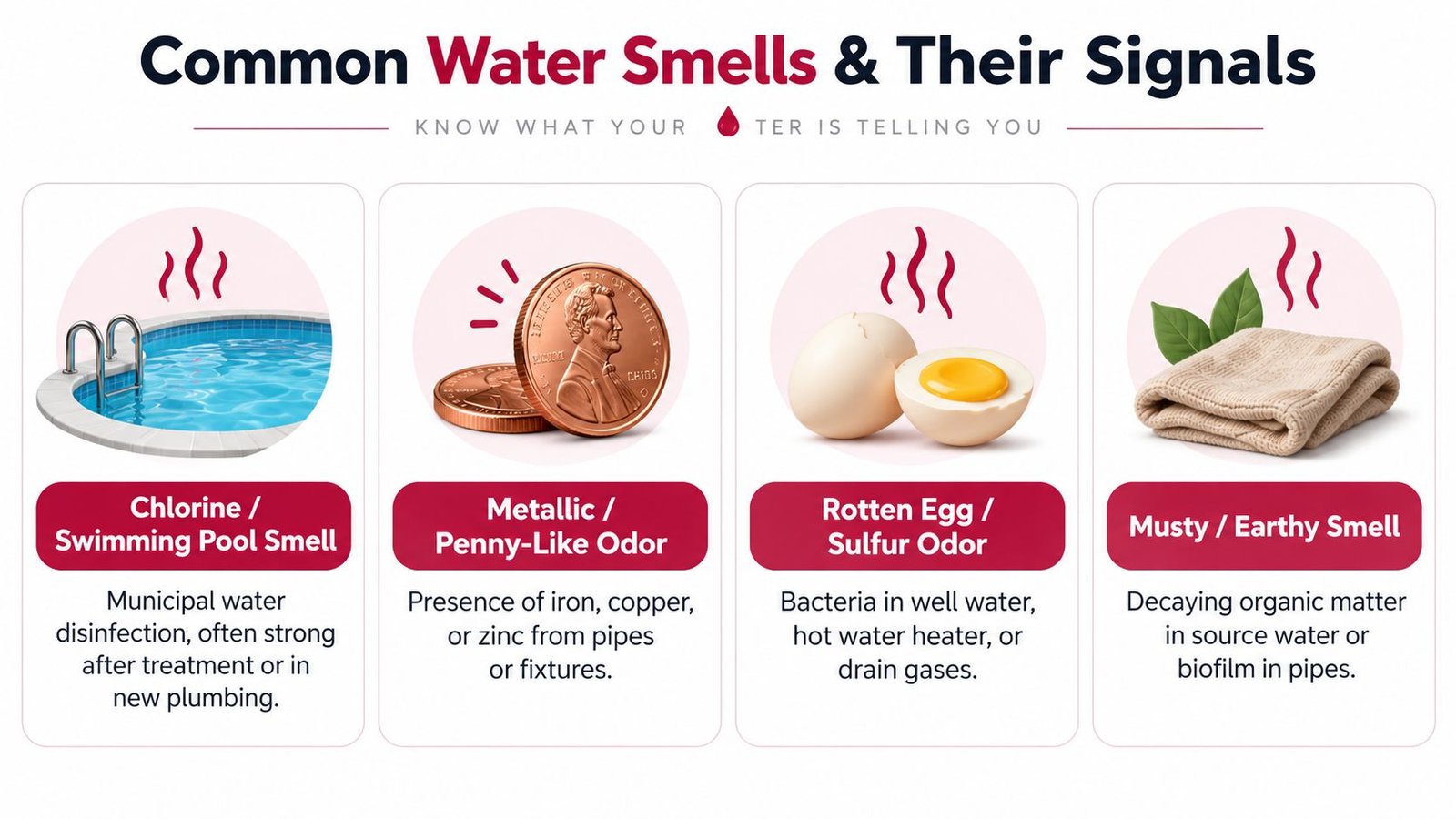
This grouping matters because the same smell does not always come from the same place. A rotten-egg odor often points to sulfur conditions, a metallic smell often points to pipe materials or minerals, a chlorine smell often comes from disinfection, and a musty smell often points to organic buildup or stagnation.
Why Does Tap Water Smell Like Rotten Eggs or Sulfur?
Tap water smells like sulphur (sulfur), which is often due to hydrogen sulfide, a compound commonly associated with the rotten-egg odor in water. This issue may arise from the condition of the groundwater, the presence of sulfur-producing bacteria, or reactions occurring within a water heater.
1. Sulfur Bacteria
Sulfur bacteria can use sulfur compounds in water as part of their biological processes and produce hydrogen sulfide as a byproduct. This can create the characteristic rotten-egg smell in water. The odor may be noticeable in private well water, plumbing systems, or other environments where these bacteria are present. Testing the water can help determine whether sulfur-related compounds are contributing to the odor.
2. Water Heater Anode Rod Reactions
A water heater’s anode rod is designed to protect the tank from corrosion. Under certain water conditions, however, reactions involving the anode rod can contribute to hydrogen sulfide formation. If the rotten-egg smell occurs mainly when you run hot water, the water heater should be considered as a potential source. A professional can inspect the system and determine whether maintenance or anode-rod service is appropriate.
What Causes Musty, Metallic, or Chemical Odors in Water?
Not all smelly water is sulfur-related. Musty, metallic, and chemical odors usually point to different plumbing conditions, water chemistry, or fixture buildup.
1. Corroded Pipes or Minerals
Corrosion inside aging pipes can affect the characteristics of water flowing through the plumbing system. Dissolved minerals and deposits from old plumbing pipes can also contribute to unusual tastes, odors, or changes in water appearance. The plumbing system may require inspection if the odor is accompanied by discoloration or occurs mainly after water has been sitting in the pipes.
2. Algae and Organic Matter
Algae and other organic matter in a water source can produce earthy, musty, or swamp-like odors. This can be more noticeable when environmental conditions affect a water supply. For properties using private wells or other non-municipal sources, water testing can help identify whether organic compounds are contributing to the smell.
3. Chlorine Disinfection
Chlorine disinfection can cause a bleach-like or swimming-pool smell when treated municipal water reaches your tap with a noticeable disinfectant residual. This is usually not a plumbing failure. It is more often a water-treatment characteristic, especially if the smell appears at every faucet.
For reference, the EPA treats odor as a secondary drinking-water issue, not a primary health standard, and lists a secondary odor standard of 3 threshold odor number for nuisance tastes and smells (EPA secondary drinking-water standards). The same point appears in the EPA secondary standards document.
4. Buildup in Drains or Sink P-Traps
A foul smell around a sink does not always mean the tap water itself is contaminated. Organic debris, grease, bacteria, and biofilm can accumulate inside drains and P-traps and produce unpleasant odors.
If the smell is strongest around the drain rather than in a glass of freshly collected water, cleaning the drain and P-trap may resolve the problem.
A quick glass test helps confirm it. If the water smells normal away from the sink but the basin area still smells bad, clean the drain, overflow opening, and P-trap area before treating the water supply as the problem.
How Do You Remove Foul Odors and Improve Water Quality?
To remove foul odors and improve water quality, follow the steps below.
- Clean faucet aerators: Remove accumulated debris that may affect water quality or odor at the fixture.
- Clean drains and P-traps: Remove organic buildup that can create foul smells around sinks.
- Flush the water heater: Follow the manufacturer’s maintenance recommendations to reduce sediment and buildup.
- Inspect the anode rod: If only hot water smells like sulfur, have the water heater evaluated.
- Test the water: Testing is especially useful when the source is a private well or the cause of a persistent odor is unclear.
- Choose treatment based on test results: Filtration, oxidation, or other water quality treatment systems should target the specific contaminant involved.
- Inspect the plumbing: Persistent odors affecting multiple fixtures may require professional diagnosis.
Which Water Filters or Softeners Best Eliminate Odors?
Activated carbon filters are effective for removing chlorine and various taste-and-odor compounds, making them a common choice for addressing these issues. In contrast, sulfur treatment systems are specifically designed for situations where hydrogen sulfide is identified as the source of the odor. It’s important to note that a water softener's primary function is to reduce hardness minerals, and it should not be relied upon as a comprehensive solution for odor removal.
The selection of the appropriate treatment system is contingent upon the specific contaminant present in the water. For instance, activated carbon filters primarily reduce chlorine and certain taste and odor compounds, effectively addressing chlorine and some organic odors. Sulfur treatment systems focus on sulfur-related compounds, targeting hydrogen sulfide and associated sulfur odors. Oxidizing filtration is utilized for treating specific issues related to sulfur, iron, and manganese, which can also help with selected sulfur-related odors. Meanwhile, water softeners are designed to reduce calcium and magnesium hardness, serving more for mineral-scale control rather than general odor removal.
It is advisable to test the water first to ensure the most effective treatment. This testing can help identify the specific contaminants present, allowing for the selection of a treatment system that directly addresses the actual cause of the odor rather than installing a system that may not be suitable.
What Maintenance Steps Fix Odors in Water Tanks and Sinks?
The maintenance tips to fix odors in water tanks and sinks are listed below.
- Clean faucet aerators to remove accumulated sediment and debris.
- Clean sink drains and P-traps to eliminate organic buildup.
- Flush water heaters according to the manufacturer’s plumbing maintenance instructions.
- Inspect the anode rod when persistent sulfur odors come from hot water.
- Check infrequently used fixtures for stagnant water and drain-related odors.
- Test private well water when an unexplained odor develops.
- Inspect aging plumbing if odors persist or occur with discoloration and other changes.
- Address recurring odors instead of repeatedly masking them with cleaning products or fragrances.
Should I Call a Plumber if My Water Smells Like Rotten Eggs?
Yes, you should consider calling a plumber when a rotten-egg odor persists, affects multiple fixtures, occurs primarily in hot water, or cannot be traced to a drain or faucet.
Professional assistance can help determine whether the problem involves the water heater, plumbing system, supply line, or another source. If the property uses a private well, water testing may also be necessary because plumbing inspection alone cannot identify every water-quality issue.
Is It Safe to Shower in Smelly Water?
No, the safety of smelly water depends on what is causing the odor, and smell alone cannot determine whether water is safe.
A mild chlorine odor from treated municipal water does not automatically mean the water is unsafe. Similarly, a sulfur smell does not by itself establish whether the water is suitable for bathing or drinking.
If the odor is sudden, unusually strong, unexplained, or accompanied by discoloration, cloudiness, an unusual chemical smell, or other changes, stop using the water until the source can be evaluated. Private well owners should consider appropriate water testing when a new or persistent odor develops.