

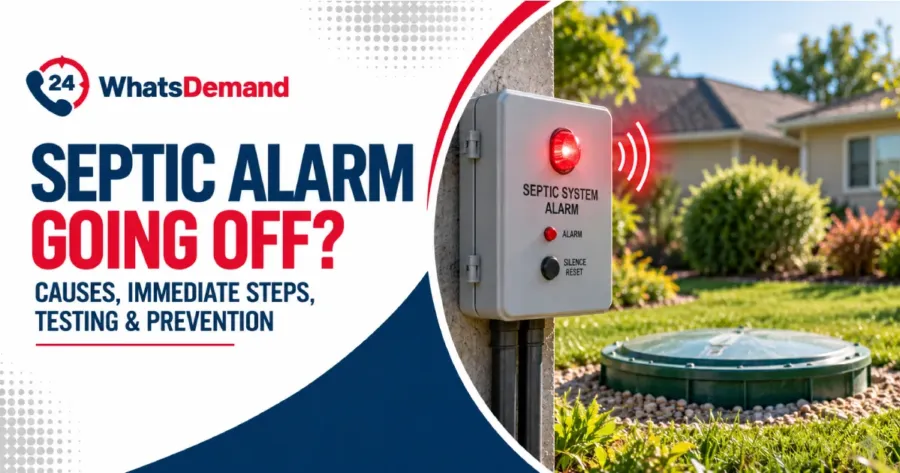
A septic alarm warns that something in your septic system needs attention. It can mean the liquid level inside the tank is too high, the effluent pump has stopped working, the electrical supply has been interrupted, or a piece of treatment equipment is malfunctioning. An alarm sounding does not automatically mean your septic tank has failed. In many cases, it simply means the system needs a check or a minor repair. However, ignoring the alarm is not a safe option. If you leave the underlying cause unaddressed, wastewater can back up into your home, or the system can sustain damage that leads to a much larger repair bill.
What Is a Septic Tank Alarm, and How Does It Work?
The septic tank alarm is a monitoring device connected to a float switch inside the tank, designed to alert you when the wastewater level rises above or falls below a safe operating range. This typically happens when the effluent pump cannot keep up with incoming wastewater or stops working altogether, causing liquid to accumulate faster than it can be discharged to the drain field in a septic tank system. The alarm’s electrical control panel, sometimes called the septic box, houses the alarm circuitry, a visual light, and an audible signal. This panel is usually mounted on an exterior wall near the tank or inside a garage, and it works alongside the float switch and pump to keep the system’s water level within its designed range.
What Does a Red Light or Beeping Sound Mean on My Septic Box?
Alarm indicators are not standardized across every septic control panel, so the exact meaning of a light or sound can vary depending on the manufacturer and system design. That said, a few patterns are common across most systems. A red light commonly indicates a fault condition, a high water level, or that the alarm has been triggered. A beeping or buzzing sound commonly indicates that the alarm has actually activated, rather than simply being in standby. Most panels include a silence or reset button that stops the audible alarm, but pressing it only quiets the sound. It does not fix the underlying problem that caused the alarm to trip in the first place. Because light and sound patterns differ between control panels, it’s worth checking the labels on your specific panel or the owner’s manual to understand exactly what your system is telling you. The most important distinction to keep in mind is the difference between silencing the alarm and actually resolving the issue that triggered it.
Is a Septic Alarm Going Off an Immediate Emergency?
No, a septic alarm going off is not always an immediate emergency, though it should never be ignored. In most cases, you have some window of time to identify the cause and respond before the situation escalates. Faster action is necessary. Signs that require prompt attention include wastewater backing up into sinks, tubs, or toilets, standing water or sewage odor near the tank or drain field, or an alarm that continues for an extended period without an obvious explanation, such as a recent power outage.
Why Is My Septic Tank Alarm Going Off?
The causes of the septic tank alarm going off are listed below.
- High water usage: A sudden increase in water use, such as running multiple loads of laundry back to back or hosting guests, can temporarily overwhelm the system’s capacity and raise the tank’s water level faster than it can be processed.
- Pump failure: If the effluent or grinder pump stops working due to a worn-out motor, a jammed impeller, or a burned-out component, wastewater will continue to accumulate in the tank with no way to be pumped out, triggering the high-water alarm.
- Tripped breaker or power interruption: A tripped circuit breaker, a tripped GFCI outlet, or a broader power outage can cut electricity to the pump, stopping it from operating even though the rest of the system is otherwise functional.
- Float switch malfunction: A float switch that has become tangled, stuck, or coated in solids may fail to move correctly, causing it to either miss the point where the pump should activate or trigger a false alarm reading.
- Clogged filter or line: A clogged effluent filter or a blocked outlet line can restrict the flow of wastewater out of the tank, causing the level to rise even when the pump itself is functioning correctly.
- Aging or full tank: A septic tank that hasn’t been pumped in an extended period may accumulate enough solids and scum that its effective capacity is reduced, leading to elevated water levels under normal usage conditions.
Why Is the Alarm Going Off on My Aerobic Septic System (ATU)?
An aerobic treatment unit, or ATU, includes additional mechanical and treatment components beyond what a conventional gravity or pumped septic system uses, such as an air compressor, aerator, and sometimes a disinfection unit. These added parts introduce a few causes specific to aerobic systems.
Aerator or compressor failure: If the air compressor or aerator motor stops running, the biological treatment process that ATUs rely on is disrupted, which can trigger the alarm even if the water level itself hasn’t changed dramatically.
Air filter blockage: A clogged air intake filter can restrict airflow to the aeration chamber, reducing the compressor’s efficiency and causing the system to flag a fault.
Timer or control malfunction: ATUs often use timers to cycle components like aerators or disinfection units, and a malfunctioning timer can cause the system to run components at the wrong intervals, prompting an alarm.
Excess sludge buildup: Because ATUs process wastewater more actively, insufficient maintenance can allow sludge to build up faster than in a conventional system, interfering with treatment and triggering a fault signal.
What Should I Do Immediately When My Septic Alarm Goes Off?
To respond to a septic alarm safely and effectively, follow the steps below.
- Locate and note the alarm signal. Check whether the light is solid or flashing and whether the sound is continuous or intermittent, since this information can help identify the cause later.
- Reduce water usage immediately. Pause laundry, dishwashing, long showers, and any other water-heavy activity so the tank isn’t taking on additional wastewater while you investigate.
- Check the electrical panel. Look at your home’s circuit breaker and any GFCI outlets connected to the septic system to see if either has tripped.
- Inspect the septic control panel. Look for any visible fault indicators, error codes, or labels on the panel that point to a specific failure.
- Listen for pump activity. If you can safely access the area near the tank, listen for whether the pump appears to be running or is silent.
- Avoid opening the tank yourself. Septic tanks can contain hazardous gases, and lids should only be removed by someone trained to do so safely.
- Contact a septic professional if the cause isn’t clear. If you can’t identify or resolve the issue using the steps above, it’s time to bring in someone qualified to inspect the system further.
How Do I Check if the Circuit Breaker or GFCI Outlet Tripped?
To check your electrical connections, follow the steps below.
- Find your home’s electrical panel and look for a breaker labeled for the septic system, sump pump, or a similar designation.
- Look for a breaker in the “off” or middle position, which indicates it has tripped rather than remaining fully switched on.
- Reset the breaker by switching it fully off and then back on if it appears tripped.
- Locate any GFCI outlets connected to the septic pump or control panel, often found near the panel itself or in a nearby utility area.
- Press the reset button on the GFCI outlet if its indicator light shows a tripped state.
- Confirm the alarm and pump respond after resetting either component. If the breaker trips again shortly after resetting, this suggests an underlying electrical fault that needs professional attention rather than repeated resetting.
What Should I Do If My Septic Pump or Grinder Pump Is Not Working?
To check a pump that isn’t working, follow the steps below.
- Confirm the pump has power by checking that its breaker and any connected GFCI outlet haven’t tripped.
- Listen for a humming sound, which may indicate the motor is receiving power but is jammed or otherwise unable to turn.
- Check for visible error codes on the control panel that reference the pump specifically.
- Avoid attempting to access or repair the pump yourself, since pumps are typically submerged in wastewater and require specialized tools and safety precautions to service.
- Schedule a professional inspection if the pump shows no signs of activity or if you notice repeated cycling, unusual noise, or a burning smell near the panel.
How Long Can I Wait Before Calling a Septic Professional?
There is no universal safe waiting period for a septic tank alarm, because septic systems and alarm designs vary by manufacturer, tank size, household water usage, and the specific cause behind the alarm. A system with a large reserve capacity above its designed water line may tolerate a short delay better than one that’s already near its limit. Rather than trying to estimate a safe window on your own, it’s best to treat a persistent or unexplained septic tank alarm as a signal to call a plumber promptly, especially if basic checks like the breaker and GFCI outlet don’t resolve it.
How Can I Prevent My Septic Tank Alarm From Going Off in the Future?
To reduce the chances of future septic alarm activations, follow the steps below.
- Space out heavy water use. Spread laundry loads, dishwasher cycles, and long showers throughout the week instead of concentrating them in a short period.
- Schedule regular tank pumping. Have the tank pumped on the interval recommended for your household size and tank capacity to prevent solids from reducing usable capacity.
- Inspect the float switch periodically. Have a professional check that the float switch moves freely and isn’t obstructed by solids or debris.
- Clean or replace the effluent filter on schedule. A clogged filter is one of the more common preventable causes of alarm activation.
- Test the alarm system periodically. Confirm the light, sound, and reset function are all working as expected before you actually need them.
- Keep the control panel accessible. Avoid storing items or parking vehicles in a way that blocks access to the panel, since quick access matters when the alarm does go off.
How Often Should I Clean Effluent Filters and Inspect Float Switches?
The right maintenance frequency depends on your septic system’s design, how much wastewater your household generates, the manufacturer’s specific instructions for your equipment, and any local regulations that apply in your area. Because these factors vary so widely from one property to another, following the schedule listed in your system’s documentation and having a professional confirm it during routine septic tank pumping is more reliable than relying on a generic timeframe.
How Do I Test My Septic Tank Alarm System to Ensure It Works?
To test my septic tank alarm system to ensure it works, follow the steps below.
- Locate the control panel and float switch access point, typically found near the tank or in a utility area of the home.
- Manually raise the float switch according to your manufacturer’s guidance, which usually simulates a high-water condition.
- Confirm the alarm light activates and the audible signal sounds as expected.
- Test the silence or reset button to confirm it stops the audible alarm without damaging the system.
- Lower the float switch back to its normal resting position carefully once the test is complete.
- Confirm the alarm resets to standby mode and no fault indicators remain active.
- Repeat this test on a routine schedule, such as annually or as recommended by your system’s manufacturer, so you can be confident the alarm will work when you actually need it.